The ambitious gamble to rescue NASA's Neil Gehrels Swift Observatory is officially over.
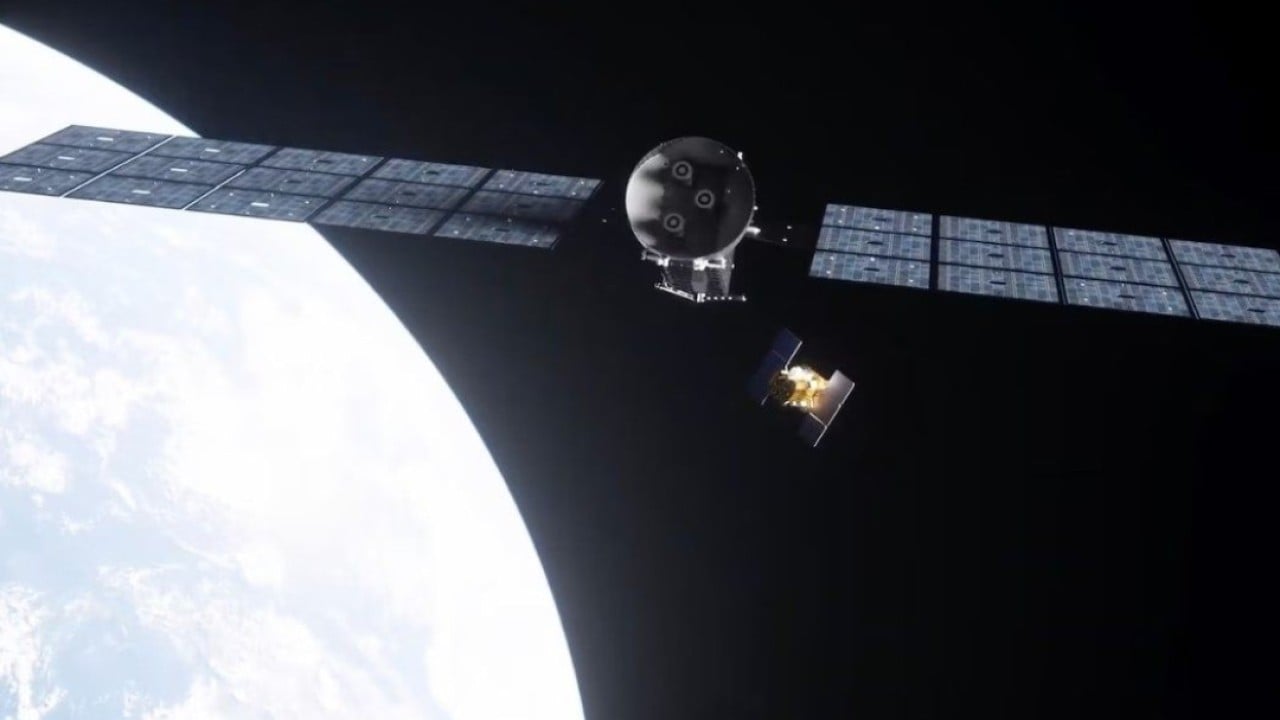
NASA and startup Katalyst Space Technologies announced that the high-stakes mission to grab, dock with, and lift the sinking space telescope has been called off. The LINK spacecraft, launched in July 2026 from the Marshall Islands on a Northrop Grumman Pegasus XL rocket, ran into critical attitude control issues shortly after reaching orbit. With two reaction wheels failing and cold gas thruster problems causing an uncontrolled spin, the rescue ship can no longer attempt its primary capture objective.
Swift is now left to face an inevitable, fiery atmospheric reentry later this year.
A High-Risk Bet on Commercial Servicing
The whole project was unconventional from day one. Launched back in 2004, Swift was designed for a brief two-year look at gamma-ray bursts and transient cosmic events. Instead, it kept working for over two decades.
Then the sun intervened. The recent solar maximum cycle was far more aggressive than predicted, heating up Earth's outer atmosphere. That expansion created heavy atmospheric drag, dragging Swift down far faster than mission planners anticipated.
Instead of writing off the aging observatory, NASA awarded Arizona-based Katalyst Space Technologies a $30 million contract in September 2025 to build a fix in less than a year. It was meant to test the commercial sector's ability to service older spacecraft that were never designed to be grappled in orbit.
Where the Mission Went Wrong
Building a robotic rescue tug in under twelve months is a brutal engineering challenge. Katalyst had to design the LINK spacecraft to match orbits with Swift, find an uncooperative target that never had docking markers installed, and secure it safely.
Everything went smoothly during the initial launch and early checkouts in July. But things deteriorated quickly when LINK experienced severe pointing and stability problems. Engineers discovered that two out of three reaction wheels were out of commission, alongside a loss of functionality in the cold gas thrusters.
Flight controllers managed to slow the spacecraft's tumble through emergency software patches and clever control algorithm updates, but the damage to the mission timeline was done. Capturing Swift is simply too risky now.
The Broader Impact on Future Space Missions
NASA Administrator Jared Isaacman noted that while this isn't the victory everyone wanted, the attempt was worth making to push satellite-servicing capabilities forward.
Katalyst won't abandon the LINK spacecraft entirely. Instead of grappling Swift, the startup will use proximity operations to test out maneuvering capabilities nearby, gathering critical flight data that engineers can use for future orbital maintenance tasks.
For Swift, the end of the road is near. The observatory's instruments were already powered down earlier this year to slow its descent, and it currently orbits at roughly 216 miles high.
The failure also casts a shadow over other aging assets in orbit, like the 36-year-old Hubble Space Telescope, which faces similar orbital decay pressures from solar activity. Commercial space salvage is clearly still in its infancy, and this high-profile setback proves just how unforgiving low-Earth orbit remains.