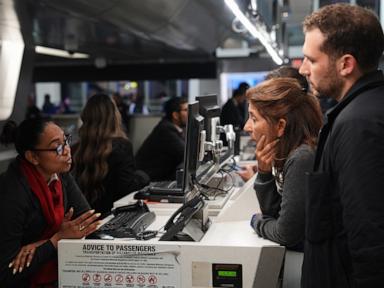
Airlines do not ground fleets because their systems failed. They ground fleets because their financial and legal risk engines worked with cold, calculated perfection.
Every time a nationwide ground stop hits the headlines, mainstream coverage follows an identical, brain-dead script: TV news channels broadcast footage of frustrated passengers sleeping on airport benches, pundits scream about aging infrastructure, and politicians call for immediate congressional hearings.
The implicit narrative is always the same—the aviation sector is collapsing under its own weight, paralyzed by unexpected chaos.
That narrative is entirely wrong.
What the public misinterprets as operational failure is actually systemic risk offloading. When thousands of flights get scrubbed in a single afternoon, you are not watching a breakdown. You are watching a highly rational, brutal insurance policy run its code. Until passengers and regulators understand the brutal math governing crew legalities, fleet displacement, and cascading liability, they will keep demanding solutions that actually make mass cancellations worse.
The Myth of the "System Breakdown"
The standard hot take following a national ground stop blames software glitches, weather fronts, or air traffic control staffing shortages. While those are the immediate triggers, they are not the structural cause of mass cancellations.
The real culprit is a deliberate trade-off built into modern airline operations: extreme capacity optimization.
In a hyper-efficient network, aircraft spend minimal time on the tarmac. A single Boeing 737 might fly four to six segments a day across five different states. Crew members are scheduled to the minute to stay within Federal Aviation Administration (FAA) mandated duty limits.
When a central FAA ground stop pauses traffic for even two hours, it does not just delay those specific flights. It instantly destroys the tightly calibrated puzzle of crew legality and aircraft positioning across the entire country.
Airlines face a binary choice:
- Attempt a rolling recovery. Keep planes moving, pay massive overtime, risk crews timing out mid-trip in secondary markets, and spend the next five days dragging aircraft and flight attendants back into position.
- Pull the emergency brake. Cancel entire blocks of flights preemptively, absorb a single day of media outrage, clear the board, and reset the schedule cleanly for tomorrow.
Management will choose option two every single time. It is not an accident. It is a strategic purge.
The Brutal Financial Engine Behind the Cancel Button
Let us talk numbers. Mainstream reporters love to cite lost revenue from canceled tickets, assuming airlines are bleeding cash during a meltdown.
They forget that unearned revenue on unused tickets does not evaporate; it converts to credits or rebooked inventory. Meanwhile, the real cash burn occurs when an airline tries to brute-force its way through an operational delay.
I spent years inside network operations centers watching directors evaluate operational risk in real time. The moment a ground stop hits three hours, the cost curve shifts exponentially.
- Crew Timeouts: Under FAA Part 117 rules, once a flight crew hits their maximum flight duty period, they cannot take off. Period. If a plane pushes from the gate and sits on the taxiway for three hours before taking off, the crew may time out before reaching the destination. Now the airline has a multi-million-dollar asset sitting on a remote ramp with 180 stranded passengers and no qualified crew to fly it back.
- Tarmac Delay Fines: The Department of Transportation enforces brutal penalties for extended tarmac delays—up to $27,500 per passenger. A single aircraft sitting stuck on a tarmac for four hours can incur penalties exceeding $4 million.
- Repositioning Costs: Flying an empty plane across the country just to get it into position for tomorrow’s schedule costs tens of thousands of dollars in fuel, gate fees, and maintenance wear, with zero revenue attached.
Canceling 2,000 flights in one stroke costs money, but it caps maximum downside exposure. It converts an unpredictable, potentially infinite financial tail-risk into a fixed, manageable loss. The ground stop isn't a surprise catastrophe; it is a circuit breaker designed to save the company's balance sheet.
The Air Traffic Control Fallacy
Whenever ground stops hit, airline executive teams instantly point fingers at Air Traffic Control (ATC) staffing shortages or outdated FAA computer networks. The media parrots these statements without question.
It is a masterclass in shifting blame.
While the FAA's legacy infrastructure certainly has vulnerabilities, blaming ATC for widespread cancellations is like blaming the highway patrol for traffic jams during rush hour.
Airlines intentionally schedule more takeoffs and landings per hour at major hubs than the airspace can accommodate under anything less than absolute perfect weather conditions. They book to maximum theoretical capacity, pocketing the profit during clean-weather operations, and then use the FAA as a political shield the second a cloud formation forces a reduction in arrival rates.
Consider this thought experiment: Imagine a major shipping company filling every warehouse to 100% capacity with zero buffer space, then blaming the local port authority when a minor rainstorm halts unloading operations for three hours and backs up supply chains nationwide.
You would call that poor inventory management. In aviation, we call it Tuesday.
Why Rebooking Systems Are Designed to Fail You
When your flight gets scrubbed during a mass ground stop, the immediate advice from consumer advocates is always identical: line up at the gate, call customer support, or use the mobile app to rebook immediately.
This advice assumes the system is trying to get you home as fast as possible. It is not.
Rebooking algorithms during a network crisis do not prioritize chronological booking or customer loyalty status in the way most flyers think. The software is executing a complex yield-management algorithm designed to protect future high-margin inventory while minimizing hotel voucher payouts.
Here is how the priority ladder actually works behind the scenes during a mass cancellation event:
- Deadheading Crew Members: Getting a pilot or flight attendant to a destination where they are scheduled to start a clean flight tomorrow takes absolute precedence over any revenue passenger.
- High-Yield Last-Minute Business Passengers: A passenger who paid $1,200 for a fully refundable first-class ticket four hours ago will displace a passenger who bought a $149 basic economy ticket six months ago, regardless of when their respective original flights were canceled.
- Connecting Passengers Stuck at Hubs: Airlines will rebook passengers stranded at intermediate hubs before rebooking passengers stuck at their home origin airport, because origin passengers cost the airline less in duty-of-care expenses (hotels, food, transportation).
If you are holding a cheap ticket at your home airport during a ground stop, you are at the absolute bottom of the food chain. The system is intentionally slow to rebook you because every seat given to you is a seat that cannot be sold to a desperate traveler paying top dollar to escape the disruption.
Stop Trying to "Fix" Delays (Do This Instead)
Consumers waste endless energy complaining about an operational structure that will never change as long as ticket prices remain low and capacity remains high.
If you want to stop getting crushed by nationwide ground stops, you have to change how you interact with the network.
1. Fly the First Bank or Don't Fly That Day
The first flights of the morning (5:30 AM to 7:00 AM) rely on aircraft and crews that slept at the airport overnight. They are insulated from the cascading delays of the previous day. By 2:00 PM, an operational hitch in Chicago has contaminated schedules in Atlanta, Dallas, and Denver. If you are on a flight scheduled after 3:00 PM during severe weather or high-volume travel periods, you are playing Russian roulette with your schedule.
2. Never Book a Connection Through Tight Operations Hubs
Mainstream travel booking sites present two-hour layovers in dense, weather-vulnerable hubs like Chicago O'Hare, Newark Liberty, or Charlotte Douglas as standard options. They are traps. During a ground stop, these hubs turn into bottlenecks fast. If a connection is mandatory, choose mid-continent airports with lower overall congestion and multiple runway configurations, or build in a minimum three-hour layover window.
3. Maintain Parallel Booking Options
The moment a ground stop is declared, thousands of passengers flood the same rebooking channels simultaneously. Relying on the airline app to solve your problem while sitting on a bench is a losing strategy.
When disruption hits:
- Immediately check competing airlines for one-way direct flights out of your current airport before the rest of the stranded pool catches on.
- Look into regional train networks or rental cars for short-haul distances (under 300 miles). Driving four hours beats sleeping on a terminal floor for fourteen hours waiting for a standby seat that will never open up.
4. Stop Calling Customer Service—Use Alternate Channels
The standard phone lines lock up instantly during fleet-wide ground stops. The insider trick? Call the airline’s international support numbers (such as their UK, Canadian, or Australian service desks). These lines connect to agents with access to the exact same global distribution software, but with virtually zero queue time.
The Uncomfortable Truth
The aviation industry is not going to rebuild its infrastructure to guarantee zero cancellations. Adding massive operational buffers—flying half-empty planes, holding spare crews on standby at every outstation, building endless airport runways—would drive average domestic ticket prices up by 300%.
Passengers claim they want reliability, but their purchasing behavior proves they actually want cheap tickets.
Airlines give the market precisely what it demands: ultra-lean, highly optimized networks that run at maximum efficiency 95% of the time, and aggressively purge operational capacity the remaining 5% of the time to keep the corporate entity solvent.
Mass flight cancellations are not a bug of modern commercial aviation. They are the primary feature keeping air travel affordable.
Accept the math, stop expecting the system to care about your itinerary, and start planning like an insider who knows the odds are stacked against you the moment the first plane hits the tarmac.


