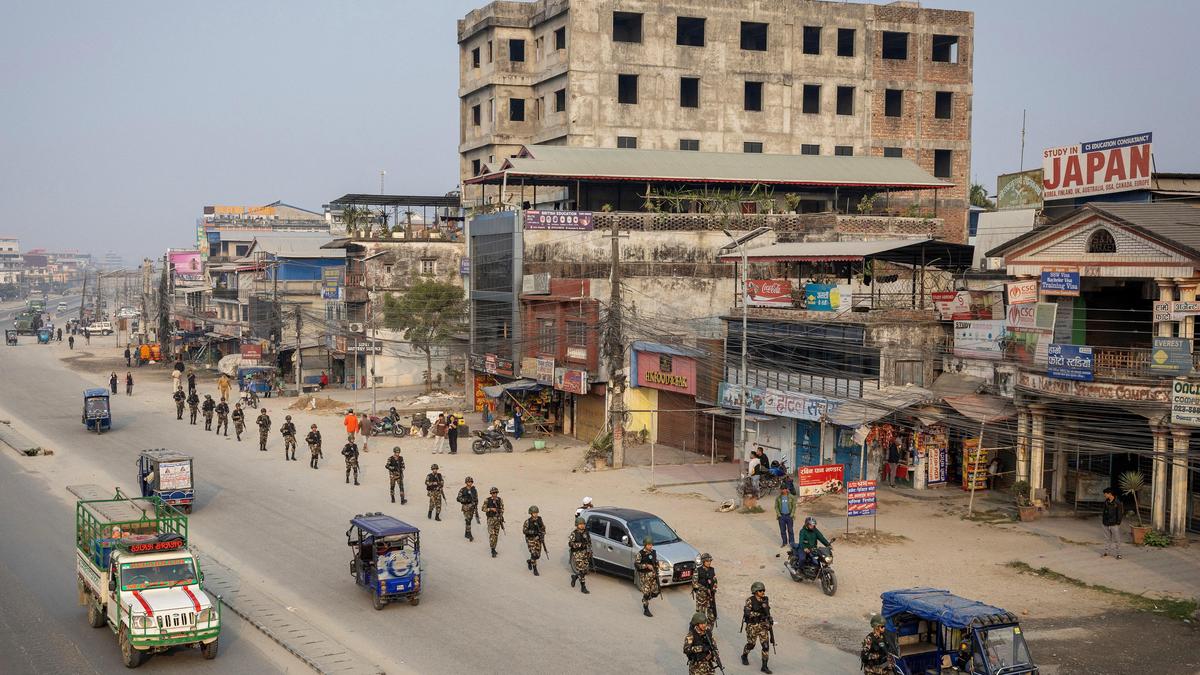
Nepal's voters are heading to the polls on March 5 with a heavy sense of déjà vu and a desperate craving for something—anything—different. If you've followed Himalayan politics for more than a week, you know the drill. A revolving door of aging prime ministers, fragile coalitions that shatter at the first sign of a disagreement, and a disillusioned youth population that’s mostly looking for the quickest way to get a visa to Dubai or Kathmandu’s airport. This isn't just another routine trip to the ballot box. It’s a referendum on whether the federal democratic system, established with such high hopes in 2008, can actually deliver a stable life for its citizens.
The stakes are higher than they look on the surface. We aren't just talking about who sits in the Baluwatar residence. We're talking about a country caught in a geopolitical tug-of-war between India and China, an economy that relies far too much on money sent home by migrant workers, and a growing populist movement that wants to scrap the current system entirely. People are tired of the "musical chairs" played by the Big Three parties. They want jobs, they want the roads fixed, and they want a government that lasts longer than a monsoon season.
The Big Three vs The New Wave
For decades, Nepali politics has been dominated by a trio of veteran leaders. You have Sher Bahadur Deuba of the Nepali Congress, K.P. Sharma Oli of the CPN-UML, and Pushpa Kamal Dahal (Prachanda) of the CPN-Maoist Centre. These men have swapped the Prime Minister's chair so many times it’s hard to keep track. Their alliances change as fast as the weather in the mountains. One day they're "brothers in arms," the next day they're trading insults on national television.
This constant bickering has created a massive opening for the Rastriya Swatantra Party (RSP) and other independent "bell" candidates. In the last local and provincial rounds, we saw a surge of support for younger, tech-savvy professionals who promise to run the country like a business rather than a personal fiefdom. This March 5 election will show if that "RSP wave" was a fluke or a permanent shift in the political crust.
If the traditional parties don't get their act together, they might find themselves sidelined by a generation that doesn't care about the 1990 revolution or the civil war. These voters care about 5G speeds, transparency, and why they have to pay bribes to get a simple driving license. It’s a classic clash between the old guard’s "struggle credentials" and the new guard’s "competence credentials."
Geopolitics and the Great Himalayan Game
Nepal’s location makes every election a regional event. To the south, New Delhi watches closely to ensure a "friendly" government stays in power to protect its security interests and hydropower investments. To the north, Beijing has become increasingly assertive, pushing its Belt and Road Initiative (BRI) projects and trying to unify the various communist factions in Kathmandu.
The March 5 election outcome will dictate how Nepal balances these two giants. K.P. Sharma Oli has historically leaned toward Beijing, using a nationalist "sovereignty" card to gain votes. Meanwhile, the Nepali Congress is often seen as more comfortable dealing with India and the West. For the average voter in a village in Humla or a tea shop in Jhapa, these grand strategies feel distant, yet they impact the price of petrol and the availability of chemical fertilizers.
We’ve seen what happens when Nepal gets caught in the middle. Blockades, stalled infrastructure projects, and diplomatic frostiness. The next government needs the spine to say "no" when necessary and the tact to say "yes" when it benefits the local economy. It’s a tightrope walk that requires more than just political survival skills.
Economic Anxiety is the Real Kingmaker
Let’s be honest. The biggest threat to the status quo isn't a rival party; it’s the economy. Nepal’s inflation has been biting hard. Small businesses are struggling, and the liquidity crisis in the banking sector has made it nearly impossible for entrepreneurs to get loans.
When you look at the numbers, the picture is grim. Remittances—the money sent home by Nepalis working abroad—account for roughly a quarter of the GDP. That’s a massive vulnerability. It means Nepal is essentially exporting its most productive people to build skyscrapers in Qatar and stadiums in Saudi Arabia because there are no opportunities at home.
The March 5 vote is a cry for an industrial policy that actually works. Voters are looking for:
- Concrete plans to modernize agriculture so Nepal stops importing food it can grow itself.
- A massive push in the tourism sector that goes beyond just Everest climbers.
- Serious investment in hydropower that doesn't just export electricity but uses it to power local factories.
If the new parliament spends the first six months fighting over cabinet positions instead of addressing the cost of living, the public’s patience will finally snap. We’re already seeing "pro-monarchy" protests gaining steam in some corners, fueled by the feeling that the republic has failed the common man.
Federalism on the Chopping Block
One of the most controversial topics this election cycle is the cost of federalism. Nepal transitioned to a federal structure to bring "Singha Durbar to the doorsteps" of the people. In theory, it’s great. Local governments have more power. In practice, it’s been expensive and bureaucratic.
Critics argue that having seven provincial governments is a luxury a poor country can't afford. They point to the massive salaries for provincial ministers and the slow pace of development as proof that the system is broken. On the flip side, supporters say federalism is the only way to ensure marginalized groups in the Terai and the hills get a seat at the table.
Expect this debate to dominate the talk shows and town halls. Some parties are even campaigning on the promise to "downsize" the government or scrap the provinces entirely. It’s a risky move that could alienate ethnic minorities, but it resonates with urban voters who see their tax money being swallowed by a bloated administrative machine.
The Youth Vote and the Digital Campaign
This is the first election where TikTok and social media are arguably more influential than traditional rallies. The youth vote is massive, and they aren't listening to the old-school speeches delivered through crackling loudspeakers. They're watching short clips of candidates getting grilled in interviews.
Candidates who can't speak the language of the internet are at a severe disadvantage. We're seeing a shift toward "performance-based" politics. Voters want to see a track record. They're looking at what Balen Shah has done as Mayor of Kathmandu or how Harka Sampang is literally carrying stones to build water systems in Dharan. This "work-over-words" mentality is the biggest challenge the career politicians face.
If you’re a candidate who’s been in power for 30 years and can't point to a single finished project in your district, you’re in trouble. The digital age has made it very easy to fact-check the empty promises of the past.
What Happens After the Polls Close
The real drama usually starts after the results are in. Because of Nepal’s proportional representation system, it’s almost impossible for one party to get a majority. This means we're almost certainly looking at another coalition government.
The danger is that we end up with the same "Frankenstein" coalitions that have plagued the country for years—parties with completely opposite ideologies joining forces just to keep someone else out of power. This leads to policy paralysis. Nothing gets done because every decision requires the approval of five different party bosses.
For Nepal to move forward, the March 5 election needs to produce a clear enough mandate that one bloc can govern with a sense of purpose. Whether that happens depends on whether the "silent majority" actually shows up at the booths or stays home in protest.
Keep a close eye on the fringe parties and the independents. They're the ones who will likely hold the keys to the kingdom. If they can force the major parties to adopt more transparent and accountable policies as a condition for their support, there might be a glimmer of hope.
The best thing you can do right now is look past the flashy posters and the loud rallies. Look at the candidate lists. Check their history. See who’s funding them. In a country where politics is the national sport, the fans are finally demanding a better game. Don't expect a miracle overnight, but don't discount the power of a fed-up voter with a ink-stained thumb. Verify your local polling station details early and make sure your voter ID is updated, as the Election Commission has been strictly enforcing documentation rules this time around.