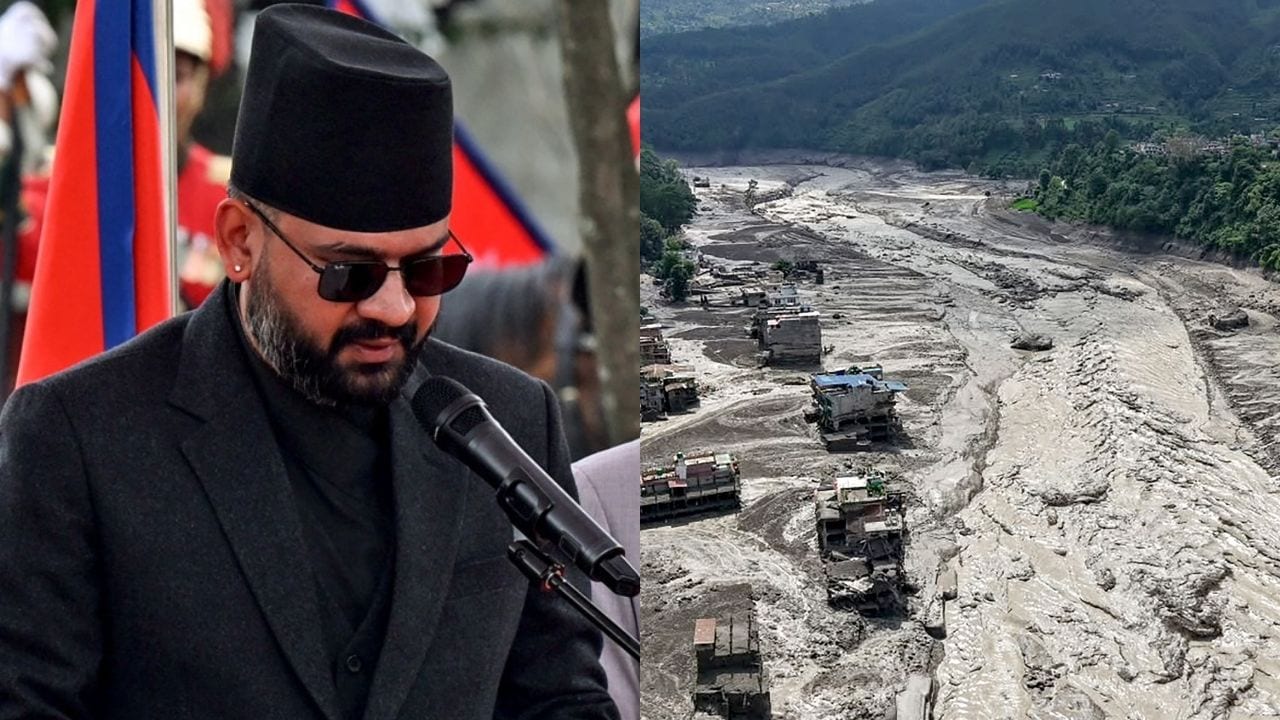
When Prime Minister Balen Shah stepped up to the podium at the 81st United Nations General Assembly in New York, he wasn't just giving another standard diplomatic address. He was carrying the collective grief and anger of a nation fresh off the devastating Bhotekoshi floods. Weeks prior to his UN debut, catastrophic flooding and landslides ripped through Nepal's fragile Himalayan topography, claiming hundreds of lives and washing away vital infrastructure.
Instead of opening with polite diplomatic pleasantries, Shah chose a blunt, striking hook. He framed the disaster not merely as a local weather anomaly, but as an urgent warning for the entire planet. For a young prime minister facing his first major administrative and political crisis back home, this international stage was his baptism by fire.
The Reality Behind the Himalayan Crisis
Most global coverage of climate change focuses on melting ice caps or rising sea levels in coastal mega-cities. Shah forced the international community to look upward at the roof of the world. Nepal contributes a fraction of a percent to global carbon emissions, yet the country pays an exorbitant price in lives, displaced families, and ruined local economies.
The math of international climate finance is broken, and Shah didn't sugarcoat it. Developing mountain states are expected to jump through bureaucratic hoops, filling out endless forms while their valleys wash away.
- The Bureaucratic Maze: Climate funds take years to materialize while local communities face immediate survival threats.
- The Debt Trap: Poor nations are forced to take on heavy international loans to fix destruction they never caused.
- Cross-Border Realities: Glaciers and floodwaters do not check passports at the border; they flow seamlessly from the Himalayas down into India and beyond.
Navigating Domestic Pressure and Regional Diplomacy
Back in Kathmandu, critics were watching closely. Handling a disaster of this magnitude requires more than sharp rhetoric abroad. It requires fixing domestic vulnerabilities, updating spatial planning, and ensuring that early-warning systems actually translate into safer housing and infrastructure on the ground.
Yet, Shah's proposal for a regional Himalayan climate resilience mechanism involving neighboring heavyweights like India and China was a masterstroke. Instead of playing the role of a helpless victim asking for charity, Nepal positioned itself as the necessary coordinator for regional ecological survival. It's a clever pivot that turns geographic vulnerability into diplomatic leverage.
The real test now begins. Speeches at the United Nations buy attention, but concrete institutional reforms build safety. If Shah can bridge the gap between his fiery global declarations and practical, local infrastructure changes, he might just redefine how small nations handle existential threats. The waters have receded from the Bhotekoshi, but the political tide is only just coming in.