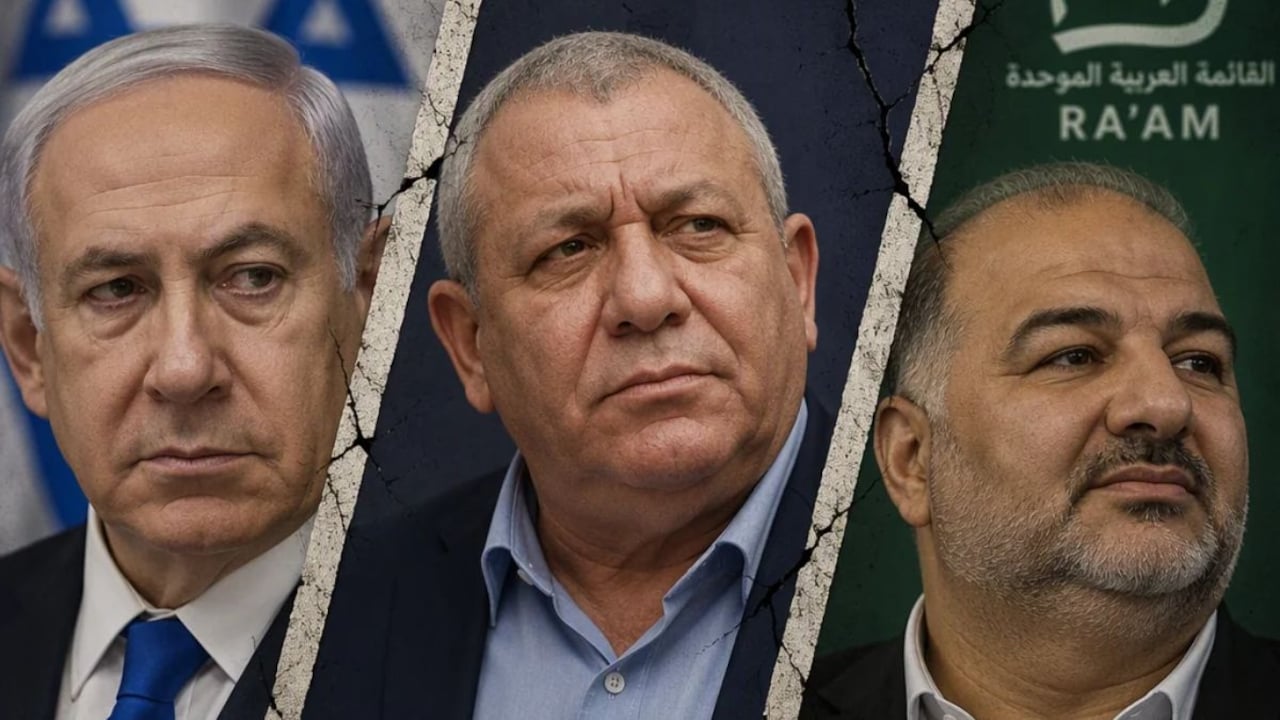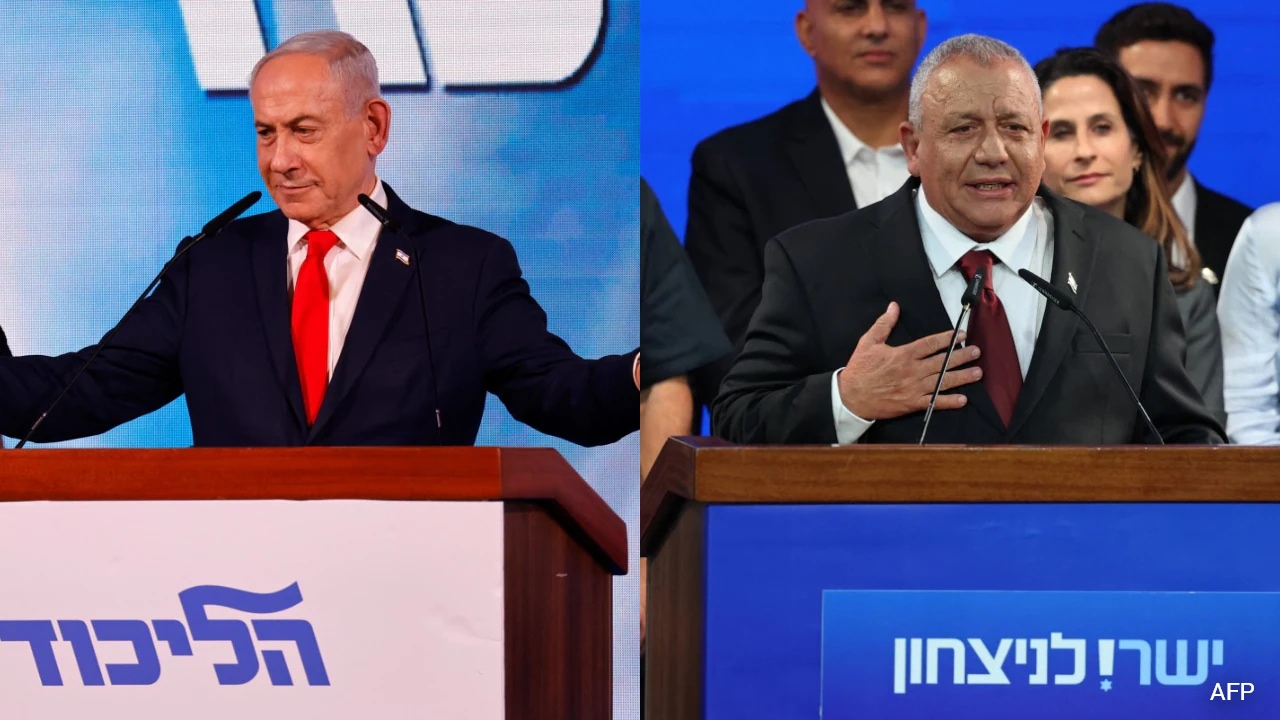
In Israel’s October 27, 2026 parliamentary election, Prime Minister Benjamin Netanyahu’s right-wing and religious bloc finished first with 53 seats in the 120-member Knesset, falling eight seats short of the 61 needed to form a majority government. According to PBS News and The Times of Israel, the Zionist opposition bloc led by former military chief Gadi Eisenkot secured 48 seats, while Arab-led parties won a combined 19 seats. The result leaves neither major bloc with an immediate governing coalition and places the country in a complex political standoff.
The Arithmetic of a Hung Knesset
The final tally reflects a significant shift from the outgoing coalition’s standing while preserving the deep structural divisions that have defined Israeli politics for years. Per The Times of Israel, Netanyahu’s 53-seat bloc sits eight seats shy of a parliamentary majority. While his Likud party remained the single largest faction in the legislature, losses among its religious and nationalist allies eroded the coalition’s governing cushion. CBS News reported that the bloc's overall share of Knesset seats dropped down to 53, stripping the outgoing government of its automatic legislative control.
On the opposing side, the Zionist opposition parties—led by Eisenkot and including factions spanning from the center-right to the secular left—collected 48 seats. That total leaves the anti-Netanyahu Zionist camp 13 seats short of a majority on its own.
The decisive swing factor sits with the Arab-led parties, which captured 19 seats. According to PBS News and The Jerusalem Post, that 19-seat haul represents an all-time record for Arab representation in the Knesset. Together, the 48 seats held by Eisenkot’s opposition bloc and the 19 seats held by Arab parties equal 67 seats—six more than the 61-seat threshold required to unseat Netanyahu. Yet in Israeli coalition politics, raw arithmetic rarely translates directly into a functioning government.
Why 67 Seats Do Not Automatically Make a Government
The core obstacle facing the opposition is political rather than mathematical. As The Jerusalem Post notes, although Arab lawmakers have signaled willingness to back an alternative government at minimal political cost, several key figures inside Eisenkot’s 48-seat bloc campaigned on explicit pledges not to form a coalition reliant on Arab parties.
Those internal red lines have surfaced publicly during post-election negotiations. According to The Times of Israel, former Prime Minister Naftali Bennett—whose B'Yachad party holds 12 seats within the opposition camp—informed Eisenkot that he would not support an Arab-backed minority government at this stage, expressing a preference instead for a broader unity arrangement that includes Netanyahu. That stance drew sharp pushback from B'Yachad’s number-two figure, Yair Lapid, who warned publicly that allowing Netanyahu to remain in office would prolong diplomatic and domestic instability. The friction intensified after Bennett held a private, two-hour meeting with Netanyahu without notifying his opposition partners in advance, fueling speculation over potential realignments even as Bennett’s associates denied plans to defect.
Meanwhile, other components of the opposition have staked out conflicting positions on how to reach 61 seats. Yisrael Beiteinu leader Avigdor Lieberman has maintained his opposition to any government that includes or depends upon Arab parties, arguing that such an arrangement would be unstable and ultimately benefit Netanyahu. Conversely, Democrats leader Yair Golan has urged direct negotiations with Arab factions to assemble a governing majority and replace the outgoing prime minister.
The Ultra-Orthodox Conscription Fault Line
If Eisenkot cannot bridge the gap between his right-wing partners and the Arab-led lists, his only alternative path to 61 seats runs through the ultra-Orthodox (Haredi) parties—United Torah Judaism and Shas—which currently sit inside Netanyahu’s 53-seat bloc.
Here, too, ideological and policy barriers stand in the way. As The Jerusalem Post reports, ultra-Orthodox factions are demanding far-reaching concessions as the price of any partnership, demands that secular and centrist opposition voters strongly oppose. Foremost among those disputes is military conscription for ultra-Orthodox yeshiva students, an issue that strained Netanyahu’s own outgoing coalition and remains a central demand for secular parties like Yisrael Beiteinu and centrist lawmakers in Eisenkot’s camp.
Furthermore, The Times of Israel reports that United Torah Judaism’s Yaakov Asher has declined to enter formal coalition talks with Eisenkot, while Shas has publicly affirmed its loyalty to Netanyahu. Without at least one Haredi party breaking away from Likud, or a shift in stance from right-leaning opposition lawmakers regarding Arab parliamentary support, Eisenkot faces a narrow and treacherous path before his presidential mandate expires.
Netanyahu’s Strategic Advantage in a Stalemate
Under Israel’s Basic Laws, an inconclusive election favors the incumbent prime minister. As PBS News notes, Netanyahu remains in office as caretaker prime minister throughout the coalition-building process until a new government wins a Knesset vote of confidence.
That institutional reality shapes the incentives for every party in Jerusalem:
- Time works for the incumbent: President Isaac Herzog granted Eisenkot the initial 28-day mandate to form a government on November 8, with the option of a 14-day extension. If Eisenkot fails to assemble a majority, the mandate can pass to another lawmaker—potentially Netanyahu—or eventually trigger yet another round of national elections. Throughout any prolonged negotiation or repeat election cycle, Netanyahu retains executive authority.
- Poaching individual defectors: Sitting at 53 seats, Netanyahu needs eight lawmakers to cross the aisle to reach 61. Rather than negotiating an ideological compromise with entire rival blocs, Likud strategists can focus on peeling off individual MKs or smaller factions—such as Bennett’s 12-seat list—by offering senior ministerial portfolios or policy concessions.
- Testing opposition cohesion: As The Times of Israel reported, Eisenkot has weighed bringing a proposed government to a Knesset vote before his mandate expires even without a guaranteed 61-seat majority. Such a move would force reluctant partners like Bennett and Lieberman, as well as the Arab parties, to make an on-the-record choice between backing an imperfect alternative or allowing Netanyahu to remain in power by default.
Post-Election Disputes and Institutional Strain
The coalition deadlock is unfolding against a backdrop of heightened political polarization and disputes over the election process itself. Following the release of final tallies showing his bloc losing its majority, Netanyahu’s Likud party alleged that the election had been "stolen," pointing to high turnout and voting patterns in Arab communities—claims documented by PBS News and CBS News. Election officials certified the final count on October 30, confirming the 53–48–19 distribution of seats across the three main parliamentary groupings.
Outside the Knesset, public pressure has mounted on both sides. According to PBS News, hundreds of demonstrators have rallied to urge Eisenkot and fellow opposition leaders to overcome their reluctance and partner with Arab-led parties—a formula attempted only once before in Israeli history, during the short-lived 2021 coalition.
For now, the 26th Knesset reflects an electorate split into three mutually skeptical camps: a 53-seat right-wing and religious bloc united behind Netanyahu but short of a majority; a 48-seat Zionist opposition united in wanting Netanyahu out but divided over how to govern; and a historic 19-seat Arab bloc holding the numerical balance of power while remaining outside the consensus of Israel’s center-right politicians. Until one of those political vetoes gives way, Israel’s next government remains locked in arithmetic that adds up to 120 seats, yet refuses to form 61.