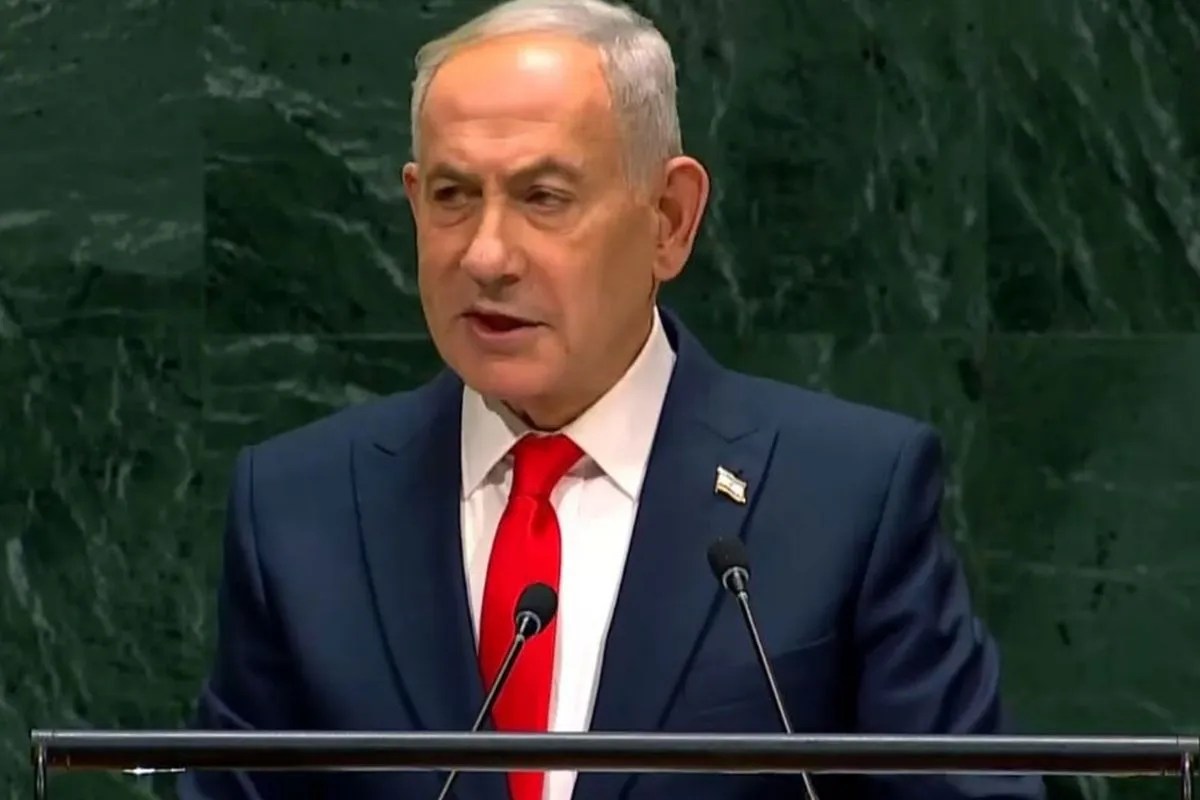
Every time a statesman steps up to the United Nations General Assembly podium with a grand prophecy about the imminent collapse of a rogue regime, the international press corps treats it like gospel. Benjamin Netanyahu takes the floor, warns that the clerical establishment in Tehran is teetering on the brink, and promises that the Iranian populace will soon sweep away their overlords through sheer willpower.
It makes for compelling television. It plays well to diaspora communities and hawks in Western capitals who desperately want a clean, cinematic narrative where good triumphs over evil via a dramatic public speech.
It is also complete geopolitical fantasy.
Relying on rhetorical podium-pounding to forecast regime change in Tehran misunderstands how authoritarian survival machinery actually operates. Dictatorships do not fall because a foreign leader diagnoses their expiration date from a glass-walled chamber in New York. They adapt, they absorb shocks, and they maintain absolute monopolies on violence until structural internal fractures render their security apparatus unprofitable for the elite keeping them afloat.
Let us dismantle the lazy consensus.
The Myth of Instantaneous Uprisings from Freedom Rhetoric
The core narrative peddled by interventionists and external optimists is that the Iranian street is primed for a singular, explosive liberation event. Protests break out over economic misery, mandatory dress codes, or water scarcity, and the assumption in Western media is that this is the final wave.
History tells a different, far more cynical story.
I have spent years tracking macroeconomic decay and internal security budgets across heavily sanctioned states, and the glaring truth is that oppression is an expensive infrastructure, but regimes will starve their own populations to fund it long before the supreme leader runs out of riot gear. The Islamic Revolutionary Guard Corps is not a traditional military defending borders; it is a sprawling conglomerate with its fingers in telecommunications, construction, oil, and banking. When you strike at the economy with sanctions, you do not weaken the regime—you weaken the private middle class, driving them into financial dependency on the state subsidy apparatus.
When people rely on a ration card or a government-linked black market job to feed their children, revolutions stall out. Hunger is a powerful catalyst for a riot, but it is a terrible fuel for a sustained, weaponized revolution against a mechanized state security grid unless there is a coordinated split within the elite military hierarchy. And right now, that split does not exist.
The Geopolitical Theatre of UN Predictions
For decades, political actors have used international summits to project strength and signal intent, treating the General Assembly as an echo chamber for domestic political consumption. When a leader proclaims that the people of a sanctioned nation will soon rise up, they are addressing two audiences: their domestic voters who want to hear that a dangerous adversary is crumbling, and the domestic opposition inside that adversary nation, who are handed a psychological lifeline.
However, offering psychological lifelines without practical infrastructure creates a dangerous vacuum.
During previous uprisings—such as the Green Movement or the widespread demonstrations following the death of Mahsa Amini—external actors offered plenty of verbal solidarity and very little structural backing that mattered on the ground. Slogans do not jam surveillance drones. UN speeches do not bypass state-mandated internet shutdowns. When the regime cut off digital communications and deployed Basij militias with live ammunition, the poetic prophecies delivered in New York evaporated against concrete reality.
Real regime transformation is rarely cinematic. It is grinding, protracted, and usually driven by internal succession crises rather than ideological epiphanies inspired by foreign addresses.
The Succession Vacuum Nobody Wants to Discuss
If you want to understand where Iran is heading, stop looking at podium speeches in Manhattan and start looking at geriatric medical charts in Tehran.
The primary vulnerability of the current establishment is not popular outrage—authoritarian regimes have proven remarkably adept at managing popular outrage through calculated brutality. The real vulnerability is institutional succession. A centralized autocracy built around a supreme religious authority faces an existential bottleneck when that authority ages out.
When the transition point arrives, the elite factions within the security state will not ask what the United Nations thinks. They will calculate who controls the Revolutionary Guard divisions around Tehran, who holds the keys to the central bank vaults, and whose survival is guaranteed by cutting a deal with rival factions. The street will certainly react, but the outcome will be decided by brutal boardroom negotiations behind closed doors among generals and intelligence chiefs, not by the purity of public chants.
By pretending that external speeches can catalyze internal democratization, we ignore the cold calculus of elite self-preservation. Dictatorships rarely die of embarrassment from a scathing UN address. They implode when the cost of maintaining internal terror exceeds the spoils of keeping the tyrant in power. Until that internal economic and military ledger flips, expect more rhetoric, more crackdowns, and a population caught between the cruelty of their rulers and the empty applause of the global stage.



