The Architecture of Symbolic Neutralization
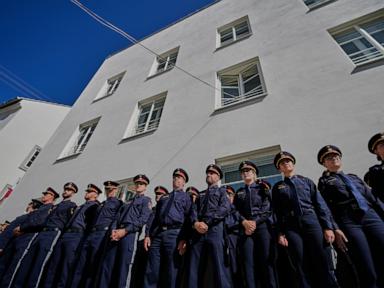
Public infrastructure serves a dual purpose: functional utility and ideological signaling. When a physical site acquires historical association with authoritarian movements, state authorities face a strategic dilemma regarding spatial management. The government of Austria resolved a multi-decade dispute over the birthplace of Adolf Hitler in Braunau am Inn by executing an operational inversion—converting the historic residential structure into a functioning police station and human rights training center.
This intervention relies on structural friction rather than physical erasure. Total demolition risks creating a symbolic void, which extremist groups frequently reframe as political martyrdom or censorship. Preserving the building as a museum or memorial invites secondary risks, transforming the location into a permanent focal point for ideological assembly. Repurposing the site into an active instrument of state law enforcement alters the utility calculation for potential pilgrims by introducing immediate administrative and legal risks to any attempt at symbolic assembly.
The Tripartite Model of Spatial Counter-Incentives
The management of contested historical geography operates across three distinct operational models:
- Physical Erasure: Complete destruction of the structure. While this removes the physical tangible point, it retains the spatial coordinates. Extremist groups continue to target the geographic location, using the absence of the building to reinforce narratives of suppression.
- Passive Recontextualization: Converting the structure into a museum, educational site, or memorial. This model seeks to control the narrative through historical context. However, it preserves the site as an accessible public destination, requiring continuous security spending to manage unauthorized gatherings and counter-protests.
- Operational Inversion: Subverting the location's symbolic capital by embedding active state functions into the architecture. By placing law enforcement operations inside the perimeter, the state shifts the risk-reward ratio for ideological visitors from passive observation to high-probability interdiction.
The Braunau am Inn conversion relies directly on operational inversion. The structural design deliberately avoids prominent commemorative markers that could serve as backdrops for ideological photography, opting instead for architectural neutrality that signals routine administrative authority.
Mechanisms of Behavioral Deterrence
The strategic value of deploying law enforcement personnel to a contested site rests on three behavioral mechanics:
Surveillance Density and Friction
Extremist pilgrimages depend on unmonitored access to generate social capital, typically through photographs, organized rallies, or covert placement of symbols. Placing a permanent police station on the property maximizes surveillance density. Visitors who attempt to gather outside the facility operate directly within the line of sight and operational range of state officers. The implicit presence of federal authority introduces immediate legal friction, raising the cost of ideological performance beyond what most sympathizers will tolerate.
Demilitarization of the Physical Shell
To prevent the police station from becoming a fortressed installation—which would signal state anxiety and grant the site exaggerated importance—the architectural modification emphasizes domestic, non-confrontational aesthetic standards. Stripping the building of historical ornaments while avoiding heavy defensive security features strips the location of ideological weight. The site appears intentionally mundane.
Strategic Functional Incompatibility
A site associated with the emergence of totalitarian ideology is assigned an operational function grounded in constitutional law and human rights education. This operational mismatch imposes an identity conflict on extremist sympathizers. Organizing an action at an active police precinct trained in constitutional standards undermines the symbolic cohesion required for radical recruitment activities.
Operational Risk and Displacement Metrics
While operational inversion effectively neutralizes the primary target location, state strategists must evaluate secondary operational risks inherent to geographic interventions:
- Displacement Effects: Deterring activities at the physical birthplace does not eliminate radical interest; it re-routes ideological focus to secondary sites, such as historical battlefields, regional gravesites, or digital forums. Spatial policy must pair physical security with digital monitoring to track geographic spillover.
- The Counter-Symbol Risk: Subverting a building into a state facility risks making the state institution itself a target for anti-government hostility. Security protocols at the site must account for traditional municipal policing needs alongside specialized anti-extremism threat vectors.
- Local Community Integration: Converting a high-profile historical site into a municipal service building impacts surrounding urban density, traffic flow, and commercial activity. Municipal planning must ensure that local residents are not subjected to perpetual security checkpoints or economic disruption.
Strategic Execution Framework for Contested Assets
States dealing with legacy structures linked to authoritarian history must execute interventions through a precise operational sequence:
- Phase 1: Legal Reclamation: Execute eminent domain or direct acquisition to eliminate private ownership claims that enable monetization or unauthorized access.
- Phase 2: Architectural Neutralization: Strip unique historical features while refusing to erect dramatic replacement architecture that could inadvertently generate new symbolic value.
- Phase 3: Administrative Conversion: Assign everyday, functional state duties to the site, prioritizing agencies that represent law, order, and civil rights.
- Phase 4: Perimeter Management: Maintain discreet, low-profile perimeter monitoring to deter target activities without projecting an image of siege.
The conversion in Braunau am Inn demonstrates that physical geography can be stripped of destructive political utility through calculated administrative deployment. Strategic victory in spatial management is achieved not through theatrical destruction, but through absolute bureaucratic normalization.


