You think you know Miles Davis. You know the raspy voice, the sharp Italian tailoring, the oversized sunglasses, and the back turned aggressively to the audience. He’s the undisputed king of cool, a stone-faced enigma who transformed music five or six times because he simply got bored with perfection.
But a massive visual shake-up at Los Angeles’s Musichead Gallery is completely overturning that frozen image.
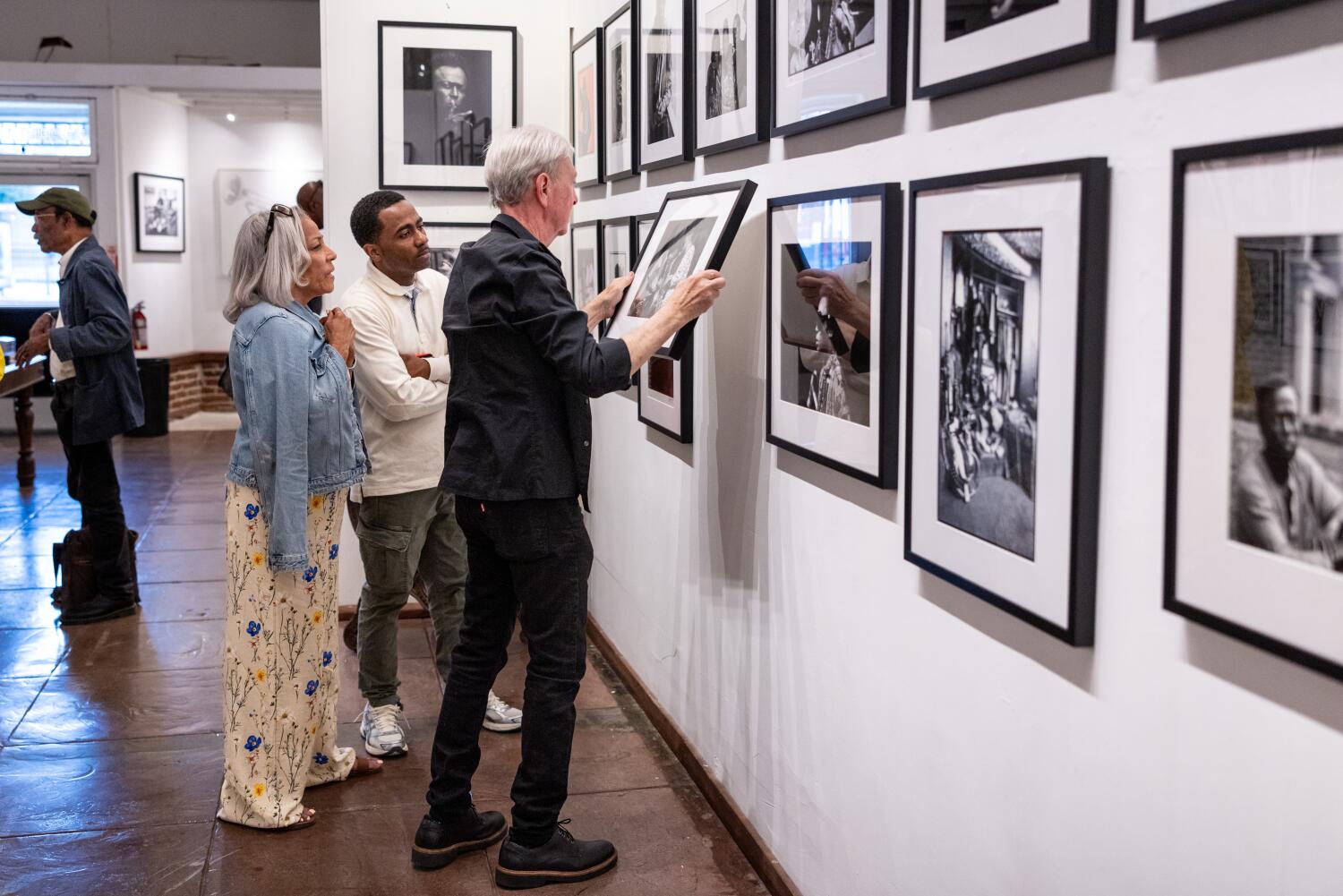
Timed for his centennial milestone, Miles Davis – A Century of Cool gathers rare and previously unreleased photographs spanning more than 60 years. Curated by gallery founder Sam Milgrom, the exhibition doesn't just rehash the standard promotional headshots. It pulls back the curtain so far that even Miles's own family members admit they are seeing sides of him that were completely hidden from history.
This isn't just an art gallery checklist. It’s a jarring, beautiful reminder that our cultural icons are rarely the flat caricatures we make them out to be.
The Myth of the Angry Man
For decades, the standard narrative labeled Miles Davis as brooding, detached, and downright hostile. Critics loved to point out how he’d walk off the stage when he wasn't soloing. They called him arrogant for refusing to bow or introduce his band members.
The photos on display at Musichead smash that myth to pieces.
Instead of a scowling monolith, we see a man laughing mid-rehearsal, leaning in close to share a quiet joke with a producer, and letting his guard down in intimate studio sessions. Photographers like Herman Leonard, Jim Marshall, and William Claxton caught Miles when he wasn't performing "Miles."
What the exhibition proves is that the fierce, unapproachable exterior wasn't just raw attitude. It was an essential shield. Miles grew up and built his career in an aggressively racist America. He was beaten by police outside the Birdland jazz club in 1959 while simply smoking a cigarette during a break. His stoicism was a protective armor, a calculated refusal to smile for a public that wanted Black entertainers to be grateful and compliant.
When you look at the candid backstage moments captured by Baron Wolman or David Gahr, you see the armor slip away. You see a vulnerable craftsman totally absorbed in the work, working with an elite roster of legendary creators like John Coltrane, Herbie Hancock, and Wayne Shorter.
The Visual Evolution of Reinvention
You can’t understand the music without looking at the clothes. Miles used fashion as a sonic manifesto. As his sound shifted from the pristine acoustic arrangements of Birth of the Cool to the plugged-in, chaotic funk of Bitches Brew, his entire aesthetic underwent a radical mutation.
The exhibition maps this transformation across six decades through the lenses of over 20 acclaimed photographers, including Anthony Barboza, Bob Willoughby, Chuck Stewart, and Deborah Feingold.
- The 1950s: Impeccable Brooks Brothers ivy-league suits, slim ties, and clean shaves. The look matched the cool, restraint-heavy modal jazz of Kind of Blue.
- The late 1960s: Silk shirts, leather vests, patterned scarves, and oversized sunglasses. This visual shift perfectly mirrored his transition into electric instruments and rock rhythms.
- The 1980s: Avant-garde shoulder pads, metallic fabrics, and wildly theatrical stage gear that matched his synth-heavy pop experimentations.
Seeing these eras lined up on a single gallery wall reveals a restless mind that refused to stay in one place. He didn't want you to love him for what he did yesterday. He explicitly wanted you to engage with what he was doing right now.
What the Family Missed
The most shocking aspect of this centennial retrospective is the reaction from the Miles Davis Estate. His son, Erin Davis, and his nephew, Vince Wilburn Jr.—who played drums in Miles’s band during the 1980s—have spent their entire lives organizing, archiving, and protecting his legacy. They know the vaults inside out.
Yet, walking through this collection left them stunned.
The exhibit features long-lost negatives and personal rolls from photographers who captured Miles in transit—catching a nap on a tour bus, messing around with a camera himself, or sharing a rare, relaxed moment with friends away from the high-pressure jazz ecosystem. These images reveal a warmth and humanity that rarely made it into the music trade magazines of the era. They show a family man and a deeply sensitive artist who chose to retreat to his Malibu home to paint rather than mingle at industry afterparties.
The Next Steps for Jazz Fans
If you want to experience this historic celebration of the trumpet icon, you don't have to settle for streaming the albums on repeat. The centennial is triggering a massive wave of live events, fresh vinyl pressings, and high-profile performances that you can actively take part in.
First, check out the Miles Davis – A Century of Cool exhibition if you are in the Los Angeles area. It's located right in the heart of the Sunset Strip at Musichead Gallery. Seeing these vintage prints up close provides a completely different perspective than looking at a compressed JPEG on your phone screen.
Second, seek out the massive live tributes happening across the country. Organizations like Jazz at Lincoln Center, SFJAZZ, and major festivals are staging centennial concerts featuring alumni and modern innovators who are rewriting these classic arrangements for the modern stage. Keep an eye out for tour dates from M.E.B. (Miles Electric Band), led by Vince Wilburn Jr., which brings the explosive, electric-era catalog to life with terrifying precision.
Finally, go beyond the standard hits. Don't just spin Kind of Blue for the thousandth time. Dive into the newly reissued live box sets, like the vinyl pressings of The Complete Live at the Plugged Nickel 1965. Force yourself to listen to the difficult, polarizing electric periods like Dark Magus or his late-career reinventions of pop tracks by Michael Jackson and Cyndi Lauper.
Miles Davis spent his entire life running away from the past. The best way to honor his 100th year isn't to build a stagnant monument to his old achievements, but to engage with his music exactly how he intended: fast, loud, unpredictable, and fiercely alive.