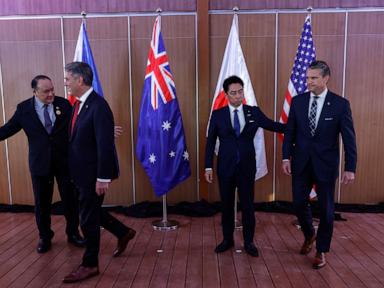
Defense analysts are popping champagne over the announcement that the United States and Japan agreed to establish a joint missile-production facility. The mainstream press is eating it up, framing this bilateral deal as an industrial triumph that will finally plug the glaring holes in allied deterrence across the Indo-Pacific.
They are wrong. This deal is not a masterstroke of allied industrial policy. It is a costly distraction masquerading as deterrence.
If you look past the ribbon-cutting press releases and examine the brutal mechanics of modern aerospace manufacturing, a far uglier truth emerges. Building a bilateral missile production facility in Japan does not solve the Pentagon’s magazine-depth crisis. Instead, it locks two allies into an expensive, slow-moving manufacturing bottleneck while handing regional adversaries a stationary, high-value target on a silver platter.
The Myth of Instant Arsenal Expansion
The lazy consensus goes like this: America’s defense industrial base is tapped out, Japan has world-class precision manufacturing, therefore combining forces immediately multiplies missile output.
Anyone who has actually walked a tier-two defense supply chain floor knows that logic is pure fantasy.
Missile production is not limited by floor space or final assembly lines. You can build a gleaming new factory in Nagoya or Kyushu tomorrow, and it will sit entirely idle without the upstream chemical and metallurgical inputs that actually make a munition fly. The real chokepoints in modern tactical missiles—specifically systems like the Patriot PAC-3 MSE or the AIM-120 AMRAAM—are solid rocket motors, specialized seekers, and military-grade microelectronics.
In the United States, solid rocket motor production is essentially a duopoly controlled by Aerojet Rocketdyne (now part of L3Harris) and Northrop Grumman. Both companies have spent years struggling to scale propellant mixing and casting capacities. Ammonium perchlorate, the primary oxidizer used in composite solid propellants, faces severe global supply constraints.
Establishing an assembly facility in Japan does nothing to create new chemical precursor plants. Unless Tokyo and Washington are quietly planning to build hazardous propellant-mixing infrastructure from scratch—a regulatory and environmental nightmare in densely populated Japan—this new facility will simply compete for the exact same starved supply of American sub-components. You are not expanding the pie. You are just adding another fork to the table.
Co-Production Versus Licensed Assembly
To understand why this pact fails the stress test, you have to separate two terms that journalists constantly confuse: licensed assembly and true co-production.
- Licensed Assembly means shipping knockdown kits—pre-manufactured seekers, warheads, and rocket motors—from American factories to a Japanese facility where technicians bolt them together and run diagnostic checks.
- True Co-Production means transferring the intellectual property, metallurgy specs, and source code so the partner nation can fabricate every sub-component domestically from raw materials.
Washington rarely grants true co-production on top-tier guidance systems. Between International Traffic in Arms Regulations (ITAR) and deep-seated Pentagon paranoia over cyber espionage, the United States guards seeker algorithms and electronic counter-countermeasure (ECCM) hardware with religious zeal.
I have watched joint defense programs burn through hundreds of millions of dollars over three years just arguing over compliance paperwork before a single wrench was turned. When Mitsubishi Heavy Industries previously built Patriot interceptors under license, the arrangement relied heavily on American-supplied critical parts. When the U.S. decided to buy back Japanese-made PAC-3s to backfill stocks sent to Ukraine, the bottleneck was immediately obvious: Japan could not scale its output because it was still waiting on seeker heads shipped from the United States.
If this new facility operates on the same restrictive licensing model, it is little more than an overseas packaging plant. It creates the illusion of distributed resilience while maintaining a single point of failure back in Camden, Arkansas, or Tucson, Arizona.
The Geography Problem Nobody Mentions
Even if Washington miraculously waives every ITAR restriction and Japan achieves full domestic fabrication, basic geography turns this facility into a massive strategic liability.
Look at a map of the Western Pacific. Japan sits well inside the First Island Chain. Every square inch of the Japanese archipelago is within the range envelope of the People’s Liberation Army Rocket Force (PLARF). Conventional ballistic missiles like the DF-16 and DF-21, alongside long-range land-attack cruise missiles, can saturate Japanese industrial hubs within minutes of a conflict erupting.
Modern warfare is a ruthless math problem of magazine depth versus attrition rates. During high-intensity simulations run by think tanks like the Center for Strategic and International Studies (CSIS), U.S. and allied forces exhaust their entire inventory of long-range precision munitions within the first seven to ten days of a Taiwan Strait contingency.
Placing a premier missile-manufacturing plant inside the adversary's primary engagement zone violates the first rule of wartime industrial survival. During World War II, the United States won the production war because Detroit, Wichita, and Seattle were thousands of miles beyond the reach of German and Japanese bombers. Today, building a fixed missile factory in Japan is the strategic equivalent of building a shipyard inside Pearl Harbor in November 1941.
Imagine a scenario where a regional crisis escalates into kinetic conflict. On day one, the PLA launches a coordinated salvo of conventional missiles targeting airfields, radar sites, and critical defense infrastructure across Japan. A centralized missile facility becomes target number one. Hardening an entire aerospace manufacturing complex against bunker-busting warheads is prohibitively expensive, and dispersal is nearly impossible given Japan's mountainous terrain and dense urban footprint.
You cannot surge production from a crater.
Answering the Wrong Questions
When news of the US-Japan missile pact broke, public discussion immediately fixated on the wrong metrics. Let’s dismantle the dominant questions surrounding this deal.
Will this deal lower the unit cost of missiles?
No. It will almost certainly increase them. Defense manufacturing relies heavily on economies of scale. Splitting a production run of 500 missiles per year into two facilities—300 in the U.S. and 200 in Japan—doubles the fixed overhead, duplicates specialized tooling, and complicates quality assurance. You pay twice for the same capital equipment to get the exact same number of rounds.
Does this strengthen the US-Japan alliance?
Politically, yes. Industrially, it introduces massive friction. Every time a shipment of sub-components is delayed by a strike in the U.S. or a typhoon in Japan, finger-pointing begins between defense ministries. True alliance strength comes from operational interoperability, not forced industrial entanglement that slows down delivery schedules.
Is Japan’s defense industry ready for this?
Japan possesses extraordinary engineering talent, particularly in materials science, robotics, and precision machining. Companies like Kawasaki Heavy Industries, IHI, and Mitsubishi Electric are world-class. However, Japan’s defense sector has spent decades operating as a boutique, low-volume artisanal industry due to postwar pacifist constraints and historical export bans. Shifting from crafting ten bespoke units a year to mass-producing thousands of expendable munitions requires a total cultural and financial overhaul that cannot be legislated overnight.
The Real Cost of Bureaucratic Theater
Why do politicians push these deals if the industrial math doesn't work? Because announcing a new factory generates immediate headlines, satisfies diplomatic pressure for "burden sharing," and looks decisive on television.
It is bureaucratic theater.
While defense ministers pose for photos, the actual structural rot in Western munitions manufacturing goes unaddressed. Look at the procurement process itself. Defense contractors refuse to invest private capital into expanding rocket motor capacity or building automated assembly lines without multi-year, guaranteed purchase commitments from governments.
Instead of offering stable ten-year block-buy contracts, Washington and Tokyo rely on erratic annual budget cycles. A contractor will not spend $500 million building a new propellant plant if Congress might slash the order volume two years later. Establishing a joint facility in Japan does not fix broken procurement incentives; it just exports them across the Pacific.
The Contrarian Downside: Why Isolation Fails Too
To be completely candid, rejecting bilateral production entirely carries its own severe risks. If the United States insists on keeping 100 percent of high-end missile manufacturing within the continental U.S., it faces two brutal realities:
- Trans-Pacific Logistics: In a shooting war, shipping heavy munitions across 6,000 miles of open ocean is slow, expensive, and vulnerable to submarine interdiction. Having munitions already sitting on Japanese soil saves precious weeks of sealift.
- Allied Political Will: Japan is doubling its defense budget and rewriting its security posture. If Washington treats Tokyo merely as a cash cow that buys off-the-shelf American hardware without gaining domestic industrial participation, Japanese political support for the alliance will erode.
The flaw is not the concept of allied industrial cooperation. The flaw is executing it through a centralized, vulnerable, high-cost assembly facility focused on legacy missile architectures.
What Washington and Tokyo Should Actually Build
If the Pentagon and Japan’s Ministry of Defense actually want to terrify adversaries and survive a high-end conflict, they need to tear up the current blueprint and pivot to three ruthless priorities.
1. Decentralize into Additive and Mobile Manufacturing
Stop building massive, fixed targets. Invest joint R&D funds into containerized, mobile manufacturing nodes capable of 3D-printing airframes, composite casings, and non-energetic components using commercial off-the-shelf (COTS) industrial equipment. If an adversary destroys one workshop, ten commercial machine shops in Osaka or Yokohama should be able to download the CAD files and start milling parts the next morning.
2. Design "Attritable" Munitions for Mass Production
You cannot win a war of attrition with $4 million interceptors. The joint US-Japan venture should not be building gold-plated legacy missiles that require clean-room assembly and rare-earth exotic metals. They should be co-developing stripped-down, modular, low-cost cruise missiles and one-way attack drones that use automotive-grade electronics and commercial turbojet engines. Japan dominates global automotive supply chains. Tap Toyota and Denso’s tier-one suppliers to build 10,000 cheap, good-enough missiles a year rather than begging aerospace giants for 300 perfectionist ones.
3. Stockpile Raw Precursors, Not Just Finished Rounds
Finished missiles have shelf lives, require climate-controlled bunkers, and take up massive space. Instead of rushing to bolt parts together, Washington and Tokyo should jointly fund massive strategic reserves of raw chemical precursors, specialty alloys, and radiation-hardened chips stored in deep, hardened underground caverns across rural Japan and the continental United States.
Stop Confusing Ribbon-Cuttings With Deterrence
Adversaries do not calculate deterrence based on press releases or bilateral memorandums of understanding. They calculate it based on cold, hard industrial throughput and survivability.
A single joint missile-production facility sitting within range of thousands of enemy ballistic missiles, starved of American rocket motors, and bogged down by export-control lawyers is not a shield. It is an expensive monument to wishful thinking.
Until Washington and Tokyo stop building boutique factories for yesterday’s weapons and start mobilizing their commercial manufacturing bases for mass, attritable warfare, every celebratory headline about this pact is just noise.