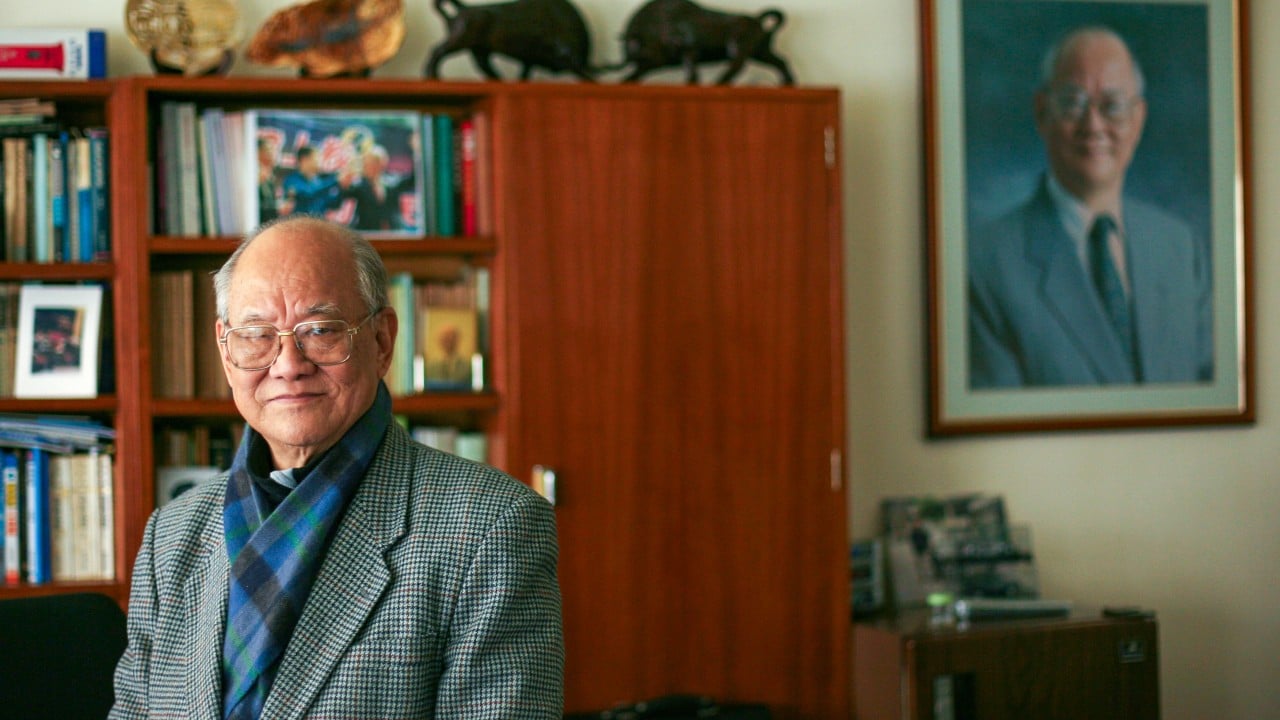
Ng Hon-mun passed away on October 18, 2026, at the age of 100, closing a century-long life that bridged patriotic schooling, Hong Kong politics, and Beijing's National People's Congress. Most obituaries focus on the headlines—the Grand Bauhinia Medal, the decades at Pui Kiu Middle School, and the tributes from city leaders. That's fine as a snapshot, yet it misses what actually made him an unusual figure.
Hon-mun wasn't a distant bureaucrat reading off talking points. He was a chemistry teacher by training who spent decades inside one school, helped shape political figures like Jasper Tsang Yok-sing, and occasionally struck notes that didn't fit neat partisan boxes. Understanding Ng Hon-mun means looking past polite memorials and asking how a traditional educator navigated one of the most complicated political shifts in modern Chinese history.
What His Career Actually Looked Like
Born in Hweilai, Guangdong, in April 1926, Ng Hon-mun lived through eras that tore apart plenty of lesser institutions. In Hong Kong, his professional anchor was Pui Kiu Middle School, where he started out teaching chemistry and served as principal from 1958 to 1985.
Think about that span. Twenty-seven years at the helm of a school isn't a brief stop on a resume. It's a generation of teenagers passing through classrooms, assemblies, and exam seasons while the world outside shifted constantly. According to reporting on his life, his work at Pui Kiu was the only paid job he ever held—which, honestly, says something about commitment in a city where people often chase sideways moves and bigger titles.
He also had an eye for talent and loyalty. Jasper Tsang Yok-sing got his start at Pui Kiu teaching English and maths under Ng's leadership, with Ng acting as a mentor. Even smaller details show the texture of school life back then: accounts of Pui Kiu note that a young teacher like Tsang could end up earning more than the principal himself. That kind of detail feels real because school budgets, pay scales, and quiet sacrifices rarely make glossy official biographies.
Outside the school gates, Ng moved into national politics early. He became one of the first Hong Kong deputies appointed to the National People's Congress in 1975, serving across multiple terms through 2008—first representing Guangdong and later Hong Kong. Thirty-three years as an NPC deputy puts you in the room for massive economic and constitutional changes.
Why His Politics Were Never Just Rubber-Stamp Stuff
If you assume every longtime pro-Beijing figure spoke in a single monotone for half a century, Ng's record complicates that picture. Reporting after his death noted that he was a long-serving deputy who at one point even called for reform of the National People's Congress.
That matters. Calling for adjustments or improvements from inside an institution is very different from shouting from outside it, and observers often overlook how much friction happens behind closed doors when longtime insiders push for tweaks. Later in life, as a columnist for Ming Pao and a vocal commentator on Hong Kong affairs, he didn't shy away from sharp judgments either.
When the Occupy Central movement unfolded, Ng was blunt, warning that moves confronting the central government would bring a "total disaster" and make Hong Kong ungovernable. Later still, in 2016 at age 91, he initially backed Chief Executive CY Leung's bid for another term before pulling back to say he needed to gauge both public sentiment and Beijing's direction.
People who admired him saw steady conviction and national loyalty. Critics viewed his warnings and political stance as rigid or out of step with pro-democracy demands. Both reactions tell you he wasn't background wallpaper. He had weight, and people paid attention when he spoke.
Common Misconceptions About Patriotic Educators in Hong Kong
Outside observers often flatten Hong Kong's school landscape into two cartoons: either purely British-colonial or purely ideological. Reality on the ground was much messier.
Here are a few things people regularly get wrong when reading about figures like Ng:
- They didn't all live in an ideological bubble. Teaching science, math, and languages at a secondary school still meant preparing students for real exams, real careers, and everyday life in a bustling port city.
- Longevity didn't mean static views. Someone active from the 1950s through the 2010s watched China's economy transform, Hong Kong's handover arrive in 1997, and city politics polarize dramatically. Nobody stays frozen in amber across seventy years.
- Public honors don't tell the whole story. Receiving the Grand Bauhinia Medal in 1998 or having top leaders head a funeral committee signals high official standing, yet his day-to-day influence built up slowly through classrooms, mentorship, and columns.
I've noticed in coverage of centenarian public figures that writers tend to round off sharp edges so everything reads like a tidy monument. That makes the story smoother, sure, but it also makes it less believable. A century is a long time. Real lives have contradictions, second thoughts, and moments where you have to read the room.
Lessons From a Century in Education and Public Life
What can anyone—teacher, manager, writer, or citizen—actually take away from a career like Ng Hon-mun's? You don't have to share his politics to notice what stuck.
First, staying put compounds. Jumping roles every eighteen months might bump your paycheck fast, yet staying in one place for decades lets you see the long-term results of how you treat young people and colleagues.
Second, mentorship outlasts policy memos. Laws get amended and headlines fade, while the students you teach and the younger teachers you back carry habits forward for years.
Third, pay attention to shifts in mood. Even at 91, Ng talked about watching both public opinion and political signals rather than pretending nothing around him was changing. Ignoring your environment is a fast way to lose relevance, no matter how senior you are.
If you want to explore this history further rather than stopping at a brief obituary, start with primary and reputable archives. Look up historical coverage of Pui Kiu Middle School's post-war development, read Ming Pao archives or commentary from the 1990s through the 2010s to see how Hong Kong public debate shifted, and compare official statements with independent historical accounts of Hong Kong's education sector and NPC representation. Checking multiple angles gives you a far truer picture than any single headline ever could.