The frost does not knock. It arrives in the quiet hours between sunset and sleep, turning the grass stiff and white, breathing its thin vapor against the windowpanes.
If you stand by the glass on the last night of October, wrapped in wool, you can feel the air changing. It smells of damp earth, woodsmoke, and something older—something that has nothing to do with candy aisles or plastic pumpkins.
We think we know what Halloween is. We buy the orange bags. We carve the faces. We herd our children down suburban sidewalks where porch lights burn bright against the encroaching dark. But beneath the consumer gloss, beneath the ghost sheets and the manufactured fright, lies an echo of a time when the dark was not a backdrop. It was a presence.
Imagine standing on a muddy hillside in the Celtic lands two thousand years ago. No electricity. No streetlights. Just the fierce, popping crackle of a massive communal bonfire and the terrifying certainty that the boundary between the living and the dead has worn entirely away.
This is the story of how we stopped trembling at the dark and learned to laugh at it instead.
The Night the Veil Tore
To understand why we dress up as monsters, we have to travel back to Samhain.
Pronounced SAH-win, this ancient Celtic festival marked the end of the harvest and the beginning of the dark, freezing winter—a season historically associated with human death. The Celts did not view time as a straight line, but as a circle. They believed that on the night of October 31st, the veil separating our world from the spirit realm grew dangerously thin.
Consider what that meant to a farmer in the Iron Age. The crops were in. The livestock had been culled or brought in from the pastures. The world outside the circle of firelight was plunging into months of cold, silence, and scarcity. It was a terrifying transition.
In this liminal space, the Aos Sí—the spirits or fairies—along with the souls of the dead, roamed the earth. They were not benevolent ghosts. They were capricious, powerful, and unpredictable. If you stepped outside your door without protection, you were entirely at their mercy.
So, what did our ancestors do? They fought back with the only tools they had: fire and disguise.
They extinguished the hearth fires in their homes. Then, gathering around the great sacred bonfires lit by druid priests, they used embers to reignite their domestic hearths, creating a protective thermal link that would keep their families safe through the coming months of darkness. To confuse the wandering spirits who might wish them harm, they practiced mumming and guising. They blackened their faces with soot or wore animal skins and crude masks.
If a spirit looked at you and saw a beast, or saw nothing at all, it would pass you by.
You were hiding in plain sight. That is the true genesis of the Halloween costume. It was never about fun. It was about survival.
The Slow Metamorphosis
Centuries do not pass overnight. They grind forward, wearing down traditions like water over river stones, reshaping them to fit new empires and new faiths.
When the Roman legions marched across Celtic territories, they brought their own festivals, blending them with Samhain. Later, as Christianity swept through Europe, the Church faced a formidable challenge. It could not easily erase a festival so deeply rooted in the rhythm of the seasons and the fear of mortality.
So, it did what history always does: it baptized the ancient rites.
In the eighth century, Pope Gregory III designated November 1st as All Saints' Day—a time to honor all saints and martyrs. The evening before—the sacred night of Samhain—became known as All Hallows' Eve.
Yet, the old ghosts refused to leave. Beneath the new theological vocabulary, the ancient anxieties remained alive in the mud and the hearthsmoke. People still built bonfires. They still disguised themselves to trick the wandering dead.
By the Middle Ages, a new custom had taken root across Britain and Ireland: souling.
Picture a cold, damp November evening in an English village. A poor villager, shivering in patched wool, knocks on the door of a wealthier neighbor. They are not asking for candy. They are asking for soul cakes—small, spiced pastries marked with a cross. In exchange, the beggar promises to pray for the homeowner’s deceased relatives, helping to ease their souls out of purgatory.
It was a brilliant economic and spiritual transaction. It fed the hungry, comforted the grieving, and bound the community together against the cold.
Alongside souling came creeping and guising among the young. Boys and young men went from door to door, performing songs, poems, or short plays in exchange for food, ale, or small coins. If you welcomed them, you received a blessing. If you turned them away, bad luck—or a mischievous prank—was sure to follow.
The threat was implicit. The boundaries of social order loosened just enough for the powerless to demand a moment of generosity from the powerful.
Crossing the Ocean in the Hold of a Ship
Traditions are remarkably durable, but they require human carriers. They need lungs to breathe them and feet to walk them across oceans.
In the mid-nineteenth century, a fungus swept across the fields of Ireland, rotting the potato crop beneath the earth and triggering the Great Famine. More than a million people died. Another million packed their meager belongings into wooden crates and boarded rotting timber ships bound for North America.
They brought very little with them. No furniture. No heirlooms. No gold.
They brought their songs, their exhaustion, their grief, and their ghosts.
When Irish immigrants stepped ashore in Boston, New York, and Montreal, they carried Halloween—or what was left of it—hidden in their memories. At first, the holiday remained largely confined to Irish and Scottish immigrant enclaves. To mainstream Victorian America, with its strict moral codes and intense focus on industrial progress, the rowdy pranks and nocturnal carousing of Halloween looked dangerously close to vandalism.
In many American towns in the late nineteenth century, Halloween was less about dressing up and more about tearing down. Gateposts were unhinged. Outhouses were tipped over. Farmers woke up to find their cows wandering down Main Street.
It was a pressure valve. A socially sanctioned night of minor chaos where the young and the marginalized could push back against the rigid architecture of polite society.
Yet, American culture has a unique alchemy. It takes immigrant traditions, strips away their jagged edges, commercializes them, and sells them back to the masses as wholesome family entertainment.
By the early twentieth century, community leaders and educators stepped in to rescue Halloween from the pranksters. They promoted indoor parties, costume parades, trick-or-treating alternatives, and bobbing for apples. The goal was simple: domesticate the monster. Take the terrifying spirits of Samhain, give them big cartoon eyes, print them on cardboard cutouts, and hand them bags of miniature chocolate bars.
We commercialized the ancient terror so we wouldn't have to feel it anymore.
Why We Still Walk the Dark
And yet, something lingers.
If Halloween were merely about buying sugary treats or wearing mass-produced superhero costumes, it would have withered away long ago under the weight of its own superficiality. But it hasn't. It is expanding. Adults spend billions on elaborate cinematic special effects makeup. Theme parks turn their properties into elaborate mazes of simulated terror.
Why do we willingly step into the dark? Why do we pay good money to be startled, to feel our hearts slam against our ribs, to look upon simulated gore and grinning skulls?
Because we live in a world that tries desperately to sanitize death, pain, and uncertainty. We hide our elderly in nursing homes. We wrap our grief in clinical language. We pretend, through the bright hum of our screens and the relentless pursuit of optimization, that we have conquered the night.
We haven't.
The dark is still out there. The fear of losing what we love, of aging, of the inevitable winter that comes for every living thing—it waits just beyond the circle of our LED porch lights.
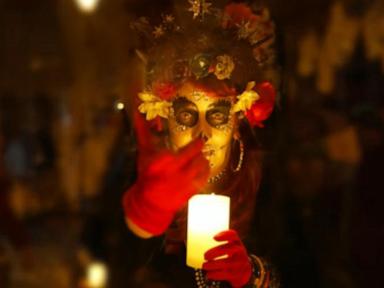
When we put on a mask, we are doing what our ancestors did on those cold Celtic hillsides. We are acknowledging the terrifying fragility of our existence. We are looking the monster in the eye, and instead of running, we are dressing up as it. We are stepping out of our mundane identities, slipping into the skin of the other, and walking down the street together in the freezing air.
The candy is just an excuse.
The real magic happens when the sun goes down, the streetlights flicker on, and for one strange, beautiful night of the year, we collectively agree that the dead are walking, the spirits are near, and we are all in this together, laughing into the dark.