The metal does not just bend when a missile strikes. It liquefies. It turns into a spray of white-hot shrapnel that cuts through steel, wiring, and human flesh with the exact same indifference.
For the twenty-two men aboard the merchant vessel, the day had been defined by the monotonous, comforting rhythms of life at sea. The steady thrum of the diesel engine vibrating through the soles of their shoes. The smell of over-brewed tea and diesel fuel. The vast, flat expanse of the Arabian Sea stretching out toward a horizon that seemed entirely devoid of conflict. They were mariners, not soldiers. Their cargo was commercial. Their destination was routine.
Then, the sky tore open.
The explosion did not sound like gunfire. It sounded like the world cracking in half. Within seconds, the illusion of isolation shattered. The engine room, the heart of the ship, became a furnace of suffocating black smoke and rising water.
This is the reality of modern maritime warfare, a chaotic theater where merchant sailors find themselves trapped in the crossfire of geopolitical chess games played by superpowers thousands of miles away. When a US missile strikes a vessel—whether by tragic miscalculation, intelligence failure, or the chaotic fog of a spreading regional conflict—the aftermath is not a clean press release. It is a desperate, dark scramble for survival.
The Anatomy of a Panic
Consider the position of the ship's captain. Let us call him Rajesh, a composite of the seasoned merchant officers who navigate these perilous trade lanes every day.
Rajesh is forty-six. He has spent more than half his life on the water. He knows how to handle a rogue wave, how to manage a stubborn crew, and how to balance a manifest. He is not trained to manage the structural integrity of a hull breached by military-grade ordnance.
As the smoke pours into the bridge, the alarms are not ringing; they are screaming. The main power dies. The lights flicker out, replaced by the eerie, rhythmic pulse of red emergency beacons. The ship instantly begins to list to port. Five degrees. Eight degrees. At ten degrees, walking across the deck becomes a grueling uphill climb.
In the darkness, the immediate instinct of the human mind is to deny the severity of the situation. It was a boiler explosion. It was a mechanical failure. But the smell of burning explosives is distinct. It tastes like sulfur and copper on the back of the tongue.
Rajesh reaches for the radio. The VHF channel, usually a dull chatter of weather reports and port coordinates, becomes a lifeline. His voice, captured in the frantic logs of regional coast guards, carries the raw, unedited terror of a man watching the ocean claim his reality.
"Help. Ship is sinking."
The phrase is devastating in its simplicity. It contains no maritime jargon, no protocol codes. It is a primal transmission.
The Geopolitical Crossfire
How does an international cargo ship with an all-Indian crew find itself in the crosshairs of American military might? To understand the tragedy, one must look at the choking points of global commerce.
The waters off the coast of Yemen, the Gulf of Aden, and the wider Arabian Sea have transformed into a shooting gallery. Drone strikes, anti-ship ballistic missiles, and retaliatory naval bombardments are the new normal. The United States navy, operating under complex rules of engagement to protect international shipping lanes or deter regional militias, moves through these waters like a hyper-vigilant giant.
But hyper-vigilance breeds catastrophic error.
A radar blip in a midnight storm can look remarkably similar whether it represents a hostile asset or a civilian freighter. A transponder failure—common among older merchant vessels—can transform a harmless cargo carrier into a perceived threat in the minds of analysts sitting in high-tech command centers in Washington or aboard a billion-dollar destroyer.
When the order is given to fire, the reaction time is measured in seconds. The missile travels at supersonic speeds. For the crew on the receiving end, there is no warning siren. There is only the impact.
The irony is bitter. These seafarers hail from seafaring communities in Kerala, Tamil Nadu, and Maharashtra. They take these high-risk jobs to send money home, to build houses, to pay for marriages and educations. They have no stake in the ideological wars of Western democracies or Middle Eastern factions. Yet, they pay the ultimate price.
Minutes Inside a Dying Hull
Below deck, the situation escalates from crisis to catastrophe.
Imagine being trapped in the crew quarters when the blast occurs. The lights go out instantly. The air fills with toxic plastic smoke from burning insulation. You cannot see your hand in front of your face. You have to find the escape hatch by memory and touch alone, feeling your way along bulkhead walls that are rapidly growing scalding hot.
Water is a relentless enemy. It does not rush in elegantly. It roars. It smashes through shattered bulkheads, bringing with it the debris of the ruined engine room—shattered glass, heavy tools turned into projectiles, and slick, blinding fuel oil.
The crew members, speaking a frantic mix of Hindi and English, try to organize a damage control party. But how do you plug a hole the size of a moving van? The ship's pumps are useless without electrical power. The water level rises to the knees, then the waist.
The psychological toll of this moment is unimaginable. The human brain is hardwired to seek solid ground when threatened. On a sinking ship, there is no solid ground. The very structure meant to protect you from the abyss is turning into your coffin.
- The First Phase: Shock. The mind refuses to process the violence of the explosion.
- The Second Phase: Hyper-awareness. Every sound—the groaning of tortured metal, the rushing of water—is magnified.
- The Third Phase: The survival pivot. The realization that no one is coming to save you in the next five minutes. You must get to the lifeboats, or you will drown in the dark.
The Silence of the Aftermath
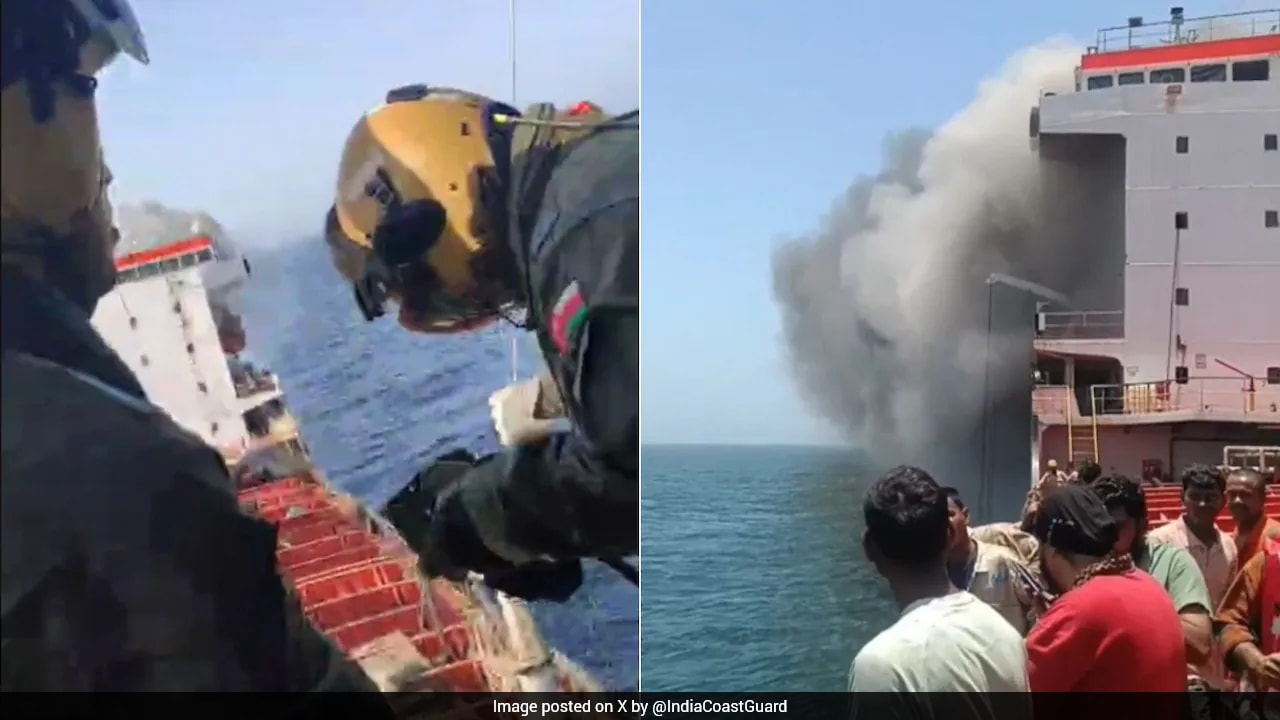
The distress call cuts through the static of the international maritime monitoring stations. Indian naval vessels, operating as part of regional anti-piracy and security escorts, deploy immediately. Helicopter crews scramble.
But the ocean is vast, and a wounded ship moves fast toward its end.
By the time the rescue assets arrive on the horizon, the merchant vessel is a ghost of itself. It rides incredibly low in the water, its stern already swallowed by the dark waves. The crew has abandoned ship, huddled together in orange life rafts that look like plastic toys against the massive swells of the Arabian Sea.
They watch from the water as their home for the past six months slides beneath the surface. With it go their belongings, their passports, their hard-earned wages, and their peace of mind.
They are rescued. They are wrapped in gray military blankets, given hot coffee, and cataloged by bureaucrats. The headlines the next day will focus on the geopolitical fallout. Analysts will debate the strategic necessity of the strike, the escalation of regional tensions, and the impact on global oil prices. The stock markets will twitch.
But in a small village outside of Mumbai, a phone rings in the dead of night. A wife answers. A mother weeps with relief because her son's name is on the manifest of the survivors, not the dead.
The true cost of modern conflict is not measured in the price of a missile or the tonnage of a lost vessel. It is measured in the trembling hands of a sailor who survived the night, who can still taste the salt and fuel, and who knows that the ocean he loved will forever sound like an explosion.