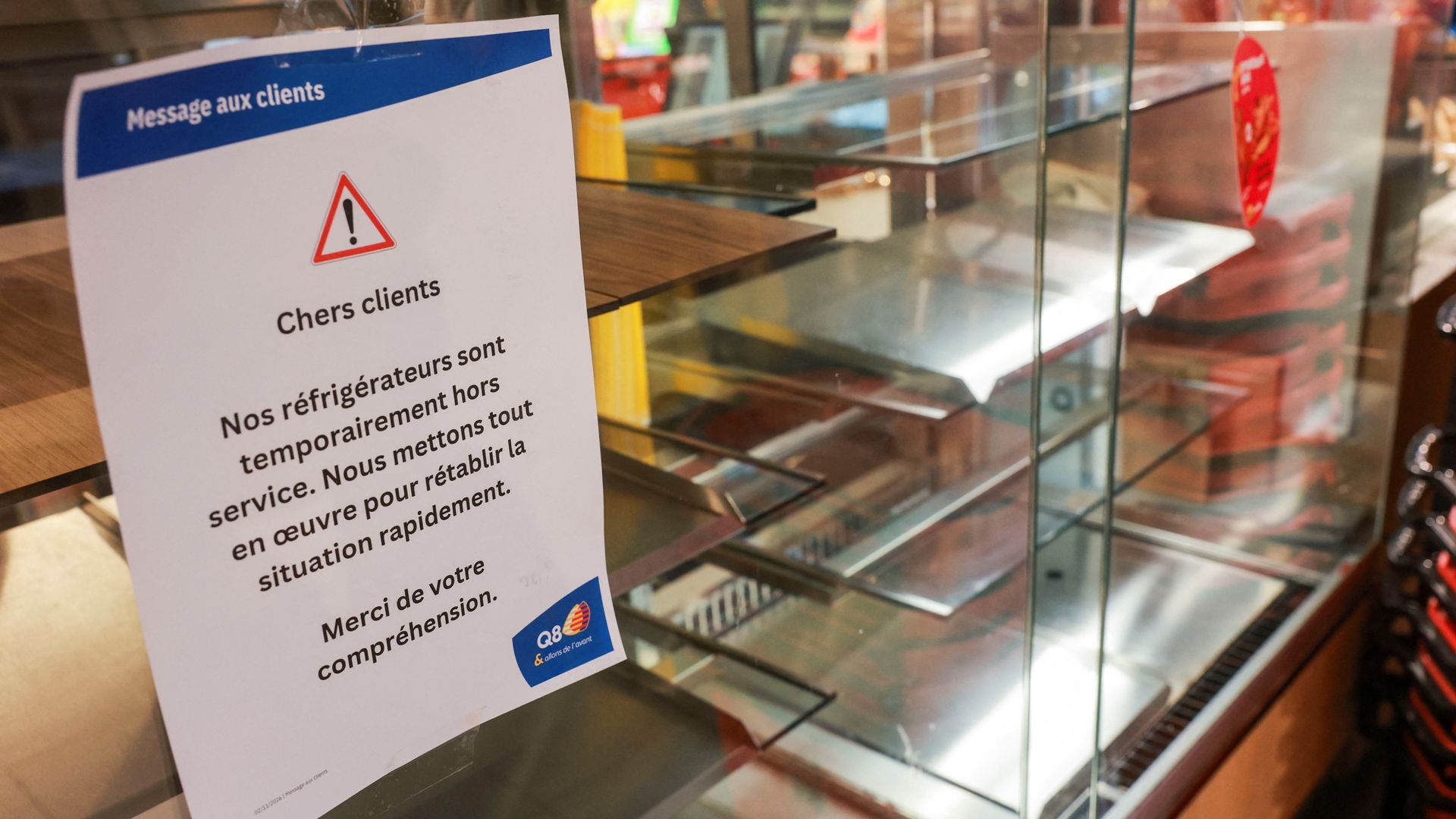
At 3:14 AM in a suburban supermarket outside Lyon, the hum stopped.
It is a sound you never notice until it vanishes—that low, steady mechanical purr of industrial compressors holding back the natural decay of a thousand perishable goods. For hours, while the town slept, the internal temperature inside thirty-two glass-fronted display cases crept upward. By the time the morning shift manager unlocked the sliding doors at six, the air smelled faintly sweet and sour. Pools of condensation had bled across the linoleum tiles. Cartons of organic milk sat lukewarm to the touch. Trays of Atlantic salmon, vacuum-sealed pork, and delicate French cheeses had crossed the threshold from dinner to biohazard.
To the cashier sweeping up the puddles, it looked like a blown fuse or a failing motor. To the cybersecurity analysts sitting in a bunker in Paris weeks later, it looked like an act of state-sponsored aggression.
When France publicly attributed a massive, coordinated cyberattack on commercial refrigeration systems to Iranian state-backed hackers, the headlines sounded almost absurd. Supermarket fridges. Out of all the terrifying targets in a modern nation—nuclear reactors, fighter jets, central banks, the power grid—foreign intelligence operatives had allegedly expended sophisticated digital tradecraft to spoil groceries. People laughed on social media. Late-night hosts made jokes about geopolitical warfare waged against camembert.
They missed the point entirely. When you understand what actually happened inside those cooling units, the laughter dies in your throat.
The Architecture of an Invisible Vulnerability
To grasp why a state actor would care about a dairy aisle, we need to step away from the cold glow of the grocery store and look at how the physical world was quietly wired together over the last fifteen years.
Imagine a hypothetical facility manager named Marc, who oversees maintenance for forty mid-sized supermarkets across central France. Twenty years ago, if a freezer broke down in Clermont-Ferrand, Marc did not know about it until an angry store manager called his landline. He would drive out with a wrench, test the coolant pressure, and replace a physical thermostat. It was slow, expensive, and completely immune to anyone sitting outside the building.
Then came the promise of smart infrastructure.
To cut energy costs and comply with strict European environmental regulations, supermarket chains replaced those dumb mechanical switches with networked industrial control systems. Every compressor, every defrost cycle, every temperature sensor was connected to a central gateway, and that gateway was plugged into the open internet. Now, Marc could sit at his kitchen table in a bathrobe, open a browser dashboard, and adjust the thermostat in aisle four from two hundred miles away.
Convenience always leaves the back door unlocked.
In cybersecurity, we call this the expansion of the attack surface, though a better analogy is replacing a solid oak front door with a wall of unlocked glass windows so you can enjoy the view. Those refrigeration controllers were built by industrial manufacturers focused on thermodynamic efficiency, not cryptographic defense. Many shipped with default administrative passwords that no one ever bothered to change. Worse, they were exposed directly to public internet search engines like Shodan—tools that allow anyone with a laptop to scan the globe for specific brands of industrial hardware in seconds.
I have spent years auditing the digital plumbing of critical infrastructure, and the most chilling discovery is rarely a piece of genius malware. It is the sheer, mundane exposure of the machinery keeping modern society alive. You sit in a fluorescent-lit server room, run a routine scan, and watch thousands of physical valves, boilers, and cooling towers pop up on your screen like unguarded light switches. You realize, with a cold knot in your stomach, that the barrier between a quiet Tuesday morning and a regional crisis is often a four-digit factory PIN.
How a Silent Sabotage Unfolds
The attack that struck French commercial refrigeration did not look like the Hollywood version of cyberwarfare. There were no skulls flashing on monitors, no ransom notes demanding millions in Bitcoin. It was quieter, cleaner, and far more insidious.
Attackers, linked by French intelligence and private security researchers to Iranian threat groups—specifically clusters associated with the Islamic Revolutionary Guard Corps—scanned for exposed human-machine interfaces governing industrial cooling systems. Once inside, they did not steal customer credit card numbers. They simply altered the operating parameters.
Consider what happens next when a hacker changes a few lines of configuration code inside a refrigeration network.
First, they disable the automated alerts. Normally, if a freezer rises above minus eighteen degrees Celsius, Marc’s phone buzzes instantly. The intruders silenced the alarms, blinding the human operators. Second, they manipulated the compressor cycles—either shutting the cooling units down entirely during the dead of night or forcing them to run continuously until the mechanical relays overheated and burned out.
Think about the physical reality of that second tactic. Software cannot directly break a piece of steel, yet by instructing a machine to ignore its own safety limits, code becomes a physical hammer. By the time store employees noticed the temperature gauges glowing red, the damage was irreversible.
Across dozens of locations, the immediate financial toll ran into the hundreds of thousands of euros in ruined inventory and fried hardware. Yet the financial loss was merely the surface ripple. The true objective lived beneath the balance sheet.
The Psychology of Friction
Why would Tehran target French grocery stores? Geopolitics rarely moves in straight lines, and asymmetric warfare—the art of a weaker or sanctioned power striking a stronger adversary where it least expects—relies entirely on psychological friction.
Iran has spent years under crushing Western economic sanctions, locked in a shadow conflict with Israel, the United States, and European powers over its nuclear program, regional proxies, and domestic human rights crackdowns. France, as a vocal European diplomatic power and frequent critic of Tehran’s policies, sits squarely in the crosshairs of Iranian cyber operators.
If Iran attacks a French military base or shuts down a major power plant in Paris, the response is predictable and catastrophic. NATO treaties get invoked. Fighter jets scramble. Devastating retaliatory strikes follow.
Attacking supermarket fridges, however, sits comfortably below the threshold of conventional war. Nobody launches cruise missiles over spoiled yogurt. Yet the cumulative effect of hitting soft, everyday targets achieves something remarkably potent: it erodes public trust in the stability of daily life.
Historians who study civil resilience have noted a consistent pattern during times of conflict. Citizens can endure dramatic, visible crises with astonishing solidarity; a hurricane or a bombing raid unites a neighborhood. What fractures morale is persistent, inexplicable friction. When the trains are delayed for no clear reason, when the ATM networks hiccup, when you walk into your local supermarket on a rainy Thursday evening and find the meat and dairy aisles taped off with yellow plastic because the coolers mysteriously died—a subtle anxiety takes root.
You start wondering what else is fragile. If they can turn off the refrigerators in Lyon, can they turn off the cold storage facilities holding insulin at the regional hospital? Can they tamper with the water treatment pumps three miles down the road?
That lingering doubt is the exact return on investment an asymmetric attacker wants. It costs a handful of operatives a few weeks of reconnaissance and zero missiles, while forcing the defending nation to spend billions securing millions of mundane devices scattered across every town square.
The Myth of the Harmless Device
I remember the first time this reality hit me personally, not as a line item in a threat intelligence report, but as a tangible physical failure. Several years ago, I was consulting for a mid-sized agricultural cooperative that stored harvested fruit in massive, climate-controlled warehouses. A minor network misconfiguration—not even a malicious attack, just a corrupted firmware update pushed remotely—locked the ventilation dampers shut over a holiday weekend.
When we opened the bay doors on Monday morning, the heat that rolled out felt like opening an oven. Six months of a farming community's labor had fermented in the dark. The smell of rotting apples clung to my jacket for weeks. Standing in that warehouse, watching grown men stare silently at crates of ruined harvest, I stopped thinking of internet-connected sensors as clever gadgets. I started seeing them for what they actually are: remote triggers attached to our physical survival.
We have built an entire civilization on the assumption that our digital networks and our physical necessities exist in separate worlds. We assume the cloud is just where our photos live, and that food, water, and warmth are governed by switches bolted firmly to local walls.
That separation is a fairy tale we tell ourselves because the truth is too exhausting to contemplate. The modern cold chain—the uninterrupted refrigerated supply line that moves vaccines, blood plasma, produce, and protein from farm and factory to your kitchen—is now entirely software-dependent. Every link in that chain is managed by programmable logic controllers designed in an era when the internet was an academic curiosity.
When French authorities pointed the finger at Iran, they were doing more than naming and shaming a foreign intelligence service. They were issuing a warning to every business owner, municipal mayor, and logistics director in Europe. The battlefield is no longer confined to ministry servers or defense contractors. If a device has an IP address and controls something humans need, it is a military target.
Reclaiming the Circuit Breaker
The terrifying part of this story is how easily it could happen again tomorrow, in any city from Marseille to Minneapolis. The encouraging part is that we already know how to stop it, provided we abandon our addiction to frictionless remote access.
Securing industrial infrastructure does not require futuristic artificial intelligence or million-dollar defense contracts. It requires returning to basic, disciplined engineering hygiene—treating digital connections with the same physical respect we give high-voltage electricity.
First, critical operational technology must be severed from the open internet. If Marc, our hypothetical maintenance manager, needs to check the temperature of a freezer in Lyon from his home, he should never be connecting directly to the compressor’s control panel. That traffic must pass through heavily fortified virtual private networks, guarded by multi-factor authentication and strict network segmentation. Even if an attacker compromises a store’s corporate Wi-Fi or billing system, they should hit a concrete wall before ever reaching the cooling units.
Second, manufacturers and installers must face legal accountability for shipping insecure hardware. Leaving a default administrative password active on an internet-facing industrial controller should be treated with the same regulatory severity as installing faulty gas lines in an apartment building.
Finally, we have to reintroduce physical fail-safes. Software should never have the absolute authority to destroy the hardware it manages. A simple, non-networked mechanical thermal cutoff—a physical switch that trips when a motor overheats, completely invisible to any hacker on earth—can turn a catastrophic hardware replacement into a minor inconvenience.
The Quiet Hum
Walk down the refrigerated aisle of your local grocery store tonight. Pause for a second beside the glass doors holding the milk, the butter, the fresh pasta. Listen to that steady, rhythmic vibration beneath your feet.
We take that cold air for granted because it has been reliable for generations, an invisible foundation of modern abundance. Yet behind that glass sits a silent tug-of-war between engineers trying to keep the lights on and unseen adversaries probing the wires from thousands of miles away. The next time the hum stops in the middle of the night, it might not be a broken motor. It might be someone testing just how easily our world begins to thaw.