The desert is never actually silent. If you sit long enough in the dunes of the East Province, you hear the shifting of silica, the rhythmic hum of wind against rock, and the distant, metallic pulse of the veins that keep the modern world alive. These veins—massive steel pipes buried just beneath the grit—carry the lifeblood of global industry. We don’t think about them until they stop beating.
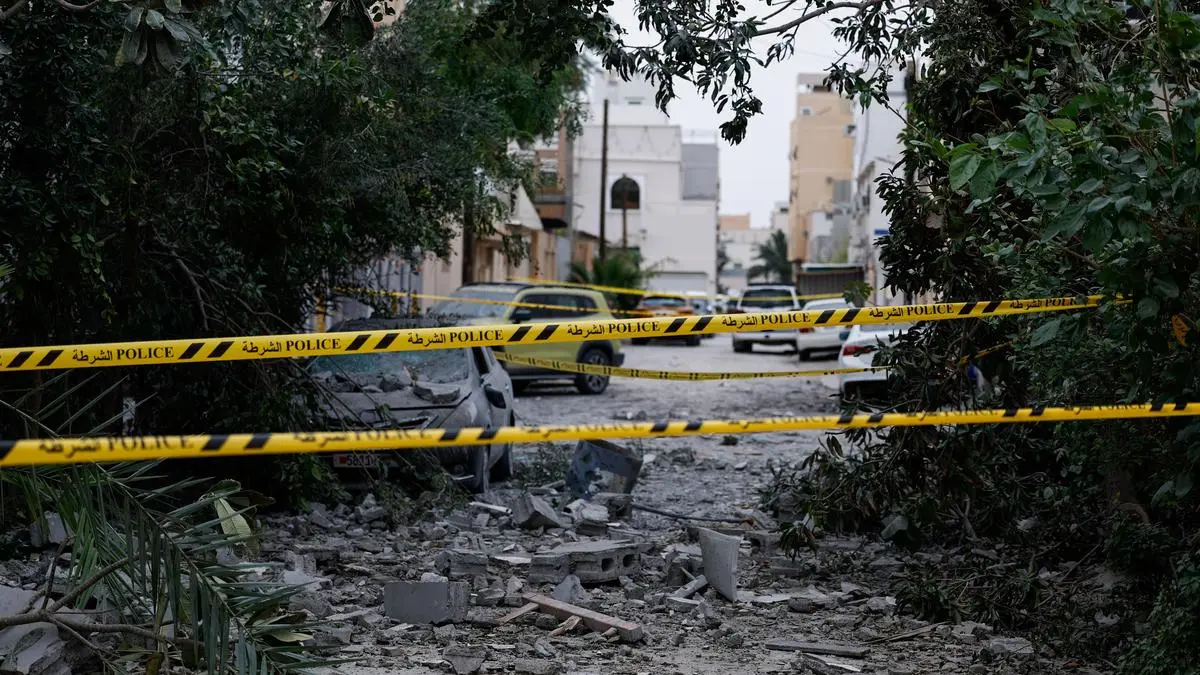
When the drones arrived over Saudi Arabia’s East-West pipeline, they didn’t come with the roar of a traditional air force. They came with a low, lawnmower buzz that signaled a new kind of chaos. By the time the sun rose, the rhetoric was already heating up in Kuwait City and Riyadh. To the diplomats, it was a breach of sovereignty. To the markets, it was a spike in Brent crude. But to the people living in the shadow of the flares, it was the moment the invisible war finally became audible.
The Ghost in the Machine
Consider a worker named Ahmed. He is a hypothetical composite of the thousands who monitor the pressure gauges and the flow rates that dictate the price of your morning commute. On the morning of the attack, Ahmed’s monitors didn't show a troop invasion. They showed a sudden, violent drop in pressure.
In the high-stakes theater of Middle Eastern geopolitics, "proxies" is a word used to distance the puppet masters from the strings. Kuwaiti officials didn't mince words this time. They pointed directly at Tehran, accusing Iran of orchestrating a multi-pronged assault using regional shadows to do the dirty work. It is a sophisticated game of plausible deniability. If a drone launched from a remote patch of desert hits a pumping station, who pulled the trigger? The hand that built the drone, or the hand that fueled it?
The East-West pipeline is more than just plumbing. It is a strategic bypass, a way for Saudi Arabia to move oil from the Gulf to the Red Sea, skipping the narrow, high-tension chokepoint of the Strait of Hormuz. By hitting this specific artery, the attackers weren't just damaging equipment. They were sending a message: You are never truly out of reach.
The Fragility of the Flow
We like to believe that our world is built on solid ground. In reality, it’s built on a series of precarious balances. The global energy market is a nervous system. When a pumping station in the Saudi desert is scorched, a trader in London breaks a sweat, and a logistics manager in Singapore recalculates their quarterly projections.
The damage to Pumping Stations 8 and 9 wasn't just a mechanical failure. It was a psychological strike. Saudi Energy Minister Khalid al-Falih described the act as "cowardly," but the word feels insufficient for the tactical precision involved. This wasn't a random act of terror. It was a surgical demonstration of vulnerability. It proved that despite billions spent on missile defense systems and standing armies, a handful of cheap, explosive-laden drones could bypass the shield and strike the heart of the kingdom’s economy.
Kuwait’s involvement in the accusation adds a layer of regional solidarity that often goes unnoticed by those outside the Gulf. Kuwait has long played the role of the cautious mediator, the "Switzerland of the Middle East." For Kuwait to align so sharply with the Saudi narrative of Iranian culpability suggests that the internal red lines have been crossed. The fear isn't just about a single pipeline. It’s about the erosion of the maritime and land-based security that allows these nations to exist as functional states.
The Invisible Stakes
Why should a family in Ohio or a baker in Berlin care about a fire in the middle of a desert they will never visit? Because the "human element" of global oil is a story of connectivity.
When supply lines are threatened, the cost of living crawls upward. It’s the hidden tax on every plastic toy, every gallon of milk, and every flight across the ocean. But the deeper stake is the threat of miscalculation. History is littered with "small" skirmishes that spiraled because one side misinterpreted the other’s resolve.
Iran remains under a crushing weight of sanctions. They are backed into a corner, their own oil exports strangled by a global embargo led by Washington. In this context, the attacks on Saudi infrastructure look less like random aggression and more like a desperate signal. It is a grim reminder that if Iran cannot sell its oil, it will make sure the rest of the world finds it very difficult to move theirs.
The drones are the hardware, but the software is grievance.
A New Kind of Friction
The technology of war has outpaced the vocabulary of diplomacy. We are used to declarations of war, to clear borders and identifiable uniforms. We are now in the age of the "gray zone." This is a place where attacks happen without fingerprints, where accusations are traded like currency, and where the victim has to decide if a hole in a pipeline is worth a full-scale regional conflagration.
The Saudi response was measured but firm. They stopped the flow of the pipeline briefly to evaluate the damage, a move that sent ripples through the commodity exchanges. The physical repairs are easy. Steel can be welded. Valves can be replaced. The "robust" nature of the infrastructure—to use a term the engineers love—is designed for this.
What can’t be easily repaired is the sense of security.
Imagine the tension in a Kuwaiti boardroom or a Saudi government office. They are looking at maps that are increasingly covered in red dots representing "asymmetric threats." It’s not just about tanks anymore. It’s about cyber-attacks that could shut down a power grid without firing a single shot. It’s about sea mines that look like pieces of trash floating in the water. It’s about the realization that the old rules of engagement have been shredded.
The Dust Settles
The fire at the pumping stations was eventually extinguished. The smoke cleared, and the desert sun returned to its relentless, baking routine. On the surface, things returned to normal. The oil began to flow again. The tankers continued their slow, heavy crawl through the blue waters of the Gulf.
But the smell of the sand has changed.
There is a lingering scent of volatility in the air. The accusations from Kuwait and the damage reports from Riyadh aren't just headlines in a news cycle. They are chapters in a long, unfolding story about the end of the old order. We are watching the birth of a world where the lines between "peace" and "conflict" are so blurred they may no longer exist.
As night falls over the East-West pipeline, the hum returns. The metallic pulse of the earth continues. But the men in the control rooms are no longer just watching the pressure. They are listening. They are looking at the sky, waiting for the buzz of a lawnmower engine to break the silence once again. They know that in this landscape, the most dangerous things are the ones you can’t see until they are right on top of you.
The pipeline is fixed. The tension remains. The desert keeps its secrets, but it no longer feels like a sanctuary. It feels like a fuse.