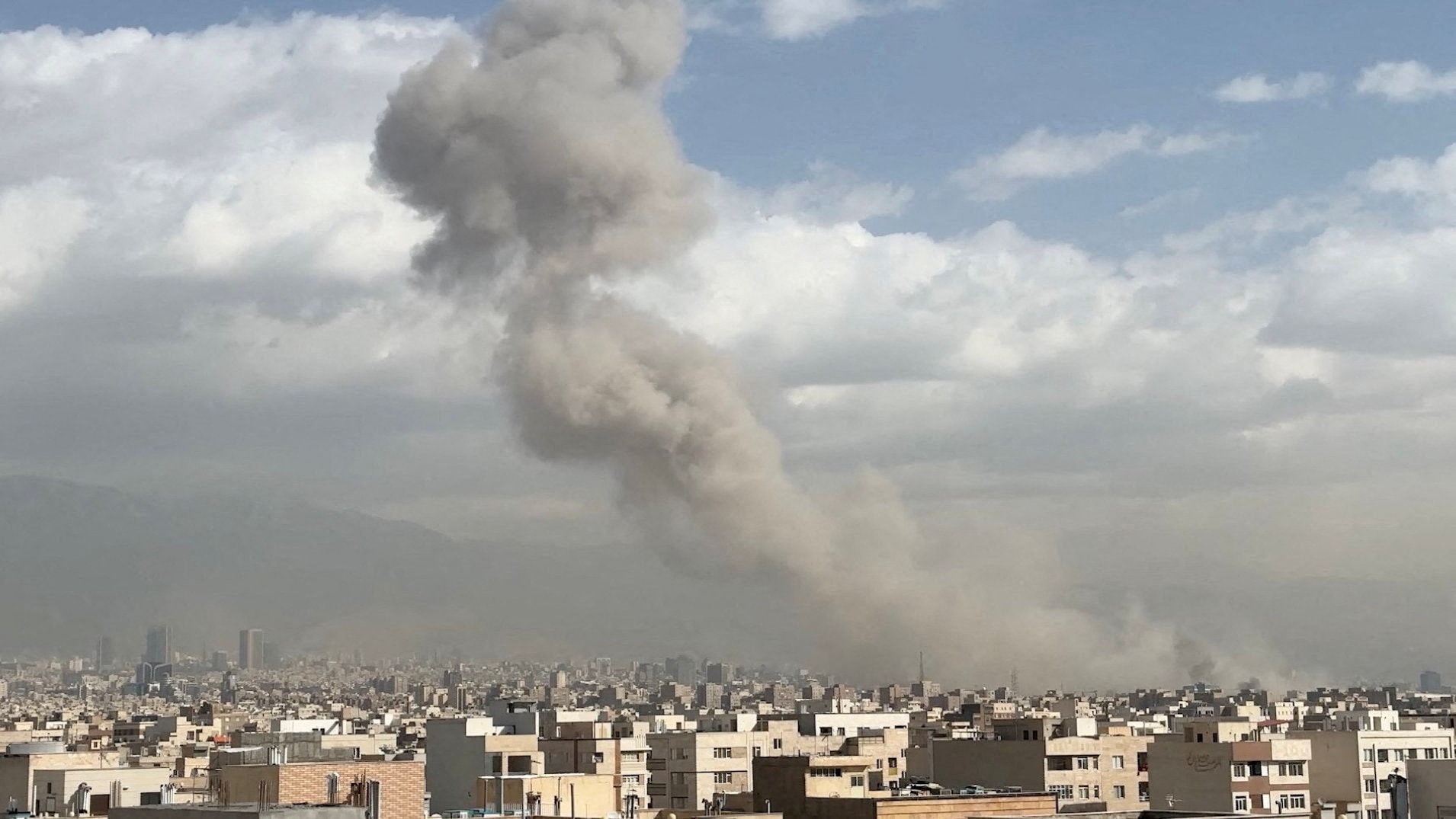
A pilot sits in the cockpit of a Boeing 787, three hours out of New Delhi. Below him, the world is a dark, serrated expanse of geography that we usually ignore until it bleeds. He is watching a screen where a tiny digital icon—his plane—is supposed to slide smoothly toward Europe. Instead, a message flashes. The airspace ahead, a critical corridor over the Middle East, has just been declared a no-fly zone.
He isn't just navigating a plane anymore. He is navigating a geopolitical tremor.
He banks the aircraft. He begins the long, expensive arc around the conflict, burning tons of extra fuel every minute. This isn't just an inconvenience for the three hundred people sleeping in the cabin behind him. It is a symptom of a fragile, fragmented system that treats Indian aviation like an unanchored buoy in a stormy sea. We have built a massive fleet of airplanes, but we haven't built the ground beneath them.
The crisis in West Asia isn't just about missiles and borders. For India, it is a brutal reminder that flying is not just about having wings. It is about the invisible architecture of insurance, fuel, maintenance, and diplomacy.
The Hidden Cost of the Long Way Around
When a flight from Mumbai to London has to avoid Iranian or Israeli airspace, the math changes instantly. It isn't just twenty minutes of extra flight time. It is a cascading failure of logistics.
Consider "Aravind," a hypothetical logistics manager at a major Indian carrier. When the sirens go off in Tel Aviv or Tehran, Aravind’s night is over. He has to calculate the "fuel penalty." A longer route means a heavier plane. A heavier plane means the aircraft might have to leave behind ten tons of high-value cargo—pharmaceuticals or electronics—just to stay under the maximum takeoff weight.
Money evaporates.
Indian carriers are particularly vulnerable because they operate on margins as thin as a boarding pass. Unlike their Gulf competitors, who sit atop vast sovereign wealth funds and massive localized hubs, Indian airlines are often playing a game of catch-up. When the price of Aviation Turbine Fuel (ATF) spikes because of regional instability, or when insurance premiums for "war risk" zones double overnight, the Indian passenger feels it.
The ticket you bought for a cousin's wedding in Dubai? The price just spiked. The profit margin that was supposed to fund a new hangar in Hyderabad? It just went into the engines of a jet circling the Arabian Sea.
The Myth of the Independent Airline
We often speak about airlines as if they are sovereign entities. They are not. They are the visible tips of a massive, submerged ecosystem.
In India, we have mastered the art of the "order book." We have thousands of planes on the way. We have shimmering new terminals with high ceilings and designer boutiques. But look closer at the nuts and bolts. If a bird hits an engine in Delhi, or if a sophisticated sensor fails during a detour, that engine often has to be shipped to Europe or Singapore for repair.
We own the planes, but we don't own the tools to fix them.
This is the "maintenance, repair, and overhaul" (MRO) gap. Because India lacks a truly integrated aviation ecosystem, we are essentially renting our reliability from the rest of the world. When a war breaks out in West Asia, supply chains tighten. Shipping a spare part becomes a nightmare of backlogs and hiked freight costs. An Indian plane sits on the tarmac, "AOG"—Aircraft on Ground—bleeding money because we haven't localized the technical heartbeat of the industry.
The Insurance Trap
There is a quiet room in London where the fate of Indian aviation is often decided. This is the world of Lloyd’s underwriters.
When a conflict flares up, the world is mapped into "shades of risk." India, despite its distance from the front lines, is deeply tethered to the West Asian theater. Our flight paths are the arteries of the global east-west trade. When those arteries harden, the cost of insuring a fleet sky-rockets.
Indian airlines are largely "price takers" in this market. We pay what we are told because we haven't developed a domestic insurance framework capable of absorbing these shocks. We are exposed. We are vulnerable to the whims of global risk perception.
The human element here is the CEO of a mid-sized Indian airline who realizes that his entire profit for the quarter was just swallowed by a risk premium adjustment made four thousand miles away. He didn't lose that money because he ran a bad airline. He lost it because the ecosystem he operates in is a series of disconnected islands.
The Hub That Never Was
For decades, the great hubs of the world—Dubai, Doha, Singapore—have thrived by being the world's "waiting rooms." They turned geography into destiny.
India has the best geography in the world for this. We sit exactly between the manufacturing hubs of the East and the consuming markets of the West. Yet, when a war breaks out, travelers don't flock to Delhi or Mumbai as a "safe harbor" for transit. They stay away because our airports haven't yet mastered the seamless, "ecosystem" approach to international transfers.
If a flight is diverted to an Indian airport due to a regional closure, the experience is often a thicket of bureaucracy. Transit visas, security re-checks, and a lack of integrated hotels make us a place people fly to, but rarely a place people fly through with ease.
Building an ecosystem means making the transition from "destination" to "platform."
It means that when the sky over West Asia turns red, the world should look at India not as a victim of the chaos, but as the stable bridge that keeps the world moving. This requires more than just runways. It requires a radical alignment of tax laws, fuel pricing, and visa policies.
The Fragility of the "Oil Ribbon"
Everything in aviation eventually boils down to the smell of kerosene.
India imports the vast majority of its crude oil. Our aviation fuel prices are among the highest in the world due to a layering of state and central taxes. When a drone strikes a refinery in the Middle East, the ripple effect doesn't just hit the gas station down the street. It hits the "fuel hedging" strategies of every airline in the country.
Imagine a pilot looking at her fuel gauge. She knows that every extra minute she spends in a holding pattern is costing the company more than her annual salary. The stress of "fuel tankering"—carrying extra fuel from a cheaper location to avoid buying it at a more expensive one—adds weight and risk to every flight.
A true ecosystem would involve a strategic fuel reserve specifically for aviation, or a more flexible taxation system that breathes with the market. Instead, we have a rigid structure that breaks under pressure.
Beyond the Cockpit
We must stop viewing aviation as a luxury or a standalone business. It is the central nervous system of a modern economy.
When a war in West Asia makes it harder to fly, it isn't just about "missing a holiday." it’s about the engineer who can't get to the factory in Germany to fix a machine. It’s about the heart surgeon waiting for a specialized valve that is currently stuck on a diverted cargo plane. It’s about the millions of Indians working in the Gulf who are the backbone of our inward remittances—the people whose very lives are a bridge across that volatile region.
The "ecosystem approach" is often dismissed as a buzzword used by consultants in expensive suits.
It isn't.
It is the difference between a country that has an airline industry and an "aviation nation." A nation that builds its own parts, insures its own risks, refines its own fuel, and manages its own sky.
If we don't build this ground, we are just borrowing the air.
The pilot in the Boeing 787 finally finds his new heading. He is tired. The sun is beginning to peek over the horizon, casting a long, golden light over the cockpit. He has kept his passengers safe. He has navigated the immediate crisis.
But as he looks out at the vast, unpredictable expanse of the world, he knows that bravery and skill are not enough. A pilot can fly a plane, but only a nation can build a sky that stays open when the world starts to burn.
The engines hum, a steady, thirsty roar, burning through the silence of a morning that is much more expensive than it was yesterday.


