The water does not knock. It arrives. It is heavy, thick with the silt of torn hillsides, carrying the weight of a broken sky. When the Trishuli river swelled, turning from a rushing artery of the Himalayas into a blind, battering ram of mud and debris, it did not care about the human ambition buried beneath the stone. It found the mouth of the hydropower tunnel and swallowed it.
Inside that concrete throat, two men were working.
Darkness is rarely absolute. On the surface, even on a moonless night, the stars offer a dusting of light, a faint geometry to the world. But underground, when the lights die and the mud seals the exit like a shuttered grave, darkness has weight. It presses against the eyeballs. It smells of wet iron, stale sweat, and the terrifying realization that the earth has forgotten you are there.
We talk about infrastructure in numbers. Megawatts. Cubic meters of concrete. Flow rates. Project timelines. We draw neat lines on engineering maps, carving power out of rushing water, treating the mountain like a silent partner in a transaction of progress. But mountains are ancient and indifferent. They shift. They bleed during the monsoon. And when they do, the abstract calculations of the boardroom vanish, leaving only flesh, breath, and the ticking of an invisible clock.
Imagine the sound.
It starts as a low groan, the vibration of thousands of tons of rock settling under impossible pressure. Then comes the roar—the water rushing in, cutting off the air, stealing the exits.
For nine days, the outside world assumed the worst. How could they not? Nine days under a collapsed tunnel, submerged in the debris of a flash flood in rural Nepal, is a lifetime. Families gathered outside the gates, holding photographs, watching rescue workers fight a losing battle against a blocked, unstable cavern. Every hour that ticked by hardened the grief, turning desperate prayers into quiet mourning.
Yet, deep inside that subterranean trap, two men were still breathing.
They found a pocket. A small, miraculous bubble of air trapped against the ceiling of the tunnel while the rest of the world was filled with rushing death. How do you survive nine days in a space no larger than a small room, with no food, no clean water, and the constant, mocking drip of moisture?
They heard voices.
At first, you tell yourself it is the mind playing cruel tricks. Isolation does strange things to the human brain. Deprived of light and sensory input, the nervous system begins to paint on the blank walls of the dark. You hear your mother calling your name. You hear the wind through the pines. You hear laughter from a kitchen you left behind a lifetime ago.
(Note: This psychological fracturing is a well-documented phenomenon in prolonged entrapment, where the brain desperately manufactures stimuli to keep the panic at bay.)
But the voices did not fade. They grew clearer.
Rescue teams on the outside were drilling, shouting, pushing heavy machinery through tons of mud, refusing to let the mountain keep its prisoners. That acoustic vibration traveled through the wet rock, carrying the tinny, distant echoes of human resolve. Someone was digging. Someone was refusing to quit.
Consider what happens to the human spirit when hope is reduced to a single, stubborn sound.
Hunger gnaws, but fear is sharper. Your tongue swells. Your muscles cramp in the damp chill. Every breath tastes of wet dust. In those moments, time loses its shape. Minutes stretch into agonizing epochs; entire days blur into a single, aching bruise. You begin to bargain with the dark. You think of the small things. The warmth of morning chai. The rough wool of a favorite blanket. The simple, unappreciated miracle of walking outside and feeling the wind move across your face.
We spend so much of our lives insulated from the raw edges of existence. We flip a switch, and light floods the room. We turn a tap, and clean water appears. We forget that civilization is just a thin crust over a very wild, very dangerous planet. It takes a catastrophe, a sudden tearing of the veil, to remind us how fragile our arrangements really are.
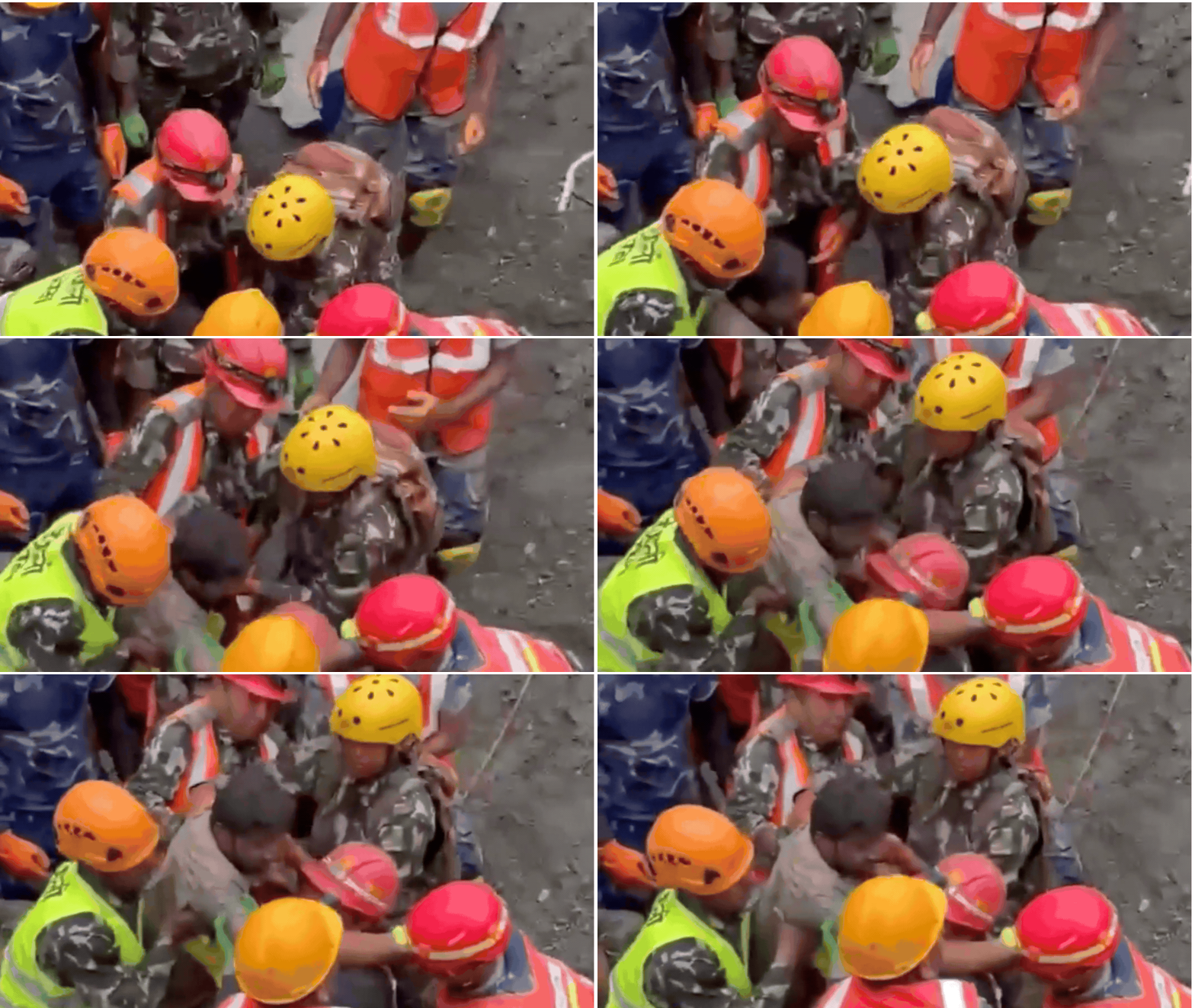
When the rescue workers finally broke through—when the first blinding shaft of daylight pierced that tomb and hit two hollow, sunken faces—it was not just a victory for engineering. It was a triumph of pure, stubborn defiance.
They walked out. Supported, blinking against a world they had almost forgotten, but alive.
Back home, the tea was poured. The blankets were wrapped around shivering shoulders. But the mountain is still there, towering over the valley, indifferent to the lives that brush against its roots. The turbines will turn again. The lights in distant cities will flicker on. Yet, somewhere beneath the stone, the memory of those nine days remains etched into the dark, a quiet testament to what a human being can endure when refusing to let go.