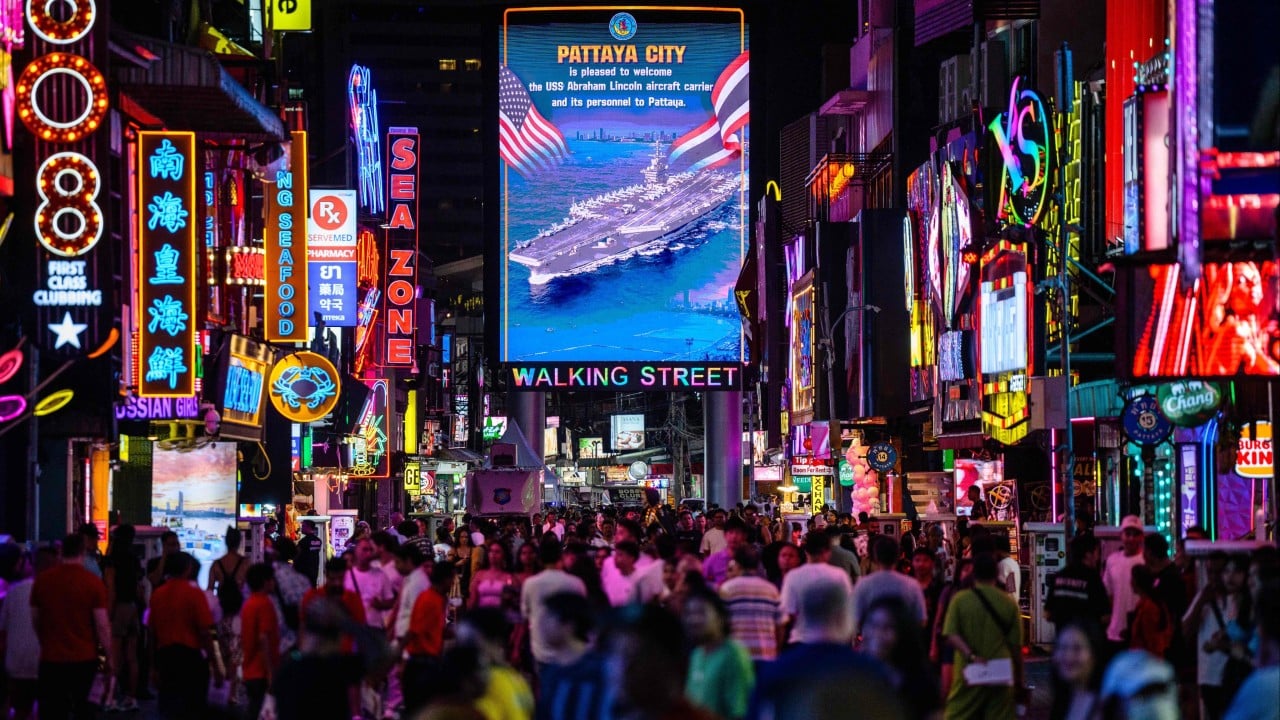
The headlines love the postcard narrative. A nuclear-powered aircraft carrier pulls into port, thousands of sailors flood the local strip, and the media runs a tired, sanitized puff piece about hard-working service members letting off steam in Pattaya after a grueling nine-month deployment. Everyone smiles. The local bars cash in. The public feels a warm, patriotic glow.
It is a complete farce.
The standard narrative treats a port visit like a reward ceremony at the end of a corporate quarter. It paints liberty call as a harmless weekend of well-earned R and R, ignoring the sheer psychological violence of transitioning overnight from a floating steel cage operating at DEFCON levels of stress straight into the hyper-stimulated, lawless sensory overload of Southeast Asia's nightlife capitals.
I have watched organizations try to manage human burnout by throwing their people into high-friction environments with zero transition buffer. It never ends well. Treating a port call as a simple vacation ignores the mechanics of operational fatigue, human behavior under extreme duress, and the systemic failure of naval leadership to properly decompress crews before unleashing them on foreign soil.
The Myth of The Well-Earned Break
We need to dismantle the premise that duration equals exhaustion in a linear way. People look at a nine-month deployment—like the recent stint logged by the USS Abraham Lincoln strike group—and assume that the final day at sea automatically equals peak readiness for leisure.
That logic is backwards.
Months of sleep deprivation, monotonous routine, restricted movement, and high-stakes operational anxiety create a specific kind of cognitive tunnel vision. When you keep human beings locked in a hyper-controlled military ecosystem for nearly three quarters of a year, their internal regulators break. Dropping thousands of them into an unfiltered entertainment zone like Pattaya without a graduated decompression phase is not a reward. It is a shock to the system.
Military public affairs offices love to project an image of orderly relaxation. They talk about cultural exchange, local tourism, and community relations projects. They skip past the reality of mass behavioral volatility, alcohol poisoning spikes, financial scams targeting naive twenty-year-olds, and the inevitable disciplinary crackdowns that follow every single carrier landing.
"A change of scenery does not equal a reset of the nervous system. In many cases, it simply accelerates the crash."
If we want to understand why liberty ports often turn into logistical nightmares for command master chiefs, we have to stop looking at sailors as tourists and start looking at them as exhausted operators suffering from acute sensory starvation.
The Mechanics of Operational Whiplash
Imagine a scenario where you pull a racecar driver straight out of a car running at two hundred miles per hour on a narrow track, blindfold them for ten minutes, and then drop them into the middle of a crowded, neon-drenched night market with a pocketful of cash and no map.
That is roughly what a carrier port visit feels like to an 18-year-old machinery repairman who hasn't seen a tree, a wave of non-filtered civilian faces, or a horizon that doesn't tilt for two hundred and seventy days.
The psychological term is operational whiplash. The brain adapts to the shipboard environment by suppressing certain impulses and amplifying hyper-vigilance. When that environment vanishes in an instant, the behavioral guardrails collapse.
Naval leadership treats liberty management as a set of rules: don't fight, don't get scammed, stay out of restricted zones, make curfew. Those are legal boundaries, not psychological safety nets. They manage the fallout instead of addressing the root cause, which is that modern deployments demand inhuman levels of sustained endurance without providing an equivalent mechanism for mental off-loading.
Why The Tourism Industry Loves The Carrier Routine
Local economies in places like Thailand rely heavily on the economic surge of a carrier strike group visit. Millions of dollars flow through local establishments in a matter of days. Bar owners, hotel operators, and local merchants plan their entire quarters around these floating deployments.
This creates a perverse incentive structure. The host city wants maximum chaos and maximum spending. The Navy wants zero incidents that make the local command look bad on the front page of Navy Times. The individual sailor is caught in the middle, treated as a revenue generator by the host economy and a liability by their own chain of command.
The common narrative ignores this friction. It sanitizes the transaction. It pretends that a sailor walking down Walking Street in Pattaya is just enjoying a nice Thai iced tea and a stroll along the beach. Anyone who has spent five minutes on the ground during a strike group port call knows that reality looks entirely different. It is loud, messy, expensive, and frequently regrettable.
How To Fix The Break
If military leadership actually cared about sailor wellness rather than public relations optics, they would scrap the traditional port-call model entirely.
First, introduce a staged decompression phase. Do not drop crews straight from the brow into the city streets. Provide a middle-tier staging environment where sailors can sleep, eat civilian food, and recalibrate their sensory input for forty-eight hours before hitting high-intensity urban centers.
Second, stop treating alcohol consumption as an inevitable disciplinary problem to be managed with a heavy hand. Treat it as a predictable human variable that requires structural mitigation, such as mandatory buddy systems backed by professional peer-support teams rather than just military police patrols looking to hand out Article 15s.
Third, redefine what a deployment schedule looks like. Nine months at sea is an artifact of Cold War logistics and budget constraints, not modern human optimization. Shorter, more frequent deployments with built-in regional rotation would eliminate the desperate, explosive need for sailors to blow off steam in a frantic forty-8-hour window.
The next time you read a glossy article about a massive warship pulling into port for a well-deserved break, look past the cheering crowds and the smiling sailors in uniform. Look at the systemic exhaustion underneath. We are burning out our best people at sea, and then blaming them when they break the rules the moment they hit dry land.
Stop romanticizing the liberty call. Fix the deployment model.