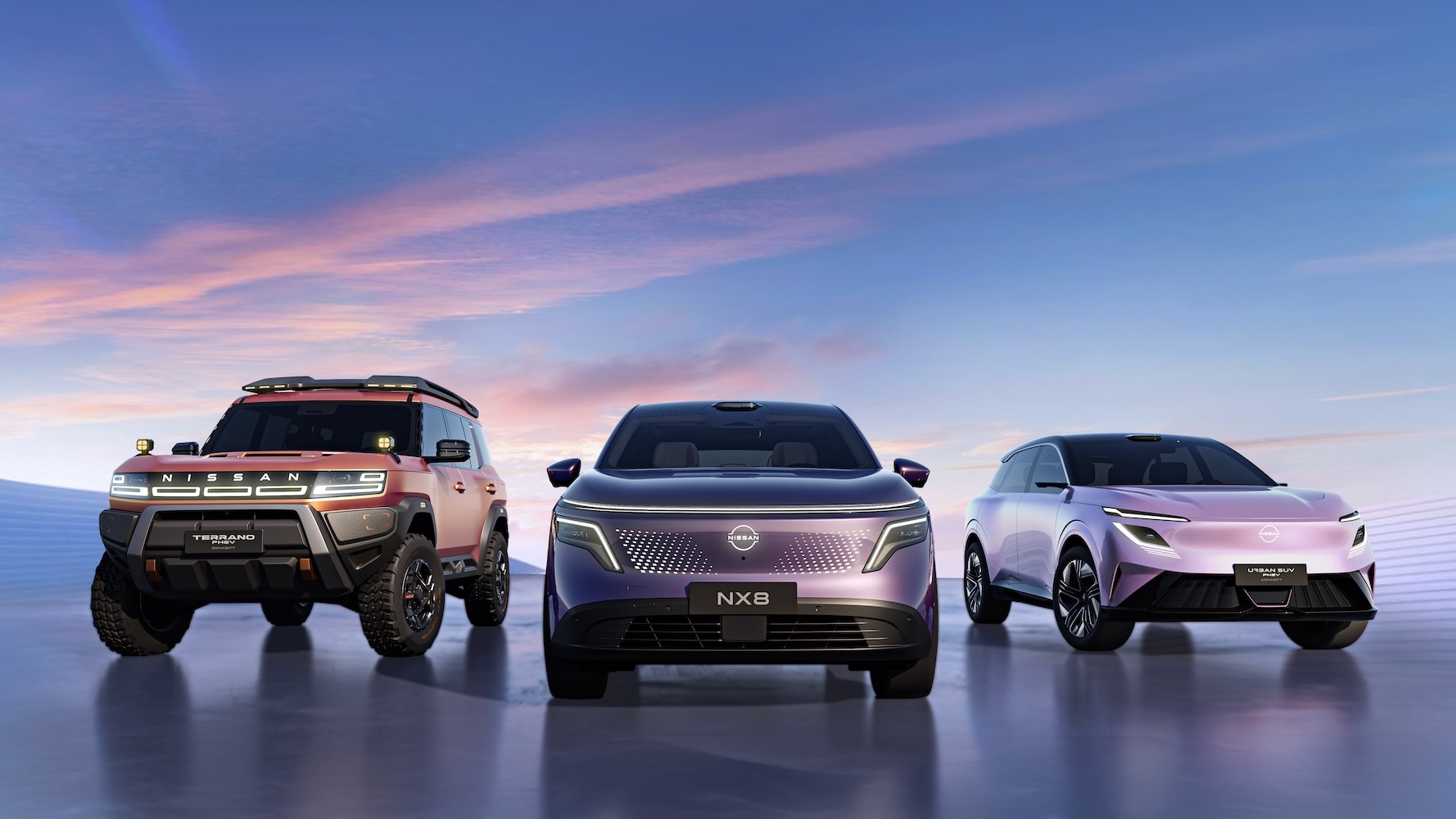
Nissan is finally moving to end its years-long drought in the mid-size SUV market by greenlighting a production-ready offensive based on its newly unveiled Urban SUV and Terrano PHEV concepts. The company has officially confirmed a rollout within twelve months, signaling an aggressive pivot toward electrification that side-steps the sluggish adoption of pure EVs in favor of high-performance hybrid systems. This is not merely a product refresh; it is a survival tactic for a brand that has spent too much time relying on a single volume-driver while competitors carved up the most profitable segments of the global market.
The move centers on two distinct pillars. First is the Urban SUV, a sleek, technology-heavy crossover aimed at younger, metro-dwelling professionals who prioritize connectivity and design over raw off-road utility. Second, and perhaps more significant for long-time enthusiasts, is the resurrection of the Terrano nameplate. Unlike the budget-oriented Duster-clone of the previous decade, the new Terrano PHEV is a rugged, body-on-frame monster built on the Frontier Pro platform. By merging heavy-duty hardware with a 429-horsepower plug-in hybrid powertrain, Nissan is attempting to bridge the gap between traditional mechanical toughness and modern emissions mandates.
The Engineering Logic Behind the Plug-In Pivot
While much of the industry remains locked in a binary debate between internal combustion and battery electric vehicles (BEVs), Nissan’s decision to lead with Plug-in Hybrid Electric Vehicles (PHEVs) in these segments is a calculated bet on infrastructure reality. In markets like India and China, the charging network outside Tier-1 cities remains a significant hurdle for high-end electric SUVs. The Terrano PHEV addresses this by utilizing a 1.5L turbocharged four-cylinder engine acting alongside a high-capacity electric motor.
The hardware under the hood reveals a focus on torque and range. Early technical data indicates a 32.85 kWh battery pack capable of delivering up to 135 km of pure electric range under specific testing cycles. For the Urban SUV, the focus shifts to efficiency and rapid replenishment. That model is expected to feature a battery capable of a 30 to 80 percent charge in just 17 minutes. By offering a "safety net" of gasoline power combined with a legitimate electric-only commuting range, Nissan is targeting the "range anxiety" that has kept the premium SUV buyer tethered to diesel.
Reclaiming the Middle India Market
In India, Nissan’s story has been one of extreme highs and long silences. The Magnite saved the brand from domestic irrelevance, but it operates in a price-sensitive sub-compact bracket where margins are razor-thin. To actually grow, Nissan needs to play where the money is: the 4.3-meter to 4.6-meter SUV space. This is the territory currently dominated by the Hyundai Creta and Mahindra XUV700.
The upcoming Nissan Tekton, expected in mid-2026, and the production versions of these new concepts are designed to fill this void. Unlike the previous partnership-era Terrano, which felt like a rebadged afterthought, the new strategy utilizes the Alliance CMF-B platform to create a distinct identity. The goal is to move away from being the "value alternative" and toward being a "technology leader." This involves introducing features that were previously reserved for the luxury tier:
- Advanced Driver Assistance Systems (ADAS) tuned for chaotic urban environments.
- e-POWER technology that offers the driving feel of an EV without the need for a plug.
- A design language that mirrors the global Ariya and Infiniti lines rather than budget-market models.
The Manufacturing Reality in Chennai
The success of this rollout depends heavily on the Alliance plant in Chennai. Nissan and Renault have committed to a massive investment to modernize this facility, turning it into a hub for both domestic supply and right-hand-drive exports. The manufacturing strategy is now focused on "smart differentiation." While the underpinnings—the chassis and the basic engine architecture—will be shared with Renault’s upcoming Duster and Bigster, the "top hats" or the visible parts of the cars will be entirely unique.
This is a critical lesson learned from the past. When the original Terrano and Duster were nearly identical, consumers gravitated toward the established brand or the better service network. This time, Nissan is leaning into its "rugged Japanese" heritage. The Terrano PHEV concept features visible underbody protection, orange recovery hooks, and a roof-mounted ladder—design cues intended to separate it from the softer, more European styling of its Renault siblings.
The Risks of a Late Arrival
Despite the impressive specs, Nissan is entering a crowded room. The mid-size SUV segment is no longer a blue ocean. To win, Nissan must solve two persistent problems: a thin dealer network and a reputation for high long-term maintenance costs.
The strategy also relies on the assumption that buyers are willing to pay a premium for PHEV technology. Historically, Indian buyers have preferred the upfront cost of a traditional engine or the long-term savings of a diesel. However, with diesel engines facing increasing regulatory pressure and outright bans in some regions, the window for a high-torque, high-efficiency hybrid has never been wider.
Nissan isn't just launching two cars; it is attempting to re-brand its entire presence in the East. If the production versions of the Urban SUV and Terrano PHEV can maintain 80 percent of the concept's boldness while keeping the pricing within the 18 to 25 lakh range, the company might finally move out of the shadow of its own history. The next twelve months will determine if Nissan returns to its status as a top-tier player or remains a niche manufacturer of one-hit wonders.