Most people assume a school field trip means a yellow bus, a packed lunch, and a dusty museum three towns over. Then you hear about high schoolers boarding ice-strengthened expedition vessels bound for the Antarctic Peninsula, and your brain kind of short-circuits.
Taking students on an Antarctica class trip sounds like an absurd luxury reserved for billionaire heirs. Honestly, that's the biggest misconception out there. While the price tag is undeniably steep, a growing number of public and private schools pull off polar expeditions every single year through multi-year fundraising, science grants, and specialized educational tour operators. Meanwhile, you can read similar events here: What Most Parents Miss About Water Safety in Spanish Holiday Rentals.
I've watched educators plan these journeys, and the reality looks nothing like a vacation. It's grueling, cold, seasick-inducing, and arguably the single most transformative classroom on Earth.
Why Schools Actually Send Kids to the Bottom of the World
You don't fly teenagers across the Drake Passage just so they can take selfies with gentoo penguins. If that's the goal, save ten thousand dollars and go to a zoo. To understand the full picture, check out the excellent analysis by Lonely Planet.
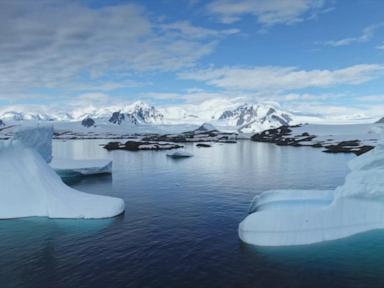
Schools organize polar expeditions because textbook climate science feels abstract to a sixteen-year-old. Reading about glacial retreat in a fluorescent-lit room doesn't hit the same way as watching a building-sized chunk of ice calve into the Southern Ocean and feeling the resulting wave rock your Zodiac boat.
Real educational programs treat the continent as a floating laboratory. Organizations like Students on Ice and IAATO (the International Association of Antarctica Tour Operators) structure these voyages around active data collection. Students aren't passive tourists. They're measuring water salinity, logging whale flukes for global identification databases, and testing snow samples for microplastics alongside working glaciologists and marine biologists.
That hands-on immersion changes how kids think about science. When a student realizes their water sample goes directly into a peer-reviewed polar database, apathy disappears fast.
The Brutal Logistics Nobody Mentions in the Brochure
Here's the part that gets glossed over in heartwarming local news segments. Getting a group of teenagers to Antarctica is a logistical nightmare that takes eighteen to twenty-four months of military-grade planning.
First, you have the Drake Passage. That stretch of water between the southern tip of South America and the South Shetland Islands is notorious for having the roughest seas on the planet. You either get the "Drake Lake" or the "Drake Shake." There's no middle ground. Half your students—and probably two chaperones—will spend forty-eight hours horizontally in their bunks questioning every life choice that led them to Ushuaia, Argentina.
Then there's the gear. You can't show up in a standard winter parka from a suburban mall. Every student needs waterproof outer shells, merino wool base layers, insulated rubber muck boots, and polarized eyewear. Outfitting twenty kids properly costs thousands of dollars before anyone even steps onto an airplane.
The Strict Biosecurity Rules
Antarctica isn't owned by any single country. It's governed by the Antarctic Treaty System, which enforces environmental rules that would shock most travelers.
Before students ever set foot on land, they go through mandatory vacuuming sessions. Every Velcro strap, backpack pocket, and boot tread gets scrubbed and dipped in disinfectant baths. Why? Because a single dandelion seed stuck to a teenager's sock could introduce an invasive species to a fragile polar ecosystem.
Kids also have to maintain a strict five-meter distance from wildlife. If a curious Adélie penguin waddles up to you, you have to back away. Touching anything, taking a single pebble as a souvenir, or leaving behind even a crumb of a granola bar violates international environmental protocols.
How Normal Schools Actually Afford This
Let's talk money, because pretending cost isn't the elephant in the room is insulting.
A typical ten-to-twelve-day expedition cruise to the Antarctic Peninsula runs anywhere from $8,000 to $15,000 per person, excluding international flights to Buenos Aires or Santiago. Multiply that by fifteen students and three teachers, and you're staring at a quarter-million-dollar budget.
So how do non-elite schools make it happen? They start early and treat fundraising like a full-time job.
- Two-year rolling timelines: Schools rarely announce an Antarctica trip for the next semester. They recruit freshmen or sophomores for a trip happening in their junior or senior year, giving families twenty-four months to chip away at the balance.
- Corporate and STEM sponsorships: Local engineering firms, environmental nonprofits, and rotary clubs love funding tangible youth science initiatives. When students pitch their trip as a citizen-science research mission rather than a sightseeing tour, local businesses write checks.
- Group operator berths: Educational travel companies often offer one free chaperone spot for every six to ten paying students, which keeps faculty travel costs from inflating the kids' tuition.
- Scholarship pools: Programs like the Students on Ice Foundation actively fundraise to provide full scholarships for Indigenous youth and students from underrepresented backgrounds who could never afford the ticket price on their own.
What Happens to a Teenager's Brain at 65 Degrees South
Strip away the logistics and the fundraising headaches, and you're left with the actual impact on the kids.
Modern teenagers live inside screens. Their entire social ecosystem exists on six-inch glass rectangles. Put those same kids on an expedition vessel where satellite Wi-Fi is either nonexistent or astronomically expensive, and something weird happens around day three.
They start talking to each other. They play cards in the mess hall. They spend hours standing on the freezing outer deck scanning the horizon for humpback whales or leopard seals.
There's also a massive psychological shift that comes from visiting a place with zero permanent human infrastructure. There are no convenience stores, no hospitals around the corner, and no cell towers. Everything depends on the ship, the crew, and your group following safety protocols to the letter. For high schoolers used to a cushioned, hyper-regulated suburban existence, realizing that nature doesn't care about their comfort is profoundly grounding.
They come back different. College admissions officers see hundreds of essays about volunteering at local food banks or playing varsity soccer. When an applicant writes thoughtfully about analyzing phytoplankton blooms in Paradise Harbor and navigating forty-foot swells, people pay attention.
The Environmental Paradox You Have to Confront
It would be dishonest to ignore the biggest criticism of educational polar travel. Taking twenty people on long-haul flights to southern Argentina and burning marine gas oil to cruise through pristine ice fields generates a massive carbon footprint.
Critics argue that flying kids to Antarctica to teach them about climate change is like burning down a forest to teach fire safety. That's a fair point, and any school planning this kind of trip needs to address it head-on rather than sweeping it under the rug.
Responsible educators build carbon accountability directly into the curriculum. Students calculate the exact emissions of their flights and vessel transit, debate the ethics of polar tourism, and commit to local conservation or emissions-reduction projects when they return home. The core philosophy of IAATO is that visitors become lifelong ambassadors who protect the continent precisely because they've seen it firsthand. Whether that trade-off is worth it remains an open debate, and forcing students to wrestle with that contradiction is actually great education.
How to Start Planning an Expedition From Scratch
If you're an educator, parent, or school administrator who wants to turn a polar field trip from a crazy idea into a real itinerary, don't start by looking at cruise brochures. Start with the administrative groundwork.
- Gauge administrative appetite first. Pitch the concept to your principal and school board as an interdisciplinary STEM and humanities capstone, not a spring break trip. Bring a preliminary risk-management outline so they don't immediately shut it down over liability fears.
- Vet IAATO-member operators only. Never book a school group on a mega-ship carrying more than 500 passengers—vessels that size aren't even allowed to make landfall in Antarctica under IAATO rules. Look for small expedition vessels carrying fewer than 200 passengers, ideally ones with dedicated youth or educational programming.
- Lock down medical and evacuation insurance. Standard school travel policies will not cover you below 60 degrees south latitude. Every single traveler needs specialized polar medical evacuation coverage capable of airlifting someone off the peninsula in an emergency.
- Build a community pitch deck. Create a clear breakdown showing how the trip ties into state science standards, what citizen-science data the students will collect, and how they will present their findings to the community upon return. Use that deck to approach local STEM grants and civic organizations before asking parents for a dime.
Start the conversation at your next faculty or PTA meeting eighteen months before your target departure window—the Antarctic summer season runs strictly from November through March, and small-ship berths sell out years in advance.


