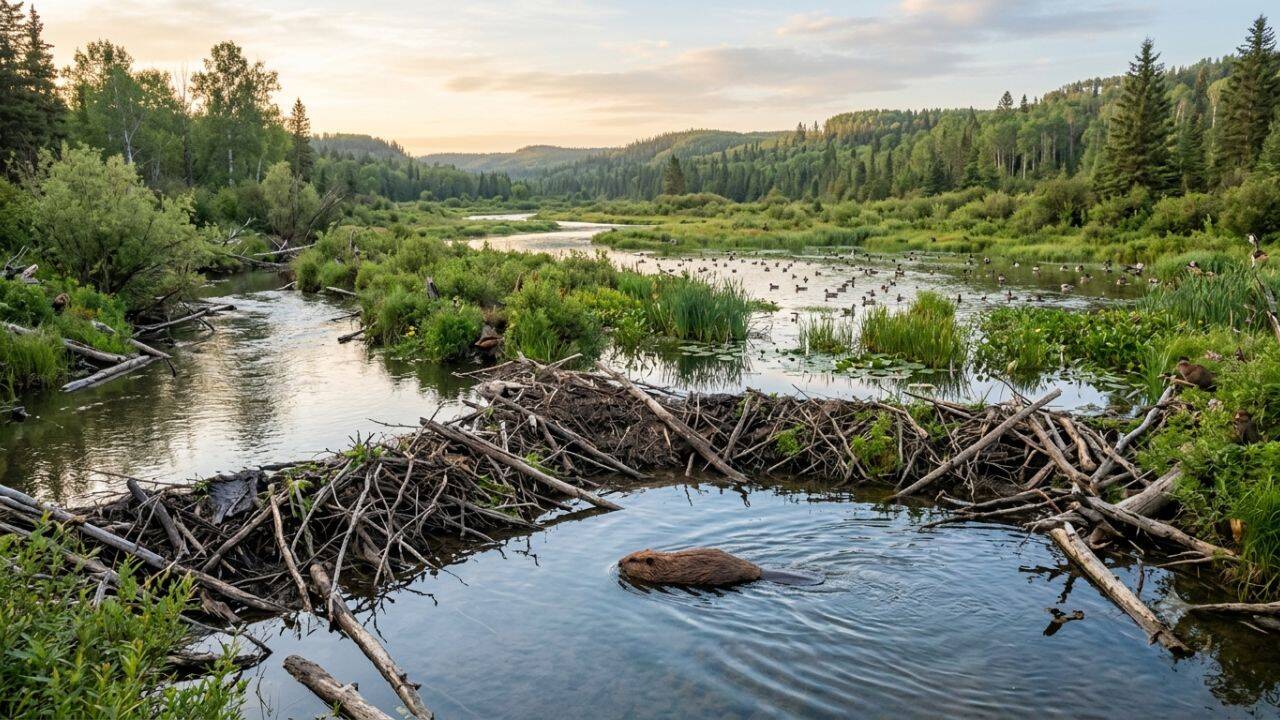
You have probably heard that beavers cut down trees and annoy landowners. But honestly, that narrow view misses the entire point of what these animals actually do for the continent. North American beavers are ecosystem engineers, and removing them from our watersheds centuries ago caused environmental damage we are only starting to reverse.
Before the fur trade decimated populations from an estimated hundreds of millions down to a tiny fraction, these rodents shaped virtually every stream and valley from Alaska to northern Mexico. When we trapped them out, rivers straightened, wetlands dried up, and water tables dropped. Bringing them back isn't just about cute wildlife. It's about survival. You might also find this connected story insightful: Why That Old School Pizza Hut in Pennsylvania Still Captures Our Imagination.
The Engineering Behind the Dams
Beavers do not build dams just to annoy people. They build them to create deep water zones that protect their lodges from predators and secure food storage for the winter.
Using mud, branches, stones, and logs, they slow down fast-flowing streams. This single action triggers a chain reaction across the environment: As highlighted in latest coverage by Apartment Therapy, the results are significant.
- Water spreads out, forming shallow ponds and rich freshwater wetlands.
- Silt and sediment drop out of the water column, clearing up downstream habitats.
- Groundwater recharges as moisture lingers in the soil instead of rushing away.
Building a man-made wetland costs thousands or even tens of thousands of dollars per acre. Beavers handle the entire construction and maintenance process for free.
Fixing Droughts and Floods Naturally
We spend billions of dollars on concrete infrastructure to manage water, yet we routinely ignore the biological solution chewing on willow branches down the street.
Climate change brings extreme swings between dry spells and torrential downpours. Beaver dams act like natural speed bumps on a runaway river. They hold back water during heavy rains, blunting downstream floods. During severe droughts, those same ponds retain moisture long after surrounding creeks have turned to dust.
Research shows that landscapes with active beaver populations maintain significantly higher water resilience during dry summer months. They keep the sponge wet.
Bringing Back Forgotten Wildlife
Nearly half of all endangered or threatened species in North America rely directly on wetland habitats. When wetlands vanish, those species go down with them.
The ponds created by beavers serve as nurseries for fish like salmon and trout. Amphibians, migratory birds, and insects flood into these newly created habitats within months of a colony moving in. Even terrestrial predators like wolves and bears visit these zones because the increased biodiversity offers reliable food sources.
Living With Nature's Builders
Coexisting with wildlife isn't always easy. Sometimes a beaver decides to flood a rural road or chew down an expensive backyard tree.
Killing them or dynamiting their dams rarely works long-term. Another family simply moves into the vacant territory next season. Instead, modern conservationists rely on smart, non-lethal fixes. Flow devices, like pond levelers or perforated pipes inserted through dams, regulate maximum water heights automatically. Wrapping vulnerable tree trunks in heavy wire mesh stops unwanted chewing instantly.
We spent two hundred years trying to straighten and control every drop of water on the continent. It failed. Letting the beavers back to work is the easiest restoration project you could ever ask for.