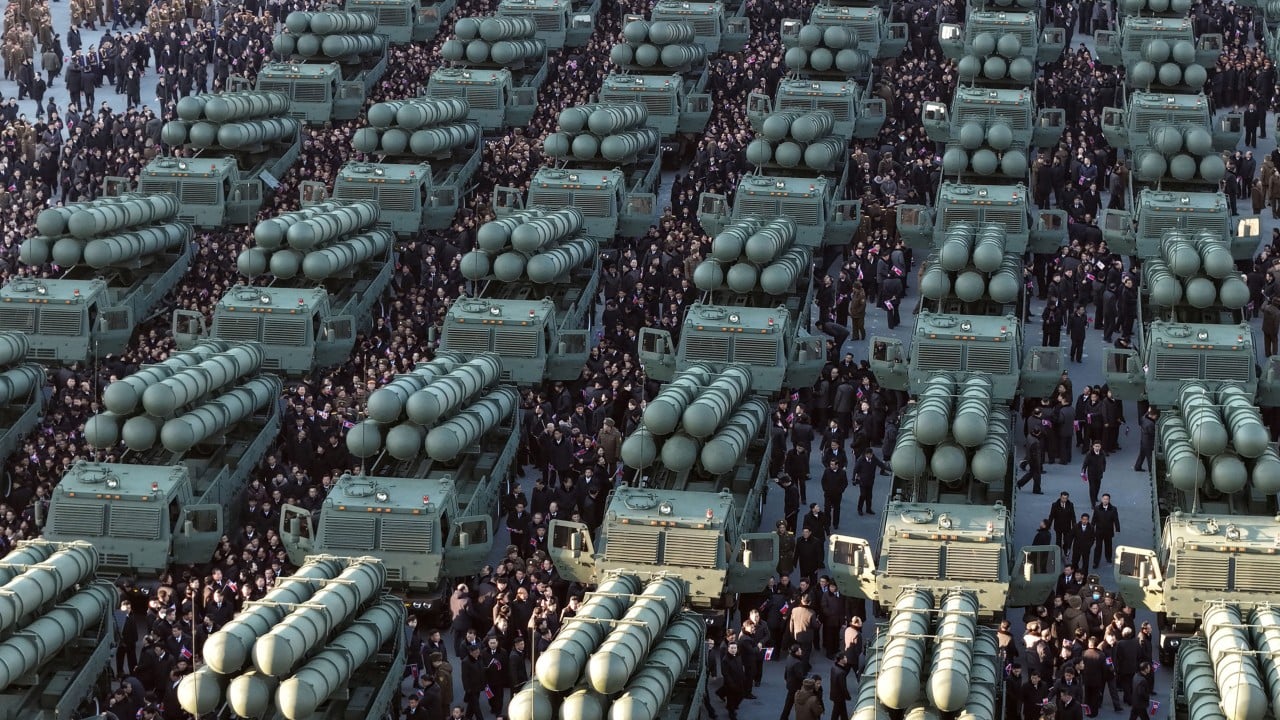
While the rest of the world fixates on shifting trade alliances and regional skirmishes, a much more permanent threat just hit a "very serious" milestone. Rafael Grossi, the chief of the UN’s International Atomic Energy Agency (IAEA), landed in Seoul today with a message that should make anyone lose sleep. Pyongyang isn't just maintaining its nuclear stash; it's aggressively scaling up.
If you've followed the headlines for years, you might feel some "Korea fatigue." We've heard about Yongbyon a thousand times. But the data coming out of April 2026 suggests this isn't the same old song and dance. We’re looking at a regime that has moved past the "testing" phase and is now in a full-blown industrial manufacturing sprint.
The Yongbyon Factory Is Running Overtime
Yongbyon is the heart of Kim Jong Un's nuclear ambitions. Usually, we see one or two facilities active there. Today, the IAEA confirms that almost every major unit is humming. The 5-megawatt reactor is likely on its seventh irradiation cycle. The reprocessing lab, which turns spent fuel into weapons-grade plutonium, saw a massive spike in activity throughout late 2025 and into this spring.
What’s truly alarming isn't just the plutonium. It's the uranium. Satellite imagery has identified a new building at Yongbyon that looks suspiciously like a twin to the existing enrichment halls. This isn't a minor expansion. It’s a doubling down. When you combine plutonium—which is great for compact warheads—with highly enriched uranium, you get a diversified arsenal that's much harder for intelligence agencies to track.
The Light Water Reactor is finally alive
For years, the Experimental Light Water Reactor (ELWR) was a bit of a joke among analysts. It sat there, unfinished or "testing," for over a decade. That changed recently. Grossi pointed out that cooling water discharge—a telltale sign that a reactor is generating heat—has become consistent.
Why does this matter? An operational ELWR gives North Korea a way to produce tritium, the key ingredient for boosted fission weapons or even full-blown hydrogen bombs. It also provides a "civilian" cover for high-level nuclear activity. Don't let the "experimental" tag fool you; this is a production house for the materials needed to level cities.
Breaking Down the Numbers
Let's look at what this actually means for the global stockpile. Most current estimates from groups like the Stockholm International Peace Research Institute (SIPRI) put the North’s count at roughly 50 warheads. However, the new enrichment capacity suggests they could be adding 10 to 20 weapons to that pile every single year.
- Plutonium Stockpile: Estimated enough for 40-60 warheads.
- Uranium Capacity: Doubling with the new Yongbyon facility.
- Annual Growth: Potentially 15% to 20% year-over-year.
It’s no longer about whether they have "the bomb." It’s about how many they can put on a rack. Kim Jong Un explicitly called 2025 a "crucial year" for overfulfilling production plans. He wasn't bluffing. The sheer volume of material means they can afford to fail a few tests or lose a few missiles in a conflict and still have a devastating second-strike capability.
Why the Miniaturization Myth is Dangerous
You'll still hear some skeptics say, "Sure, they have the nukes, but can they actually put them on a missile?" Honestly, that's wishful thinking at this point. While some experts doubt the reliability of their reentry vehicles, the IAEA’s current assessment of their "serious increase" in capability suggests the technical gap is closing fast.
The North has shown off the Hwasong-17 and Hwasong-18 ICBMs. These aren't just for show. They’re designed to reach the US mainland. If you can build a 100-ton missile that flies halfway across the globe, you’ve likely figured out how to make a warhead small enough to sit on top of it. Assuming they can't miniaturize is a gamble that no defense secretary wants to make in 2026.
The Russian Connection
There’s a giant elephant in the room: Moscow. While Grossi noted the IAEA hasn't found "smoking gun" evidence of Russian nuclear tech transfers yet, the political climate says otherwise. North Korea has been shipping shipping containers of munitions to Russia for its ongoing war efforts. In return, they’re getting food, fuel, and—most likely—technical know-how.
Even if Russia isn't handing over "Nuke 101" blueprints, they might be helping with the hard stuff, like heat shielding for reentry or satellite guidance. This "synergy" (to use a corporate word I usually hate, but fits here) between a desperate Russia and an ambitious North Korea is a nightmare for non-proliferation.
What This Means for Your Security
If you live in Seoul, Tokyo, or even Los Angeles, the "North Korea problem" just got significantly more expensive. The IAEA's warning isn't just a bureaucratic report; it's a signal that the era of "strategic patience" is officially dead.
The immediate next steps aren't found in a UN resolution—those have been ignored for twenty years. Instead, look for:
- Increased Trilateral Drills: The US, Japan, and South Korea will likely ramp up joint naval exercises, specifically focusing on missile defense.
- South Korea’s Own Nuclear Debate: Don't be surprised if Seoul starts talking more loudly about its own nuclear deterrent. If the neighbor has 50+ nukes and a growing factory, the "umbrella" of US protection starts to look a bit flimsy to some local politicians.
- Sanction Tightening on Dual-Use Goods: Expect a crackdown on the chemicals and specialized machinery used for centrifuge cooling, which the North is clearly still managing to sneak past borders.
The bottom line is simple: North Korea has stopped trying to get our attention and started trying to outpace our defenses. When the UN's top watchdog uses words like "very serious," it’s time to stop treating this as a regional curiosity and start treating it as a global production crisis.