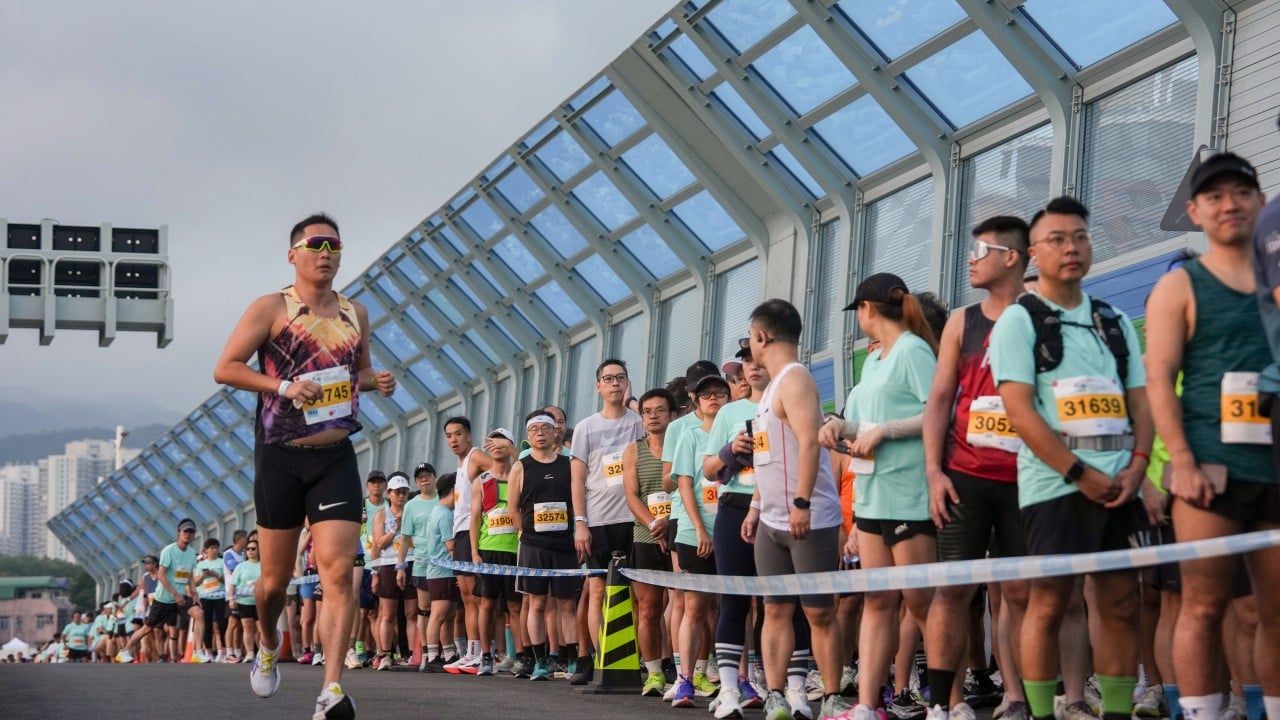
The inaugural Northern Metropolis Marathon in Hong Kong just wrapped, and the local running community is throwing a collective tantrum.
If you believe the prevailing media narrative, the event was an unmitigated disaster. Runners took to social media to complain about congested start corrals, delayed baggage claims, sparse hydration stations in the back half of the course, and uneven road surfaces in the New Territories. The mainstream press dutifully amplified every single complaint, framing the race organizers as incompetent amateurs who failed to deliver a five-star customer service experience. For a more detailed analysis into this area, we recommend: this related article.
This is the lazy consensus of modern sports journalism. It treats a 42.2-kilometer physical crucible like a poorly managed brunch buffet.
I have spent fifteen years managing logistics, route safety, and operations for mass-participation endurance events across Asia. I have seen organizers blow millions of dollars on unnecessary VIP perks while ignoring basic crowd flow, and I have watched entitlement steadily rot the core of distance running. The outrage over the Northern Metropolis Marathon misses the real story entirely. The friction experienced on that course wasn't a failure of basic competence; it was the inevitable collision between an ambitious, developing urban infrastructure project and a generation of recreational runners who confuse paying an entry fee with purchasing a frictionless theme park ride. For broader information on this topic, extensive reporting can also be found at NBC Sports.
The Myth of the Turnkey Inaugural Marathon
Every major marathon on the planet—from New York to Tokyo to Berlin—started as a logistical mess.
When Fred Lebow organized the first New York City Marathon in 1970, 127 runners ran four loops around Central Park. The race had a budget of $1,000, almost zero crowd control, and finish-line clocks that broke. Even when it expanded to the five boroughs in 1976, logistical bottlenecks, missing water cups, and traffic conflicts were standard features of the day. You cannot simulate the exact friction of thousands of human bodies moving through a live municipal environment until you actually put them on the asphalt.
The Northern Metropolis itself is a massive, multi-decade urban development blueprint designed to transform Hong Kong's northern border region into an economic and residential hub. Staging a full-scale marathon through an active development zone is a fundamentally different operational beast than closing down the established, predictable arteries of Kowloon and Hong Kong Island for the Standard Chartered Hong Kong Marathon.
Consider the sheer mechanics of municipal permitting and crowd dynamics:
- Dynamic Road Geometry: Infrastructure in the Northern Metropolis is actively shifting. Temporary barriers, uneven asphalt transitions, and narrow bottleneck junctions are physical realities of a region under construction, not deliberate traps set by race directors.
- Permit Windows: Local transport authorities grant razor-thin closure windows for inaugural events. Organizers do not get a blank check to shut down commercial transit routes for twelve hours while slow-moving back-of-the-pack runners take seven hours to finish.
- Supply Chain Friction: Delivering tens of thousands of liters of water and isotonic fluids to remote border-adjacent checkpoints requires navigating the exact same narrow access roads that runners are occupying.
When critics demand World Marathon Major polish from a Year One regional race, they are demonstrating a complete ignorance of event operations. You do not get operational perfection without Year One scar tissue.
The Consumerization of Suffering
Let's examine the specific complaints dominating the headlines. Runners complained about waiting too long to drop off and retrieve their bags. They complained that the course felt lonely and lacked cheering crowds. They complained that the water stations ran low on paper cups during peak congestion.
Notice what is missing from this list? Actual life-threatening negligence. Nobody died from preventable heatstroke due to a lack of medical tents. Nobody was struck by oncoming traffic because of failed police barricades. The core safety perimeter held.
The complaints are overwhelmingly about comfort, convenience, and aesthetics.
Over the last decade, mass-participation running has been aggressively gentrified. Running clubs have morphed into lifestyle brands. Races are marketed as experiential travel packages complete with custom finisher jackets, drone light shows, and curated Instagram photo zones. As entry fees have climbed, the psychological contract between the runner and the race director has shifted. Today's amateur runner views themselves not as an athlete testing their resilience against a brutal distance, but as a paying customer purchasing an entertainment product.
When you adopt a consumer mindset, any friction feels like a breach of contract. If a baggage truck is delayed by twenty minutes because of municipal traffic routing, it is treated as a corporate scandal rather than a minor logistical hiccup. If a water station runs out of cups for three minutes during a massive surge of mid-pack runners, it is framed as a human rights violation rather than a predictable bottleneck that any prepared marathoner anticipates by carrying a soft flask.
The brutal truth is that modern runners have become soft. They train with carbon-plated super shoes, GPS watches that dictate their exact cadence, and personalized fueling schedules, yet they completely unravel the moment an external variable deviates from their expectations.
What Runners Actually Need to Know About Inaugural Races
If you are signing up for the first edition of any endurance event, you are voluntarily acting as a beta tester. Treating a Year One race like a mature commercial product is a guaranteed recipe for misery.
Stop asking whether the organizers provided enough amenities, and start asking why you outsourced your basic survival logistics to strangers in high-visibility vests.
1. Self-Sufficiency is Non-Negotiable
Relying entirely on aid stations for hydration and nutrition in a maiden race is tactical suicide. Aid stations are manned by unpaid volunteers who are often working their very first event. They do not know how to pace cup distribution during a sudden wave of runners. Carry a 500ml handheld bottle or a hydration belt. Pack your own gels and electrolytes. If the aid stations are well-stocked, treat them as a bonus. If they are overwhelmed, you keep moving without missing a beat.
2. Expect Baggage Chaos
Baggage handling is the single highest point of failure in any mass-participation race. Moving ten thousand individual bags from point A to point B while roads are closed requires military-grade precision that inaugural teams rarely possess. Do not check a bag unless you are willing to wait an hour in the cold to get it back. Wear throwaway thrift-store layers to the start corral, toss them into the donation bins at the gun, and carry your phone, transit card, and a folded emergency foil blanket in your running shorts.
3. Research the Topography, Not the Marketing Copy
Organizers sell the vision of a race; civil engineering dictates the reality. Before registering for any race in a developing zone, pull up the route on satellite imagery. Look at the road widths. Identify the pinch points where four lanes narrow into two. Expect uneven surfaces and sharp 180-degree turnarounds. When you anticipate the ugliness of the course in advance, it loses its power to break your mental focus on race day.
The Uncomfortable Downside of Defending Imperfection
Let's be completely fair here. Defending the operational reality of an inaugural marathon does not mean giving race organizers a free pass for genuine incompetence.
There is a massive difference between unavoidable logistical growing pains and preventable greed. When organizers aggressively oversell race entries to maximize registration revenue—stuffing fifteen thousand runners onto a course engineered to safely hold eight thousand—that is not a "Year One learning curve." That is cash-grab negligence. Overcrowding narrow choke points creates genuine trip hazards, spikes injury rates, and ruins the athletic integrity of the event for everyone from the elite wave to the final finisher.
Furthermore, poor communication before the gun goes off is indefensible. If the course has narrow sections, if water stations are spaced further apart due to access restrictions, or if baggage retrieval will require a long walk from the finish chute, organizers owe athletes total transparency in the pre-race briefing. Hiding logistical limitations behind glossy promotional graphics breeds justified resentment.
The organizers of the Northern Metropolis Marathon clearly failed on expectation management. They sold a polished, world-class vision while delivering a rough-around-the-edges operational reality. They deserve sharp criticism for overpromising and under-communicating.
Stop Sanitizing the Marathon
Despite those valid operational critiques, the broader cultural reaction remains pathetic.
The marathon was never meant to be a sanitized, predictable, customer-service-driven stroll through a manicured park. Its entire historical and psychological value lies in its unpredictability, its discomfort, and its capacity to strip away your modern conveniences until all you have left is your own grit.
If the Northern Metropolis organizers listen to the loudest voices in the current backlash, they will spend next year's budget hiring more baggage handlers, setting up extra selfie stations, widening the comfort margins, and raising entry fees to pay for the privilege. They will sand off every rough edge until the race is indistinguishable from every other corporate fun run on the calendar.
Real endurance athletes don't need more hand-holding at mile twenty. Leave the fragile complainers in the comment sections, pack your own water, and run the course in front of you.