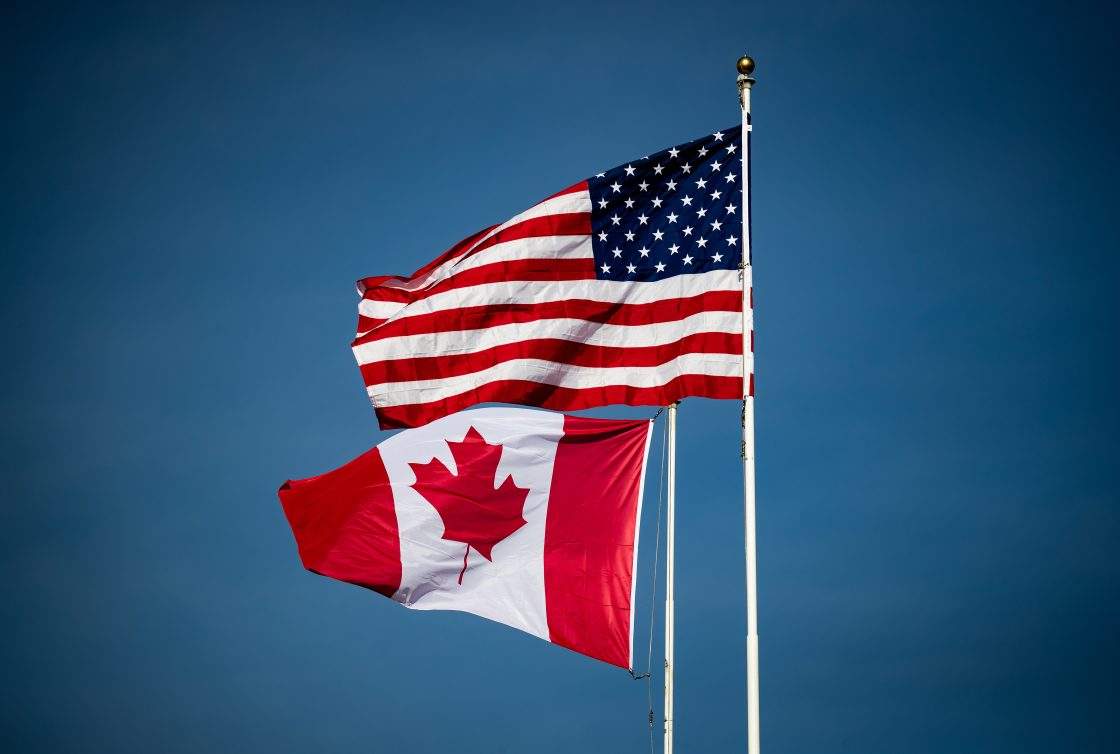
Borders are lines drawn on aging paper, but winter respects no ink.
Standing on the banks of the Detroit River when the ice begins to break, you can hear the low, metallic groaning of slabs grinding against concrete pylons. Just across that grey water sits Windsor, Ontario. For generations, Americans looked north not with anxiety, but with a quiet, paternal reassurance. We saw our polite, orderly sibling: a place of endless pine, universal healthcare, and an unspoken agreement that doors could be left unlocked.
Then came the rhetoric from the south. The sharp words echoing across podiums, claiming that Canada—our steadfast trading partner, our cultural mirror—is destroying itself. The diagnosis offered to the public points a finger at unchecked immigration, painting a picture of a nation buckling under the weight of its own open doors.
It is a dramatic narrative. It is also an extraordinary flattening of reality.
To understand what is actually happening in the world's second-largest country by landmass, you have to step away from the cable news chyrons and walk down College Street in Toronto at dusk. You have to smell the cardamom drifting from a Somali-owned bakery standing shoulder-to-shoulder with a Greek diner that has been open since the seventies. You have to look at the numbers, yes, but more importantly, you have to look at the human cost of a demographic panic.
Let us start with the arithmetic. Canada is an aging nation. This is not a political opinion; it is a cold, biological certainty. The birth rate has hovered well below the replacement level of 2.1 children per woman for years. The Baby Boomers are retiring at a rate of thousands every single day. Without an influx of working-age adults, the math breaks down entirely. Tax revenues shrink. Hospitals groan under the weight of an elderly population requiring intensive care. Pension funds face depletion.
Immigration was never a charitable afterthought for Canada. It was an emergency protocol disguised as economic policy.
To fill the gap, Ottawa turned the tap. And the tap came open with a force that surprised even the architects of the policy. Hundreds of thousands of international students, temporary foreign workers, and permanent residents arrived in a remarkably short span of time. They came answering an invitation. They came seeking the quiet promise of the north.
And then the infrastructure hit a wall.
Consider what happens when you pour a gallon of water into a teacup. The water does not care that the cup is small. It simply overflows.
Canada built its economic engine on population growth without expanding its physical foundation at the same speed. Municipal zoning laws froze housing supply in amber for decades. Single-family neighborhoods stretched outward while high-density options remained choked by red tape. The result was a housing market that detached entirely from local wages. In cities like Vancouver and Toronto, renting a modest apartment became an exercise in quiet desperation for young professionals and newcomers alike.
This is where the political narrative finds its footing. When a nurse who has lived in Ontario her entire life cannot afford a two-bedroom condo, and when a newly arrived family from Punjab shares a basement with eight other people, tension is inevitable. Frustration builds. People look for a villain.
It is easy to blame the newcomer. It is always easier to blame the face you do not recognize than the zoning commissioner whose name you have never heard.
Former leaders and political figures like Donald Trump look north and diagnose a self-inflicted wound. They see rising homelessness in downtown Vancouver, tent cities in Toronto parks, and strained public school systems, and they frame it as a cautionary tale of multiculturalism gone too far. They use Canada as a rhetorical cudgel to justify stricter southern borders and inward-looking policies at home.
They are diagnosing the symptom while ignoring the disease.
Canada is not being destroyed by immigrants. Canada is experiencing the agonizing growing pains of a society trying to outrun its own demographic cliff by importing a future, while failing to build the houses required to shelter it.
Walk through a hospital in Calgary on a freezing Tuesday morning. Step past the waiting room where patients nurse flues and broken bones. Look at the staff. The nurse taking your vitals likely trained in Manila. The physician reviewing your chart might have earned his degree in Dublin or New Delhi. Without them, the Canadian healthcare system would have collapsed into a heap of closed wards and abandoned emergency rooms five years ago.
The paradox is stark. The very system accused of straining under the weight of immigration is simultaneously kept alive by it.
Yet, numbers on a balance sheet do not capture the emotional toll. Imagine arriving in Edmonton in November. You have left behind the vibrant warmth of West Africa or South Asia. You step off the plane into a wall of biting, sub-zero air that feels like physical glass against your skin. You have traded your entire social fabric, your family network, your history, for a chance at security.
You find a job, but it is well below your qualifications because licensing bodies refuse to recognize your foreign credentials. You spend your nights studying for recertification while working a night shift in logistics. You open local news sites and read opinion pieces arguing that your very presence is an existential threat to the nation you are trying desperately to love and serve.
That is the invisible weight. That is the human element missing from the headlines.
Nations do not usually collapse in a cinematic flash of fire. They fray slowly at the edges. They fray when the social contract begins to feel transactional rather than communal. For decades, Canada prided itself on the idea of the mosaic—a cultural fabric where pieces retained their distinct shape while forming a coherent whole. Today, that mosaic is being tested by the sheer velocity of change.
The federal government has recently recognized this disconnect. Caps on international students have been introduced. Temporary resident targets have been slashed. The political pendulum is swinging back toward moderation and consolidation, as Ottawa realizes that you cannot build a house by simply dumping lumber on an empty lot; you need carpenters, blueprints, and time.
This is not the story of a country destroying itself. It is the story of a country being forced to grow up too fast.
When we look north from the United States, we should not look with smug satisfaction or ideological weaponization. We should look with uncomfortable recognition. Canada’s housing crisis, its healthcare strain, its struggle to balance compassion with capacity—these are our struggles, too. They are the universal challenges of a modern Western world navigating a shifting global population and an aging workforce.
The ice on the Detroit River will melt. Spring will come to Windsor and to Toronto. The cranes will rise, eventually. The new arrivals will learn to shovel snow, and their children will play hockey with accents born of a dozen different homelands.
The question is not whether Canada can survive its current turbulence. The question is whether we have the courage to look past the political soundbites and see the human reality beneath them. A nation is not defined by the walls it builds, but by the grace with which it meets its own future.