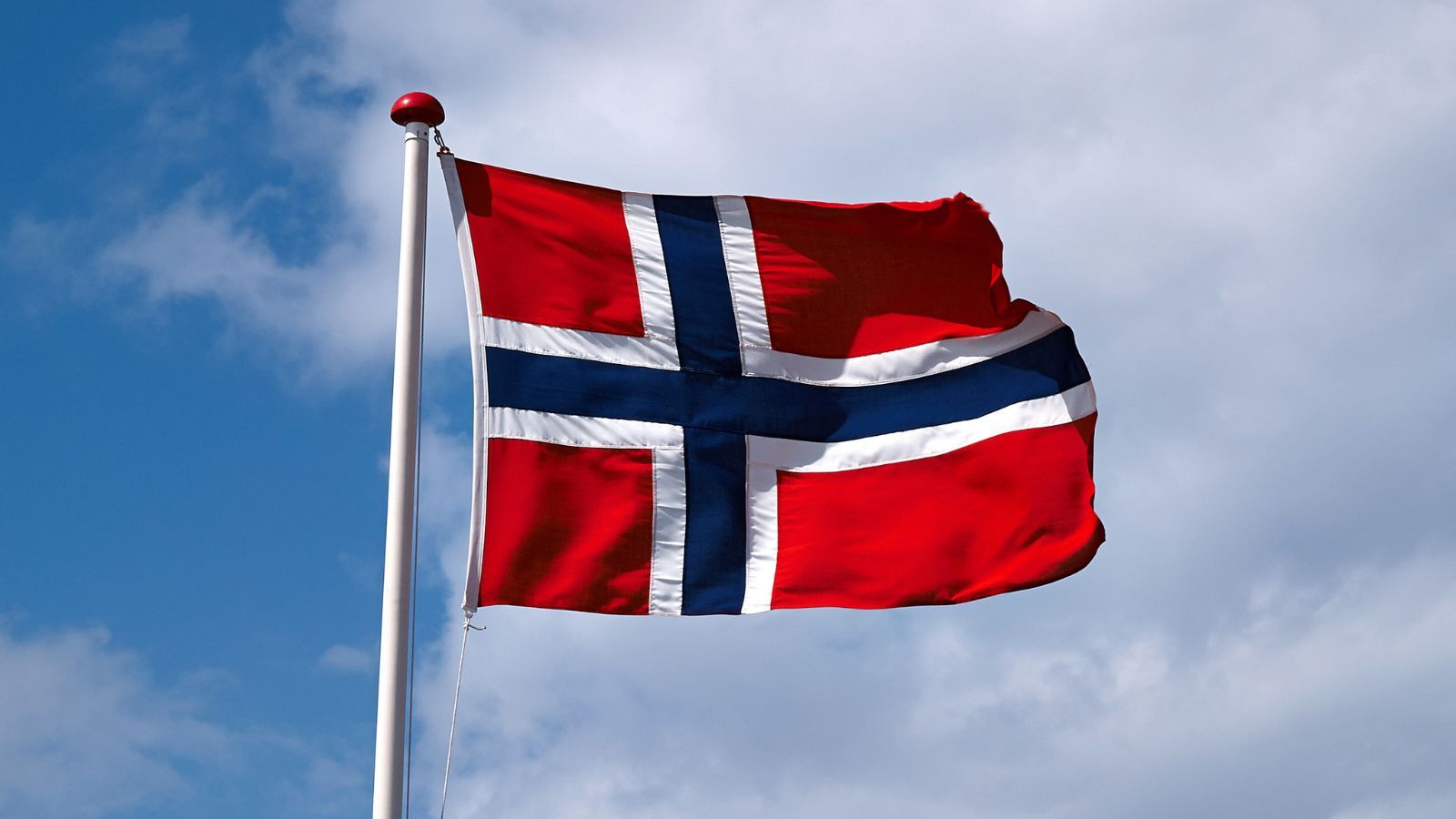
Big Tech loves cheap, clean electricity. For years, Norway handed it out like candy to anyone willing to build a massive server farm in the Nordic cold. That party is officially over.
Norway has started halting power connections for new data centers because its electrical grid simply cannot handle the tsunami of incoming requests. Statnett, the state-owned transmission system operator, and regional grid companies are staring down a backlog of capacity reservations that would swallow a massive chunk of the country's entire power supply. If you're trying to plug a new hyperscale AI cluster or crypto mine into the Norwegian grid right now, you're going to get a polite—or maybe not so polite—no.
It's a brutal wake-up call for an industry that treats electricity like an infinite resource.
The Real Reason Norway Pulled the Plug
Let's look at the actual numbers, because they're staggering. Norway produces around 155 terawatt-hours (TWh) of electricity in a normal year, almost entirely from hydropower. That sounds like a lot until you look at the queue of companies begging for grid access.
Statnett has repeatedly warned that total applications for new grid capacity across the country exceed Norway's current total power generation. Data centers aren't the only culprits—battery factories, offshore oil electrification, and green hydrogen projects are all fighting for the same megawatts—but server farms are uniquely aggressive. They ask for massive, continuous baseload power, and they want it yesterday.
In southern Norway, where most people live and where export cables connect to the UK and continental Europe, the grid is already maxed out. Statnett confirmed that the transmission network in the south has hit capacity limits. Regional utilities like Glitre Nett and Elvia have had to turn away or freeze commercial connection requests because the physical wires just aren't thick enough to carry the load without risking blackouts.
Even northern Norway, long touted as a paradise of surplus energy with dirt-cheap prices, is hitting a wall. After Google announced its massive data center project in Skien and other operators piled into regions like Nordland and Troms, local grid operators realized their surplus was evaporating on paper before a single server rack was even bolted to the floor.
How We Got Into This Mess
For a decade, Norwegian politicians rolled out the red carpet for foreign tech giants. They slashed electricity taxes for large data centers in 2016, pitching Norway as the ultimate green battery for Europe's digital economy. The pitch made sense on paper. Cool ambient temperatures meant lower cooling costs, and 98% renewable hydropower meant Apple, Google, and Microsoft could slap a "carbon-neutral" sticker on their cloud services.
Then two things happened. First, cryptocurrency miners showed up to gorge on subsidized power while employing almost nobody. Second, the generative AI boom hit, and power density per server rack exploded from 5 kilowatts to over 50 kilowatts practically overnight.
Suddenly, a single data center campus wasn't asking for 20 megawatts. It was asking for 300 or 500 megawatts. To put that in perspective, 500 megawatts is roughly enough electricity to power a city of several hundred thousand people.
And what does Norway get in return? That's the question fueling a massive political backlash in Oslo. Unlike traditional Norwegian heavy industry—like aluminum smelting or fertilizer production—which employs thousands of locals in remote towns, a modern hyperscale data center is mostly empty hallways filled with humming metal. Once the construction crews pack up and leave, a facility consuming as much power as a major city might only employ 30 to 50 full-time staff.
The "Phantom Queue" Problem
If you've ever worked in energy infrastructure, you know the grid queue is full of ghosts. Norway's grid operators got burned by a classic industry flaw: first-come, first-served capacity hoarding.
Under old rules, developers could reserve massive blocks of grid capacity years in advance without proving they had financing, land permits, or actual customers. Speculators locked up hundreds of megawatts just so they could flip the permitted land to a hyperscaler later at a massive markup.
Because Statnett and regional utilities were legally obligated to hold that capacity for whoever got in line first, legitimate industrial projects—like local manufacturing expansions or municipal electrification—got stuck behind speculative data center proposals that didn't even have a concrete foundation poured yet.
The Norwegian government finally stepped in to stop the hoarding. Energy Minister Terje Aasland and the Norwegian Water Resources and Energy Directorate (NVE) rolled out stricter "maturity criteria" for grid connections. Now, if you want a spot in the queue, you have to prove your project is real. If you miss milestones, you lose your reservation.
Still, clearing out the phantom projects takes time, and in the meantime, several regions have effectively frozen new approvals while they figure out who actually deserves the electrons.
The 2025 Data Center Law Changed the Game
Norway isn't just throttling power connections; it's putting data centers under a microscope. In 2025, Norway became the first country in Europe to enforce a dedicated Data Center Act, forcing operators to register with the authorities, disclose who owns them, and explain exactly what kind of services they're running.
Why? Because Oslo got tired of discovering that a "green data center" taking up scarce grid capacity was actually a shadowy crypto-mining rig owned by an offshore shell company.
Under the new regulatory framework, the government explicitly states that it wants to steer scarce power toward industries that create genuine societal value and local jobs. Crypto mining is at the absolute bottom of that list. Even traditional cloud storage is facing tough questions. Politicians from both the left and the right have openly questioned whether Norway should be exporting its cheap hydropower via fiber-optic cables just so Europeans can store cat videos and generate AI images, while Norwegian households and traditional factories face higher electricity bills.
What Most People Get Wrong About Nordic Energy
There's a persistent myth in the tech sector that Scandinavia has an endless ocean of cheap, green electricity waiting to be tapped. People look at a map of Norway, see endless fjords and mountain waterfalls, and assume you can just build another dam whenever Google needs another gigawatt.
That's completely detached from reality.
Norway already dammed almost all of its economically and environmentally viable rivers decades ago. Building new large-scale hydropower is practically off the table due to strict environmental protections and fierce local opposition. Wind power? Even worse. Onshore wind projects in Norway have sparked massive political protests, court battles over indigenous Sámi reindeer herding rights, and years of permitting paralysis.
Meanwhile, building new high-voltage transmission lines across Norway's brutal, mountainous terrain takes 10 to 15 years from initial planning to flipping the switch. You cannot build a grid at the speed of Silicon Valley product cycles.
When Norway halts power connections for new data centers, it's not a temporary administrative hiccup. It's a hard physical limit colliding with exponential compute demand.
Where Tech Companies Are Pivoting Now
If you're an infrastructure planner, a site selector, or a tech investor banking on cheap Nordic power, you have to adjust your playbook immediately. The era of walking into a Nordic municipality and securing a 200-megawatt grid connection on a handshake is dead.
Here is how the market is actually adapting on the ground:
- Co-location with behind-the-meter power. Instead of begging Statnett for a grid hookup, developers are hunting for direct power purchase agreements (PPAs) tied to stranded renewable assets or industrial sites that already have grid capacity from closed paper mills and smelters. If the substation is already there, you bypass the worst of the transmission bottleneck.
- Heat reuse isn't optional anymore. In Norway and across the Nordics, municipalities are rejecting data center permits unless the operator has a concrete plan to pipe waste heat into district heating networks, vertical farms, or land-based fish farms. If you're just venting megawatts of heat into the atmosphere, local politicians won't sign off.
- Shifting south—paradoxically. While northern Europe fights over grid congestion, some AI training workloads (which don't care about latency) are looking toward places with massive solar overbuild, like Spain, or regions in North America where natural gas peaker plants can bridge the gap until nuclear or geothermal comes online.
- Grid-interactive UPS systems. Forward-thinking operators are finally realizing they sit on massive banks of batteries and backup generators. By offering frequency containment reserves back to the grid—agreeing to shed load or discharge batteries during peak winter cold snaps—data centers can negotiate faster grid access with stressed utilities.
The Hard Truth for Digital Infrastructure
Norway's freeze on new data center power connections is a preview of what's coming to every major tech hub on the planet. We've already seen similar grid moratoriums in Dublin, Amsterdam, Frankfurt, and parts of Northern Virginia.
For years, software engineers treated hardware and electricity as somebody else's problem. Compute was abstract. Cloud was infinite.
Now, the physical world is pushing back. Copper transformers take three years to manufacture. High-voltage substations take a decade to permit. Hydropower reservoirs only hold so much rain and snowmelt.
If you're planning a digital infrastructure project in Europe right now, stop looking at where electricity was cheap five years ago. Look at where transmission capacity actually exists today, bring your own energy storage to the table, and be ready to prove to local governments that your servers are worth more to their community than the factory down the road.