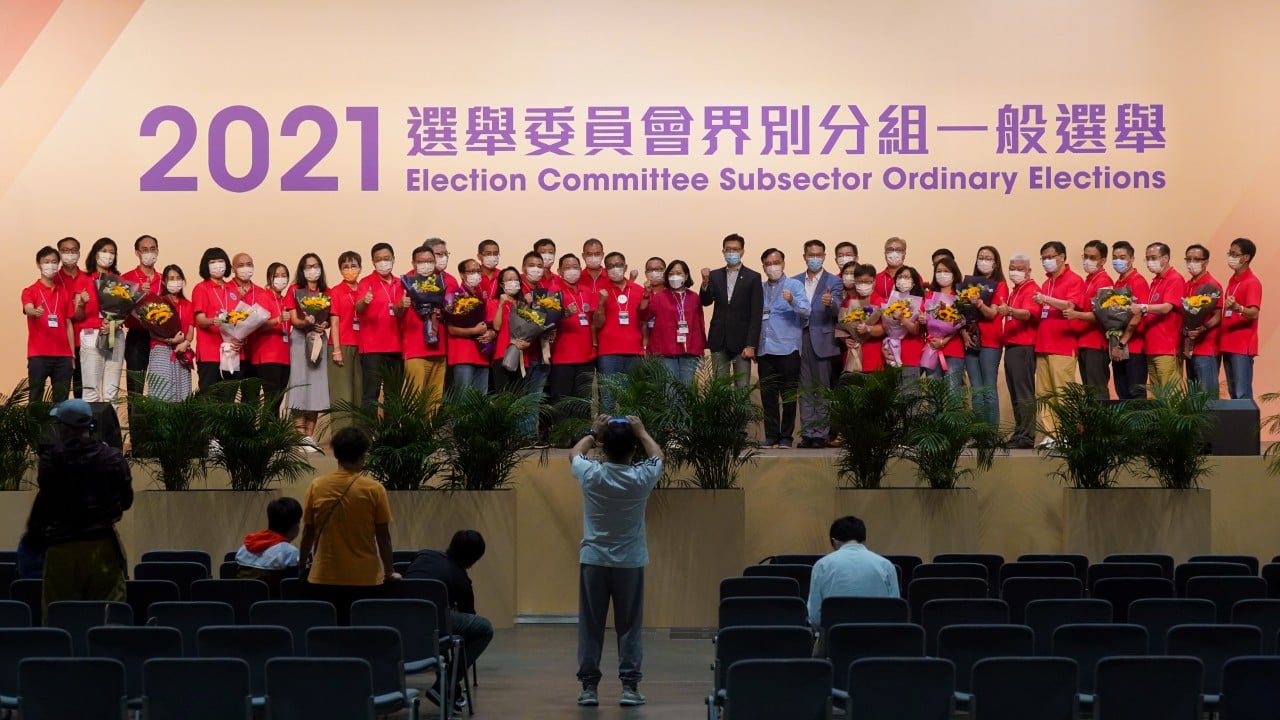
Every newsroom in the city is hyperventilating over a calendar window. October 7 to October 20. Circle it in red. The nomination period for Hong Kong’s 1,500-member Election Committee has been locked in by the government, with a November 22 polling date trailing right behind.
Cue the standard, lazy media narrative. Analysts are dusting off their old templates, treating the two-week administrative window like a suspenseful thriller where political fortunes hang in the balance. They obsess over subsectors, parse the 982 elected seats up for grabs, and pretend that the mechanics of candidate registration hold the key to the city's trajectory.
It is an elaborate distraction.
Focusing on the October nomination dates is like analyzing the steering wheel of a car while ignoring that it’s locked onto a fixed track. The lazy consensus assumes that procedural updates, candidate counts, and subsector jockeying represent actual political competition. They do not. Treating an engineered architecture like a traditional electoral contest fundamentally misdiagnoses how power operates in post-overhaul Hong Kong.
The Anatomy of a Misread Routine
Let us look at the mechanics. The Election Committee is split across five distinct sectors spanning forty subsectors. It dictates the selection of the Chief Executive and populates a hefty chunk of the Legislative Council. When the nomination period opens on October 7, the people rushing to file paperwork are not entering an open ideological marketplace. They are slotting into a meticulously curated ecosystem designed around absolute alignment.
The lazy narrative treats this process as a high-stakes puzzle. Headlines breathlessly ask who will run, which factions will secure nominations, and whether voter turnout will cross arbitrary thresholds.
This framing ignores institutional reality. Following Beijing's structural overhaul of local governance, the criteria for participation were codified down to strict definitions of political loyalty and administrative vetting. The Candidate Eligibility Review Committee ensures that every single name on the ballot passes a stringent screening process long before a voter steps into a booth.
When the rules of entry require pre-approval by design, the nomination window ceases to be an event of democratic tension. It becomes a compliance audit.
Stop Asking About Turnout, Start Asking About Economic Alignment
If you ask the mainstream press what matters about the upcoming November 22 poll, they pivot directly to voter turnout rates and sector representation. People Also Ask queries are flooded with variations of: "Who can vote in the Election Committee subsectors?" or "How many seats are decided by election versus appointment?"
These questions miss the forest for the trees. They treat the committee as an autonomous body whose policy outputs depend on internal debates. In practice, the structural mandate of the committee is macroeconomic and administrative execution, not legislative friction.
Imagine a corporate board where every member is hand-picked to execute a single, pre-determined strategic pivot. Do you spend your time analyzing whether Director A or Director B fills seat number forty-two? Of course not. You look at the balance sheet, regulatory friction, and capital flows.
The real story of Hong Kong's governance isn't hidden in the October 20 nomination deadline. It is written in how the city integrates its capital markets with the Greater Bay Area, manages talent retention, and navigates global liquidity shifts. The committee members elected in November will ultimately rubber-stamp executive priorities that are tethered entirely to Beijing's broader economic blueprints. Debating their individual identities is political theater.
The Uncomfortable Truth About Compliance Architecture
I have watched observers waste decades trying to apply Western electoral models to jurisdictions built on entirely different governance frameworks. It is an exercise in professional delusion.
The architects of the current system were explicit about their goals: predictability, elimination of systemic friction, and absolute alignment between the executive branch and the legislature. By collapsing political opposition and replacing it with a vetted "patriots-only" framework, the system achieved its primary objective. Friction is gone. Speed of execution has replaced legislative gridlock.
The downside of this contrarian approach? It strips away the illusion of choice, leaving investors and analysts with a stark reality. You cannot hedge political risk in Hong Kong by betting on electoral upsets because structural upsets have been engineered out of the equation.
The nomination period will close on October 20. The forms will be checked. The committee will be seated. The Chief Executive will be selected in March with the predictable precision of a Swiss watch.
Stop looking for drama where there is only administration. Watch the capital, watch the cross-border integration metrics, and stop pretending the ballot box tells you where the power actually lives.