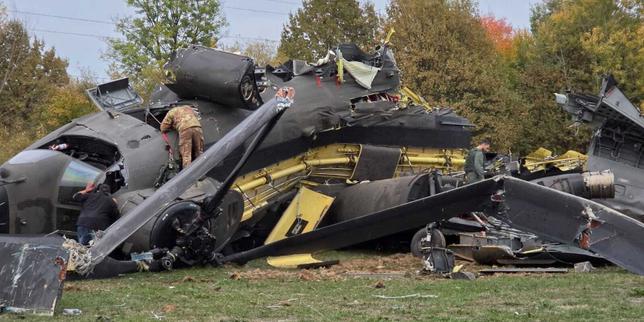
Military aviation losses during peacetime stabilization missions rarely stem from hostile fire; they are the predictable output of intersecting environmental constraints, aging airframes, and fragmented multinational command logistics. The crash of a European Union Force (EUFOR) helicopter in Bosnia and Herzegovina—resulting in four fatalities and twelve injuries—exposes the structural vulnerabilities inherent in maintaining air mobility across the Dinaric Alps under Operation Althea. Understanding this incident requires stripping away generic press-release narratives and examining the mechanical, meteorological, and organizational variables that govern rotary-wing operations in the Western Balkans.
The Structural Vulnerability of Balkan Air Mobility
Peacekeeping missions operate inside a specific risk paradox. Because the threat of active ground-to-air combat is low, flight operations routinely shift toward utility transport, medical evacuation, and troop rotation across complex terrain. This operational tempo generates high flight-hour accumulation without the redundant electronic warfare and combat search-and-rescue escorts deployed in active warzones.
In Bosnia and Herzegovina, EUFOR relies on medium-lift utility helicopters—typically platforms such as the Airbus H215M (Cougar), Sikorsky UH-60 Black Hawk, or AgustaWestland AW139, depending on the contributing nation's rotation—to bridge infrastructure gaps left by mountainous geography and degraded road networks. When an airframe carrying sixteen personnel suffers a catastrophic failure, the casualty rate reflects both the high passenger load factor typical of routine administrative flights and the unforgiving vertical relief of the region.
Three Primary Failure Vectors in Alpine Rotary Operations
To evaluate how a routine transit degrades into a mass-casualty event, analysts isolate three distinct operational vectors:
- Orographic Meteorology and Microclimate Instability: The Dinaric Alps create abrupt transitions between Mediterranean and continental air masses. Pilots navigating narrow river valleys—such as the Bosna, Neretva, or Vrbas corridors—encounter sudden katabatic winds, localized wind shear, and rapid cloud-base lowering. Unlike fixed-wing aircraft operating at high flight levels, utility helicopters fly within the boundary layer where terrain-induced turbulence directly degrades rotor efficiency and tail-rotor authority.
- Spatial Disorientation and Controlled Flight Into Terrain (CFIT): When a visual flight rules (VFR) corridor deteriorates into inadvertent instrument meteorological conditions (IIMC), crew workload spikes instantaneously. In steep karst topography, executing a standard instrument climb requires immediate positive rate-of-climb margins that heavily laden medium-lift helicopters may lack at higher density altitudes.
- Mechanical Fatigue Under High-Cycle Utility Profiles: Peacekeeping aircraft frequently undergo rapid start-stop cycles, short-field landings on unimproved surfaces, and sustained operations near maximum gross takeoff weight. These profiles accelerate wear on dynamic components—specifically main rotor gearboxes, pitch-change links, and drive shafts—faster than long-range cruise hours would indicate.
The Casualty Equation and Load-Factor Economics
A transport helicopter carrying sixteen individuals operates near the upper threshold of standard troop-carrying configurations. In military aviation risk management, consolidating personnel onto a single airframe optimizes fuel burn and maintenance hours per passenger-mile, but it simultaneously concentrates human capital risk.
Survival probability in a rotary-wing crash is governed by vertical deceleration forces, structural cabin integrity, and post-impact fire dynamics. Modern military transport helicopters utilize energy-absorbing landing gear and crashworthy stroking seats designed to attenuate vertical G-forces up to approximately 20 to 30 Gs. When four occupants perish and twelve survive with injuries, the physical evidence points toward an asymmetrical impact profile—such as a severe lateral roll, a tail-first strike, or a sloped-terrain impact—where energy attenuation systems functioned within design limits for the majority of the cabin, while localized structural intrusion or unrestrained load shifts proved fatal in specific seating zones.
Multinational Command Friction in Operation Althea
Operation Althea functions as the European Union's longest-running military mission, tasked with overseeing the military implementation of the Dayton Peace Agreement. Because EUFOR is a force-generated coalition rather than a standing unified army, its aviation detachment suffers from structural fragmentation across three domains:
- Maintenance Standardization: Different troop-contributing nations bring distinct airframes, maintenance protocols, and spare-parts supply chains. A multinational headquarters must synchronize safety oversight across national caveats, creating potential blind spots in fleet-wide trend monitoring.
- Crew Rotation Cadence: National contingents typically rotate on four-to-six-month cycles. Just as flight crews master the localized wind patterns, obstacle clearances, and unmapped wire hazards of the Bosnian interior, they are replaced by incoming personnel who must re-learn the terrain from zero.
- Host-Nation Infrastructure Dependencies: Search and rescue (SAR) response times in rural Bosnia and Herzegovina depend heavily on coordination between EUFOR quick-reaction forces and local civil defense units. In remote mountainous zones, the "golden hour" for trauma stabilization is frequently compromised by limited road access for heavy extraction equipment and the inability of secondary rescue helicopters to land near the wreckage site due to the same meteorological or terrain constraints that caused the initial crash.
Distinguishing Verified Facts from Analytical Hypotheses
Rigorous accident investigation separates confirmed baseline parameters from causal speculation. At the immediate post-incident stage, confirmed facts are strictly bounded: an EUFOR-operated military helicopter crashed within Bosnian territory during an operational mission, resulting in four confirmed fatalities and twelve injured survivors requiring medical evacuation.
Causal mechanisms remain unverified hypotheses until flight data recorders (FDR), cockpit voice recorders (CVR), and metallurgical examinations of the rotor head and turbine assemblies are completed. Investigators must systematically eliminate three competing hypotheses:
- Hypothesis A (Environmental/Human Factors): Inadvertent entry into degraded visual environments leading to spatial disorientation or wire strike during low-level transit.
- Hypothesis B (Powerplant/Drivetrain Failure): Catastrophic loss of tail-rotor drive or dual-engine power loss in a flight regime inside the height-velocity ("dead man's") curve, preventing successful autorotation.
- Hypothesis C (Structural/Maintenance Anomaly): Fatigue fracture in a critical flight-control linkage stemming from cross-contingent maintenance handovers or environmental corrosion.
External observers frequently conflate peacekeeping stability with operational safety. In reality, low-intensity stabilization environments induce complacency through routine, masking the reality that flying heavy rotary-wing assets through mountainous terrain carries an irreducible baseline hazard rate regardless of the political climate on the ground.
Strategic Imperatives for Coalition Aviation Command
To reduce catastrophic attrition in ongoing European stabilization missions, force commanders must abandon purely administrative flight scheduling in favor of strict risk-adjusted aviation governance.
First, EUFOR and contributing defense ministries must enforce a hard cap on passenger consolidation during non-emergency administrative flights across mountainous sectors, splitting sixteen-person manifests across two airframes whenever route topography or forecast wind shear exceeds baseline thresholds. Second, coalition leadership should replace rigid six-month full-unit aviation rotations with staggered crew replacements, ensuring at least fifty percent of flight leads on any given mission possess a minimum of ninety days of local terrain familiarity. Finally, the European Union must standardize black-box telemetry sharing and predictive maintenance analytics across all contributing national air wings under Operation Althea, eliminating national silos that obscure early indicators of mechanical fatigue before they culminate in fatal hull losses.