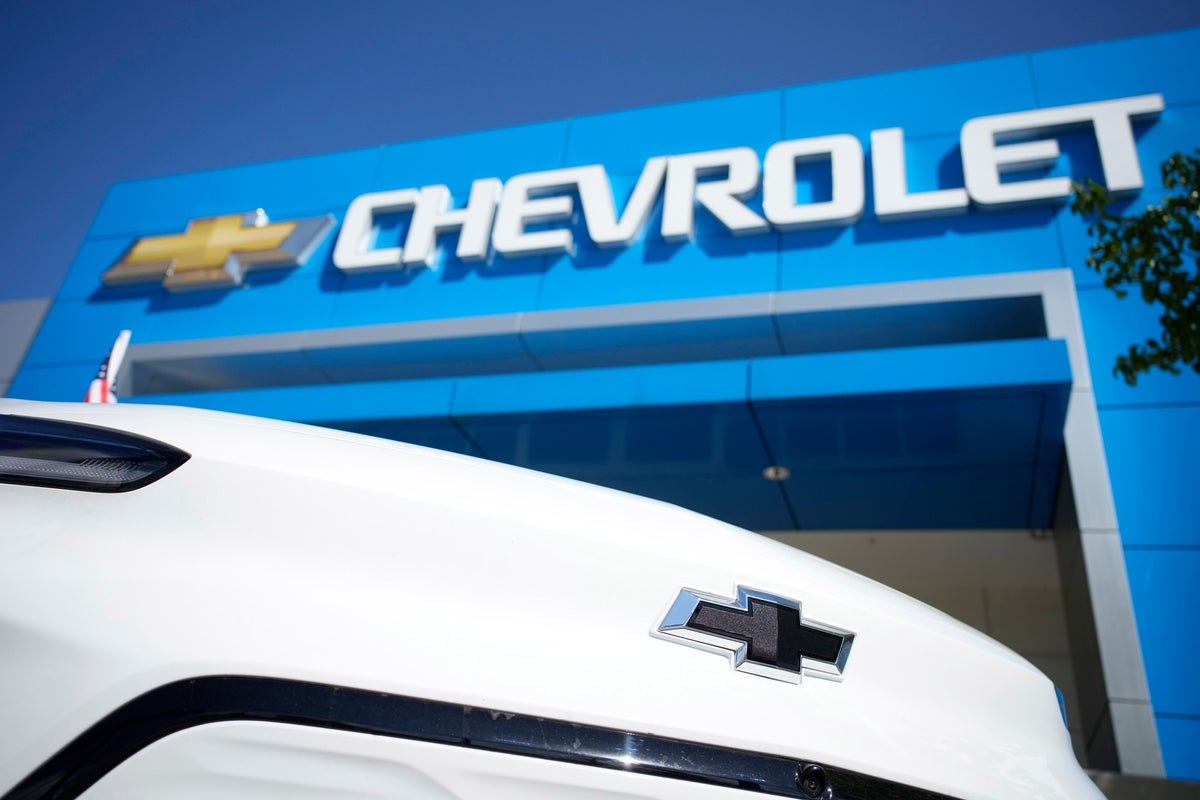
The recall of 273,229 Chevrolet Malibu units (model years 2024-2025) exposes a critical failure point in the intersection of hardware-software integration and regulatory compliance. This is not a mechanical failure of traditional automotive components; it is a breakdown of the Primary Safety Feedback Loop. When a rearview camera fails to display an image within the federally mandated response time, the vehicle transitions from a state of assisted operation to one of heightened risk, effectively blind-siding the operator who has been conditioned to rely on digital proximity data.
The root of this recall lies in the Rearview Camera (RVC) Image Processing Pipeline. Federal Motor Vehicle Safety Standard (FMVSS) No. 111 dictates that the rearview image must be visible to the driver within 2.0 seconds of the vehicle being placed in reverse. General Motors (GM) identified that a software logic error within the radio control module prevents the image from rendering, leaving a blank screen. This failure occurs precisely when the driver’s cognitive load is shifting toward spatial navigation, creating a high-probability window for low-speed collisions. Recently making news in this space: Systemic Vulnerability and the Failure of Internal Controls in High Finance Corporate Governance.
The Mechanics of the System Failure
To understand why 270,000 vehicles must be serviced, one must deconstruct the signal chain of a modern RVC system. The failure is not localized to the camera lens or the wiring harness but resides in the Application Layer of the infotainment software.
- The Trigger Event: The Transmission Range Sensor sends a digital signal via the Controller Area Network (CAN bus) indicating the gear selector has moved to "Reverse."
- The Processing Request: The Radio Control Module receives this interrupt and must prioritize the video feed over all other background processes (navigation, audio, system diagnostics).
- The Rendering Failure: In the affected Malibu units, a race condition or a memory allocation error in the software prevents the video driver from initializing.
- The Compliance Breach: Because the system fails to display the image within the 2.0-second threshold, the vehicle is legally "non-compliant," triggering a mandatory safety recall regardless of whether the hardware is functional.
This specific failure mode is particularly insidious because it is intermittent. Software bugs that do not cause a total system crash but instead fail under specific initialization parameters are harder for consumers to predict. A driver may successfully use the camera ten times, only for it to fail on the eleventh, precisely when they have lowered their manual scanning frequency (checking physical mirrors) due to over-reliance on the digital display. More insights on this are covered by CNBC.
Categorizing the Risk The Three Pillars of Driver Reliance
The danger of a faulty rearview camera is magnified by the Automation Bias inherent in modern driving. Drivers do not simply "use" cameras; they integrate them into their sensory-motor feedback loops. The risk profile of this recall can be categorized into three distinct pillars.
Cognitive Dependency
As RVC systems became standard, driver behavior shifted. The "look behind" maneuver has been replaced by the "scan the screen" maneuver. When the screen remains blank, the driver experiences a Cognitive Reset Gap—the time it takes to realize the technology has failed and to revert to manual mirror checks. During these 3-5 seconds of confusion, the vehicle is often already in motion.
The Spatial Blind Spot
Physical mirrors, while reliable, have inherent geometric limitations. The Malibu’s body geometry creates specific blind zones that the RVC was designed to eliminate. By removing the digital eyes without warning, the system leaves the driver with a physical environment they are no longer equipped to navigate with 100% certainty, especially regarding low-lying objects or pedestrians.
Systemic Latency as a Hazard
FMVSS 111’s 2.0-second rule exists because human reaction time is calibrated to near-instantaneous feedback. If a screen takes 4 seconds to load, a driver may have already traveled 5 to 10 feet in reverse. This latency is a "hidden" hazard; a camera that works "slowly" is often more dangerous than one that does not work at all, as it provides a false sense of security during the initial movement phase.
The Economic and Operational Cost Function
For General Motors, the cost of this recall is a function of labor hours, software deployment logistics, and brand equity degradation. However, the internal logic of the recall process reveals a deeper tension between Over-the-Air (OTA) Capability and Dealership Infrastructure.
The Malibu, despite being a modern vehicle, often requires a physical visit to a service center for module reprogramming. The cost function $C$ for this recall can be modeled as:
$$C = N \times (L + A) + E$$
Where:
- $N$ is the number of units (273,229).
- $L$ is the labor cost per unit (technician time to hook up the diagnostic tool and flash the firmware).
- $A$ is the administrative overhead (mailing notices, tracking compliance).
- $E$ is the "Erosion Factor" (the loss in secondary market value and consumer trust).
Because this is a software-only fix, the absence of a universal OTA update path for these specific modules represents a significant operational bottleneck. If these units were fully OTA-capable, the cost $L$ would approach zero. Instead, GM must coordinate 273,000 individual service appointments, straining the throughput of their dealer network.
Regulatory Pressure and the Threshold of "Safety"
The National Highway Traffic Safety Administration (NHTSA) maintains a zero-tolerance policy regarding FMVSS 111. This recall (NHTSA Campaign Number 24V-7XX) serves as a reminder that "Safety" is a binary state in the eyes of regulators. There is no middle ground for a "mostly working" camera.
The investigation began after field reports indicated a trend of blank screens in newer models. In the automotive industry, the transition from a "Technical Service Bulletin" (a quiet fix) to a "Safety Recall" (a public mandate) is triggered when the failure rate exceeds a specific statistical threshold or when the failure involves a "core safety function." Rear visibility has been classified as a core function since 2018.
The failure in the Malibu is a byproduct of Software Complexity Creep. As infotainment systems take on more responsibilities—integrating smartphone mirroring, climate control, and vehicle settings—the kernel of the operating system becomes crowded. If the RVC process is not given "Real-Time Operating System" (RTOS) priority, it becomes a victim of the system's own bloat.
Strategic Mitigation for the Malibu Owner
The resolution for this recall is a software update to the radio control module. This update reconfigures the boot sequence and memory management to ensure the RVC process is initialized and displayed within the mandatory window.
Owners must recognize that until the patch is applied, the vehicle is in a state of Degraded Reliability. The tactical response is a return to "Primary Control Methods":
- Manual Verification: Before shifting into reverse, the driver should wait for the infotainment system to complete its full boot cycle.
- Mirror Calibration: Re-adjust side and rearview mirrors to maximize physical sightlines, treating the RVC as a tertiary rather than a primary source of truth.
- Physical Perimeter Checks: In high-risk environments (driveways with children or pets), a physical walk-around is the only way to mitigate the risk of a blank-screen event.
The Path Toward Architectural Resilience
The automotive industry is currently grappling with the "Software-Defined Vehicle" (SDV) transition. The Malibu recall highlights that legacy architectures—where safety-critical systems like cameras are tied to non-critical systems like the radio—are fundamentally flawed.
The strategic shift must move toward Hardware-Enforced Partitioning. In this architecture, the rearview camera signal would bypass the complex infotainment OS entirely, utilizing a dedicated, lightweight hardware path to the display. This ensures that even if the radio "crashes" or hangs, the safety-critical video feed remains uninterrupted.
Furthermore, the industry must standardize Redundancy Protocols for digital vision. If the primary RVC fails, the system should ideally trigger an audible proximity warning or a dashboard notification before the driver begins the reverse maneuver. A silent failure is a catastrophic failure.
General Motors must now execute a massive logistical correction. The immediate priority is the stabilization of the radio control module's firmware across the 2024 and 2025 fleets. However, the long-term strategic play involves decoupling safety-mandated visual outputs from the volatile environment of consumer electronics software. Until the safety-critical "Fast Boot" is guaranteed by hardware-level prioritization, the automotive sector will remain vulnerable to these high-volume, high-cost software regressions. Owners should monitor their mail for official GM notification and prioritize the service appointment, as the fix is a non-destructive software overwrite that restores the vehicle to its intended safety baseline.