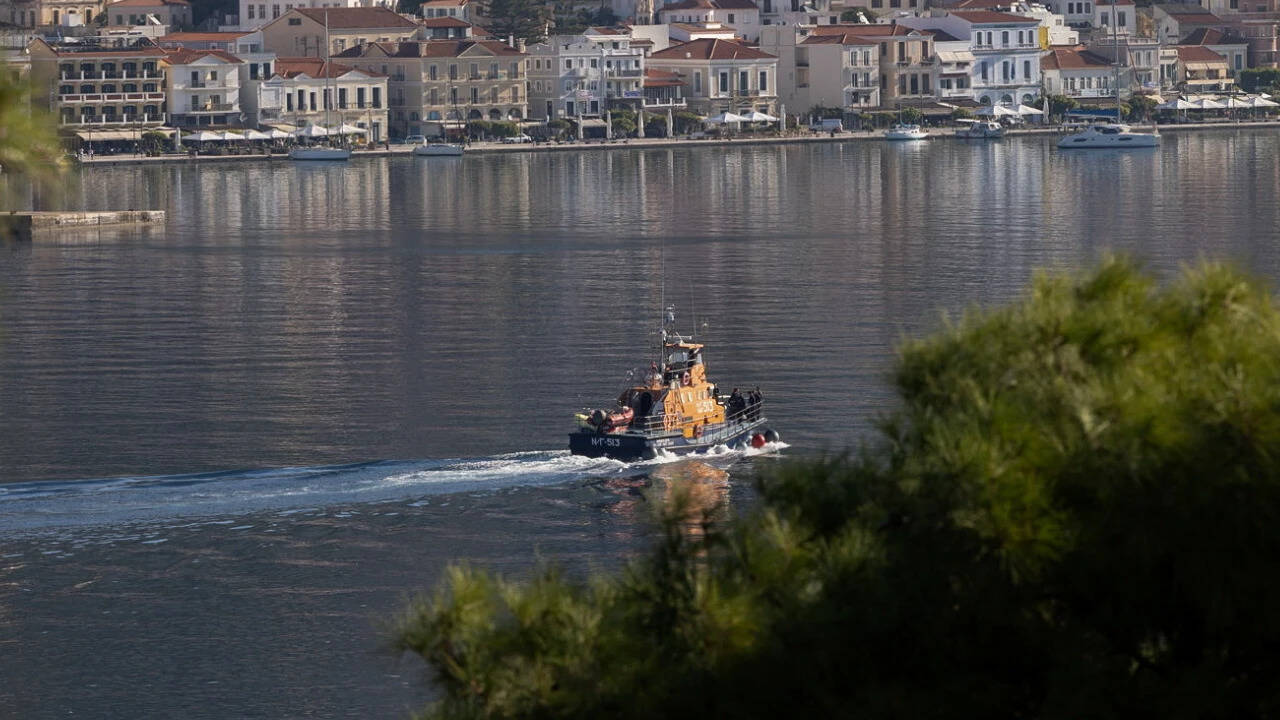
The discovery of twelve deceased migrants aboard a vessel south of Crete alongside the simultaneous arrival of hundreds of survivors exposes a structural shift in Eastern Mediterranean smuggling logistics. Standard reporting treats these incidents as isolated humanitarian tragedies or episodic border-enforcement anomalies. In reality, they represent the predictable output of a maturing, high-risk maritime transit corridor connecting eastern Libya to southern Greece. Analyzing this route requires stripping away emotional framing and examining the physical, economic, and geopolitical variables that govern irregular maritime transit across the Libyan Sea.
The Structural Shift to the Eastern Corridor
Smuggling networks operate as adaptive, decentralized supply chains that respond immediately to enforcement friction. For years, maritime transit from North Africa to Europe concentrated on the Central Mediterranean route departing western Libya (Tripoli, Zuwara, Sabratha) toward Lampedusa and Sicily, or the short-hop Aegean route from western Turkey to the eastern Greek islands.
Two primary bottlenecks forced a network recalibration toward the Libya-Crete axis:
- Increased Interdiction in the Aegean: Enhanced Greek coast guard patrols, pushback allegations, and bilateral enforcement agreements with Turkey compressed the viability of the eastern Aegean crossing.
- Militia Consolidation in Western Libya: Shifting territorial control and aggressive coast guard interceptions funded by European bilateral deals increased the operational cost and seizure risk for smugglers operating out of Tripolitania.
In response, smuggling syndicates shifted departure hubs eastward to the Cyrenaica region of Libya—specifically ports and coastal staging areas around Tobruk, Derna, and Benghazi. From eastern Libya, the shortest European landfall is no longer Italy; it is the southern coast of Crete, roughly 170 to 200 nautical miles north across open water. This geographic pivot trades the shorter distance of the Aegean for an open-sea crossing that bypasses dense coastal radar networks until vessels enter the Greek Search and Rescue (SAR) zone.
The Cost Function of Maritime Smuggling
To understand why twelve people died on a vessel that successfully reached the proximity of Crete while hundreds of others survived on parallel crossings, one must examine the unit economics of the smuggling syndicate. Smuggling operations maximize profit by minimizing capital expenditure per trip while transferring 100% of the operational risk onto the passengers.
Vessel Selection and Depreciation
Unlike land transport, where vehicles are reusable assets, boats used in irregular Mediterranean crossings are treated as single-use, depreciating consumables. Because European authorities confiscate and destroy intercepted vessels, syndicates purchase the cheapest hulls capable of clearing the harbor breakwater.
- Overloading Ratios: Syndicates calculate revenue per square meter of deck space. Exceeding maximum displacement lowers the vessel's freeboard—the distance from the waterline to the upper deck—making it hyper-vulnerable to swamping in moderate sea states.
- Propulsion Failure: Engines are frequently salvaged, poorly maintained, or undersized for the gross tonnage of a fully loaded hull. Mechanical failure mid-transit turns a motor vessel into a drifting barge subject to prevailing currents.
- Fuel-to-Weight Ratios: To maximize passenger capacity, smugglers load the absolute minimum fuel required to reach the edge of the destination state's SAR zone, assuming coast guard assets will complete the final leg of transport.
The Lethality Mechanisms at Sea
When a vessel arrives near Crete with fatalities onboard, the cause of death rarely stems from a single catastrophic sinking. If the hull had suffered total structural failure in deep water, the survival rate among the remaining passengers would be near zero. Instead, fatalities on intact or semi-intact vessels result from localized physiological failures driven by vessel design and voyage duration.
- Asphyxiation and Carbon Monoxide Poisoning: Passengers placed in the lower hold—often charged a lower fare than those on the upper deck—are exposed to unventilated engine exhaust and heat accumulation. In rough seas, hatches are battened down to prevent water ingress, sealing the hold and rapidly depleting oxygen levels.
- Hypothermia and Dehydration: A 200-nautical-mile crossing in an underpowered vessel takes between 36 and 72 hours depending on sea conditions. Exposure to sea spray, night temperatures, and a lack of potable water triggers rapid physiological decline, particularly among individuals already weakened by detention conditions in Libya.
- Crush Injuries and Swamping: When a vessel takes on water without capsizing, panic induces sudden weight shifts. Passengers trapped beneath the waterline in flooded compartments drown even while the vessel remains afloat.
Geopolitical Friction and the SAR Vacuum
The operational success of the Tobruk-to-Crete route relies heavily on jurisdictional ambiguity. The Libyan Sea encompasses overlapping and contested maritime zones. Libya's declared Search and Rescue region extends far northward into the Mediterranean, yet eastern Libyan authorities lack the naval assets, coordination centers, and political alignment with Tripoli to execute deep-water rescues.
This creates an operational vacuum:
- Delayed Detection: Without persistent aerial surveillance over the southern Libyan Sea, vessels travel undetected for the first 100 to 150 miles of their journey.
- The Distress Call Trigger: Smugglers equip vessels with satellite phones (typically Thuraya units) and instruct a designated passenger—often coerced into acting as the pilot to insulate the syndicate from trafficking charges—to dial the Alarm Phone network or Greek maritime authorities only after crossing north of the 34th parallel.
- Asymmetric Response: Once a distress call originates inside or near the Greek SAR zone, Hellenic Coast Guard vessels, Frontex assets, and nearby commercial merchant ships are legally obligated under the International Convention on Maritime Search and Rescue to render assistance.
The arrival of hundreds of migrants alongside a single vessel carrying twelve dead illustrates the high-volume, batch-departure strategy employed by eastern Libyan networks. Syndicates launch multiple vessels within a narrow meteorological window—typically a 48-hour period of low wind and minimal swell. This saturates Greek SAR capacity, forcing coast guard assets to triage responses across multiple simultaneous emergencies. While three or four vessels may reach Gavdos or southern Crete with passengers intact, a single vessel experiencing engine failure or hold flooding during that same window suffers mass casualties before rescue assets can rotate to its coordinates.
Limitations of Current Interdiction Models
Standard border-security responses to a surge on the Crete corridor fail because they misdiagnose the incentive structure of the smuggling network.
Deploying additional patrol vessels to the southern coast of Crete does not deter departures from Tobruk; it reduces the distance smugglers need to travel before achieving state-assisted rescue. The presence of Greek SAR assets near Gavdos inadvertently lowers the fuel and hull-quality requirements for the syndicates, effectively subsidizing the final leg of their logistics chain.
Conversely, attempting to replicate the western Libyan containment model in eastern Libya encounters severe political constraints. Cyrenaica is controlled by Khalifa Haftar's Libyan National Army (LNA), an entity with complex, shifting alignments involving regional powers and Russia. Negotiating durable maritime interdiction agreements with eastern Libyan factions carries high diplomatic costs and yields inconsistent enforcement, as local militias frequently tax smuggling operations rather than dismantle them.
Strategic Recalibration for Maritime Enforcement
Suppressing both transit volume and mortality rates on the Libya-Crete corridor requires shifting enforcement upstream from the point of arrival to the point of embarkation and supply.
- Target the Maritime Supply Chain: Smuggling syndicates in eastern Libya do not manufacture hulls or marine engines. Intelligence and interdiction efforts must track the commercial import of fiberglass hulls, high-horsepower outboard motors, and satellite communication devices into ports like Benghazi and Tobruk, disrupting hardware availability before vessels are assembled.
- Deploy Persistent Long-Range Aerial Surveillance: Relying on distress calls near Crete guarantees reactive rescues after fatalities have already occurred. Continuous drone surveillance between the 33rd and 35th parallels allows authorities to detect batch departures within hours of leaving Libyan territorial waters, providing early vectoring data to commercial shipping lanes.
- Decouple Pilot Prosecution from Syndicate Disruption: Prosecuting the individual holding the tiller upon arrival in Crete removes zero capacity from the smuggling network, as passengers are routinely forced to pilot the boats in exchange for a waived fare. Investigative resources must focus entirely on financial flows, hawala networks, and satellite phone metadata linking embarkation points in Cyrenaica to European destination hubs.
Until enforcement mechanisms disrupt the low-cost, single-use vessel supply chain in eastern Libya, the Libya-Crete corridor will remain active, and periodic mass-casualty arrivals will persist as a mathematical certainty of overloaded, unseaworthy hulls crossing 200 miles of open sea.