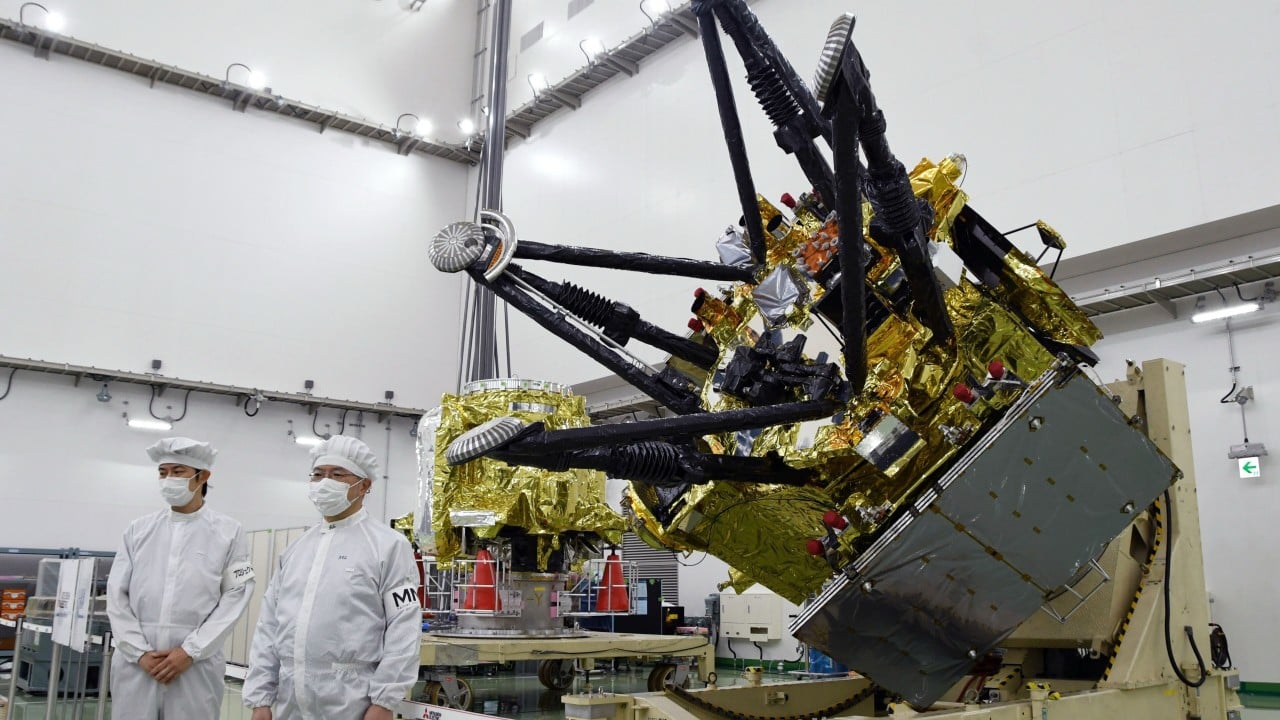
When a decommissioned NASA telescope starts plunging out of orbit, headlines scream that impact is hours away. Most of that drama is theater.
Predicting the exact time and place of an uncontrolled atmospheric reentry inside a narrow window is notoriously difficult because upper-atmosphere density shifts constantly with solar activity, geomagnetic storms, and subtle attitude changes of the tumbling spacecraft. A seemingly small drag miscalculation at high altitude translates into hundreds or thousands of miles of error along a ground track moving roughly five miles per second. Even when agencies narrow a window down to a few hours, the actual touchdown corridor still stretches across oceans, continents, or uninhabited airspace, and most of the hardware vaporizes before it ever gets close to the ground.
I have covered aerospace programs, launch pads, and orbital debris briefings long enough to recognize the pattern. A space agency issues a routine tracking update noting that a retired observatory is nearing its final passes. Within minutes, secondary outlets turn a probabilistic decay curve into a countdown clock. Readers get a thrilling story about falling space hardware, while the real engineering friction—aging attitude control, uncertain aerodynamic drag, and uneven structural survivability—gets buried under urgency.
How Drag Turns a Stable Orbit Into a Slide
Space telescopes spend their working lives fighting to stay still and pointed at faint light across vast distances. Once a mission ends or fuel runs out, station-keeping stops, and low Earth orbit stops being a clean vacuum.
Even several hundred miles up, trace molecules of atomic oxygen, nitrogen, and helium still exist. They are sparse compared to air at sea level, yet a spacecraft moving at orbital velocity slams into them continuously. Every collision extracts a microscopic fraction of kinetic energy. Over months or years, that tiny friction lowers apogee and perigee, pulling the observatory into slightly denser air where drag rises again.
The math looks neat on a chalkboard. In practice, the atmosphere breathes.
Solar ultraviolet radiation heats the upper atmosphere, causing it to puff outward and increase drag on satellites at a given altitude. Geomagnetic storms triggered by coronal mass ejections can spike thermospheric density in hours rather than weeks. If a retired telescope is tumbling end-over-end or broadside rather than flying in a steady trim, its ballistic coefficient—the ratio of mass to drag area times drag coefficient—fluctuates every few seconds.
Suppose an analyst models a retired infrared observatory with a mass of two thousand kilograms and a tumbling cross-section that varies by thirty percent. That is a hypothetical example to show how sensitive the timeline is, not a specific mission log. If a sudden solar heating wave expands the upper air even modestly, the spacecraft experiences extra braking across dozens of revolutions. An estimate made a day early can shift by hours simply because the medium the telescope is plowing through expanded.
Why Within Hours Still Leaves a Giant Footprint
A warning that reentry is hours away sounds precise. In orbital mechanics, a few hours is an eternity.
At roughly seven to eight kilometers per second, a spacecraft circles the planet in about ninety minutes. Two or three hours of timing uncertainty means the object could complete one or two additional orbits before dipping deep enough into the atmosphere to commit to final descent. Because Earth rotates underneath the inclined orbital plane, each extra orbit shifts the ground track westward by more than twenty degrees of longitude at the equator.
That geometry explains why officials hedge. A ground track might pass over the Pacific Ocean on one pass, cross Central America or West Africa on the next, and sweep across parts of Asia or Europe on another. Until atmospheric drag becomes steep and continuous—usually in the final tens of minutes—the exact entry point remains a moving target.
Public anxiety tends to jump straight from "reentry" to "crash." Those two words do not mean the same thing.
Aerodynamic Heating Versus Structural Grit
Atmospheric entry is an energy-shedding event. A telescope in low Earth orbit carries immense kinetic energy and very little potential energy compared to its speed. As it hits thicker air, compression heating in front of the hull strips away velocity and generates intense thermal loads.
Aluminum housings, thin solar array substrates, electronics boxes, and optical baffles typically melt or break apart high in the atmosphere. They turn into a trail of glowing fragments and fine particulate matter long before reaching the troposphere.
Dense components behave differently. Titanium reaction wheels, thick stainless steel rings, heavy mirror backing structures, or beryllium parts can survive the heat pulse if their mass-to-area ratio lets them fall through the hottest regime without completely ablating. Even then, surviving pieces lose most of their horizontal orbital speed once drag dominates, falling closer to terminal velocity than to hypersonic orbital speeds.
The odds of any single surviving fragment hitting a person on Earth remain extraordinarily low. Most of the planet is water, and most land is sparsely populated. Still, "low probability" is not zero, which is why tracking networks watch every large object closely until telemetry or radar confirms breakup and splashdown.
The Blind Spots Behind Every Tracking Bulletin
Watchers often assume a single government agency tracks every piece of hardware with total clarity. Reality is messier.
Tracking relies on ground-based radar and optical sensors operated by military space surveillance networks, supplemented by commercial sensors and orbital data from operators. Radar excels at detecting objects in lower orbits and through cloud cover, while optical telescopes are strong at tracking larger or higher objects under clear skies. Neither network has continuous, line-of-sight coverage of every point on every orbit.
When a spacecraft enters its final hours, atmospheric drag accelerates its descent rate. Tracking updates must keep pace with changing orbital elements while analysts reconcile sensor passes from different latitudes. A gap between radar passes during the final plunge can leave a window of uncertainty right when public attention peaks.
There is also a communications blind spot once a retired telescope loses power or attitude control. Without active telemetry, ground teams cannot tell whether a deployable sunshield or boom shifted position, altering drag. They infer behavior from motion and decay rate, which is detective work backed by physics rather than a live dashboard reading.
Why Telescopes Come Down Uncontrolled
People sometimes ask why a major space telescope cannot simply fire thrusters to steer into a remote ocean zone like the South Pacific Oceanic Pole of Inaccessibility. The short answer is mass, cost, and design intent.
Many space telescopes were never built with large deorbit propulsion systems. Pointing stability for astronomy relies on precision reaction wheels, star trackers, and small attitude thrusters—not heavy chemical engines sized to brake tons of hardware out of orbit. Adding enough propellant and tankage to guarantee a controlled ocean splashdown from a higher or larger orbit consumes payload mass that astronomers want spent on optics, cryogenics, or instruments.
Even when a spacecraft has thrusters, propellant is finite. Missions often stretch operations for years past prime design life to squeeze out extra science. By the time a telescope is retired, tanks may be empty, valves may be dormant, or solar arrays may be degraded.
| Design Factor | Uncontrolled Reentry | Controlled Deorbit |
|---|---|---|
| Propellant Budget | Minimal or none needed for disposal | Requires dedicated fuel reserve and thrusters |
| Payload Tradeoff | Maximizes instrument and bus mass | Reduces science mass or increases launch cost |
| Prediction Window | Shifts with solar weather and attitude | Tighter corridor once burn is executed |
| Cost Profile | Lower upfront spacecraft complexity | Higher hardware, testing, and risk cost |
That tradeoff is not a secret oversight; it is a deliberate engineering choice made years before launch. Every kilogram dedicated to end-of-life disposal is a kilogram not spent on light-gathering area, pointing accuracy, or mission longevity.
The Media Feedback Loop Around Falling Hardware
Why does a routine orbital decay turn into a sensational scare every time it happens? Because the ingredients are irresistible to fast-moving newsrooms.
A familiar institution like NASA provides instant recognition. A word like "crash" implies impact and destruction. A time frame like "within hours" creates immediate tension that static science stories rarely get.
Once the first headline drops, aggregation spreads the framing across social feeds, stripping away nuance. Phrases like "debris could survive" get read as "pieces will rain down on cities," and "uncertainty window" gets flattened into confusion or conspiracy. By the time the object actually breaks up over an ocean or remote region, the high-alert cycle has already moved on to the next story.
A more honest way to read these bulletins is to treat them as status checks on orbital physics, not disaster alerts. When a space telescope reenters, the main story is usually how a complex machine built for precision observation meets the blunt reality of atmospheric friction—and how human prediction models wrestle with a shifting upper atmosphere.
Check the altitude trend, the inclination of the orbit, and the size of the predicted window rather than the loudest adjective in the headline.