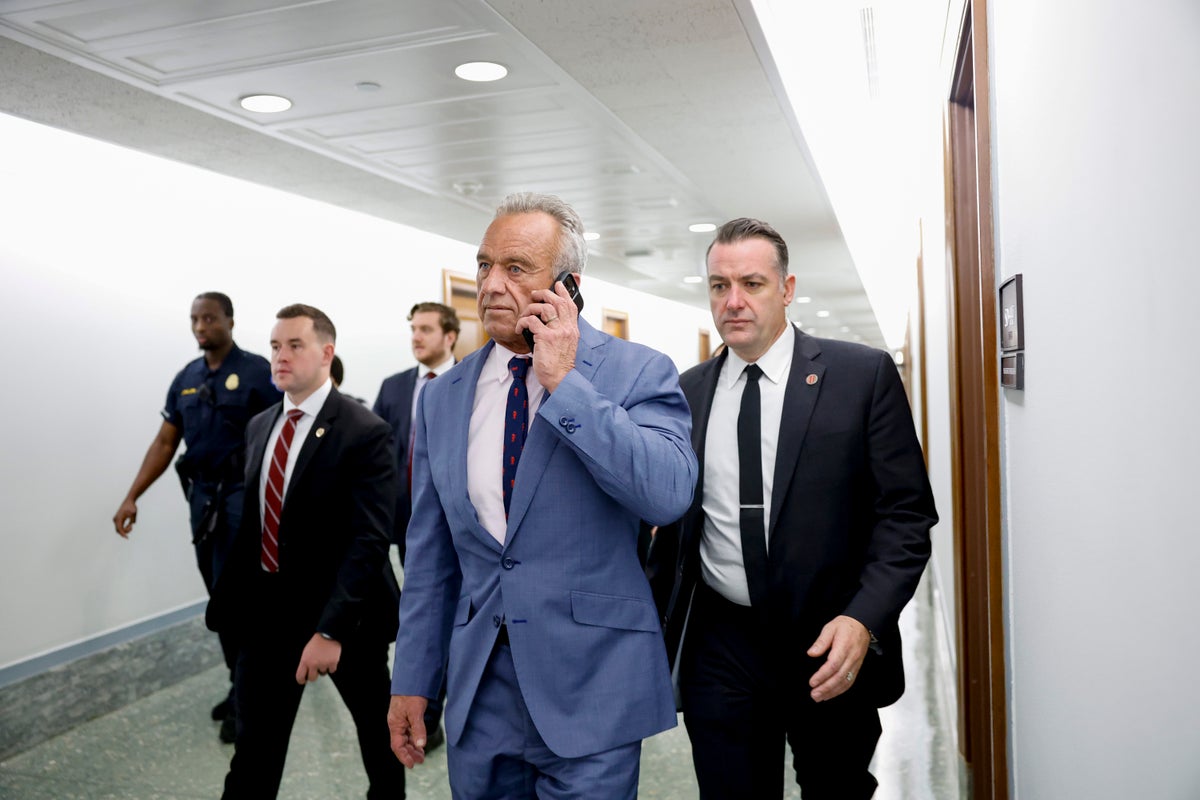
The legacy media is currently transfixed by a classic piece of Washington theater.
Anonymous mid-level staffers at the Department of Health and Human Services (HHS) are crying foul to reporters. Their grievance? Robert F. Kennedy Jr. is allegedly "checked out." They claim he spends critical meetings scrolling through his smartphone instead of hanging on every word of their PowerPoint presentations about global health emergencies. The narrative is bought wholesale by the press: a rogue, distracted leader is endangering public health by failing to engage with the established bureaucratic machinery.
This narrative is not just lazy. It is entirely backward.
The assumption underlying this outrage is that a health secretary's primary job is to sit quietly, nod along, and rubber-stamp the briefs handed to him by career institutionalists. We are conditioned to believe that active participation in the existing bureaucratic ritual equates to effective leadership.
It does not. In fact, the absolute best thing a reform-minded leader can do when dropped into a bloated, captured federal agency is to tune out the noise, ignore the scripted briefings, and look directly at the raw data on their own terms.
What the media frames as disinterest is actually a profound vote of no confidence in the very institutions these staffers are trying to protect.
The Myth of the Sacred Briefing
Let’s dismantle the premise of the institutional briefing.
I have spent years watching organizations—both corporate behemoths and massive public institutions—drown in their own process. When a crisis hits, the institutional instinct is never to fix the root cause. The instinct is to manage the perception of the crisis through endless, structured meetings.
A standard federal health briefing is a highly curated product. By the time information reaches the top level, it has been filtered through five layers of middle management, scrubbed of any career-limiting admissions, and packaged to defend the status quo.
When staffers complain that a leader is looking at a phone during a presentation on a global health emergency, they are complaining that their curation has failed. They are mad that their carefully constructed narrative is being bypassed.
Imagine a scenario where a manufacturing company is bleeding cash because its core product is toxic. The middle managers call a meeting to present a 50-slide deck on "Optimizing Box Design for Regulatory Compliance." If the new CEO sits there scrolling through the company’s raw balance sheets and customer complaints on an iPad instead of looking at the slides, is the CEO "checked out"? Or is the CEO the only person in the room who actually understands that the meeting itself is a waste of time?
RFK Jr.’s entire mandate is disruptive. You do not reform an agency like HHS—which oversees a massive budget and possesses deep-seated ties to the pharmaceutical industries it regulates—by politely listening to the people who built the current system. The scrolling isn't a distraction. It is a filter.
The Captured Bureaucracy and the Need for Friction
To understand why this friction is necessary, we have to look at the concept of regulatory capture. This isn't a conspiracy theory; it is a well-documented economic phenomenon famously articulated by Nobel laureate George Stigler. Over time, regulatory agencies inevitably come to be dominated by the very industries they are tasked with regulating.
The Food and Drug Administration (FDA) and the Centers for Disease Control and Prevention (CDC) are textbook examples. A significant portion of the FDA’s drug review budget is funded directly by pharmaceutical companies through user fees. Career bureaucrats within these agencies spend their entire lives moving through a revolving door between government service and lucrative corporate lobbying gigs.
When these agencies declare a "global health emergency," that declaration is often tied to massive funding allocations, expedited drug approvals, and corporate windfalls. A leader who blindly trusts the internal consensus of a captured bureaucracy is a liability, not an asset.
- The Bureaucratic Incentive: Expand jurisdiction, increase budgets, avoid risk, and protect the institutional reputation.
- The Reformer Incentive: Question assumptions, audit the data, eliminate waste, and expose conflicts of interest.
These two belief systems cannot peacefully coexist. If the staffers at HHS were happy with their new boss, it would mean the status quo was safe. The fact that they are leaking complaints to the press about phone usage proves that the institutional immunity response has been triggered. They are uncomfortable because they realize their traditional levers of influence—the meetings, the memos, the appeals to institutional authority—are no longer working.
People Also Ask: Shouldn't a Health Secretary Listen to the Experts?
This is the most common counterargument thrown around cable news. "He isn't a scientist. He isn't a doctor. He needs to listen to the career experts."
Let's address this honestly: the phrase "listen to the experts" has become a shield for incompetence.
First, who defines the experts? Within federal agencies, "the experts" are almost always the individuals who have survived the bureaucratic weeding-out process. Rebels, iconoclasts, and scientists who challenge the prevailing dogma do not get promoted to senior advisory roles within HHS. The people writing the briefs are the ones who agreed with the policy failures of the last twenty years.
Second, the job of a cabinet secretary is not to be a scientist. The job is to be an executive. An executive's role is to weigh competing priorities, challenge assumptions, and make value judgments. When the experts say, "We must implement this specific health measure," the executive has to ask: What are the economic trade-offs? What are the civil liberties implications? What does the independent data say?
If you want a leader who simply repeats what the internal experts say, you don't need a secretary at all. You just need a press secretary. The entire point of political oversight of federal agencies is to prevent the bureaucratic class from running the country without accountability.
The Danger of the Unconventional Approach
To be entirely fair, there is a legitimate downside to this style of leadership, and it’s one that contrarians rarely like to admit.
When you completely tune out the internal machinery of an agency, you lose the ability to effectively manage the execution of your policies. You can have the best, most disruptive ideas in the world, but if the thousands of career civil servants beneath you refuse to implement them, your agenda dies on the vine.
Bureaucrats are masters of malicious compliance. They can slow-walk regulations, leak damaging stories to the press, and tie up initiatives in legal reviews for years. By openly signaling disdain for the staff—whether through body language or phone scrolling—a leader risks unifying the bureaucracy against them. It turns a structural fight into a personal one.
But let’s not mistake that tactical risk for a lack of focus. A leader reading an independent study on their phone while a bureaucrat reads a sanitized script is not "checked out." They are actively choosing a different source of information.
The Real Emergency Is Institutional Inertia
We are told we are living through a period of constant global health emergencies. But the real, chronic emergency is the declining health of the population despite trillions of dollars in spending, coupled with a total collapse of public trust in health institutions.
That trust was not destroyed by a politician looking at a phone. It was destroyed by years of institutional overreach, conflicting mandates, and opaque decision-making processes during real-world crises.
The corporate media wants you to focus on the etiquette of the meeting room. They want you to be outraged that someone isn't playing the game by the established rules of Washington politeness. They want you to think that a well-behaved politician is a competent politician.
Stop falling for the theater.
The career staff at HHS are upset because they are losing control of the narrative. They are upset because the person at the top of the pyramid is ignoring their scripts. If a health secretary has to scroll through their phone to find raw truth because the room around them is filled with institutional spin, then the problem isn’t the phone.
The problem is the room.