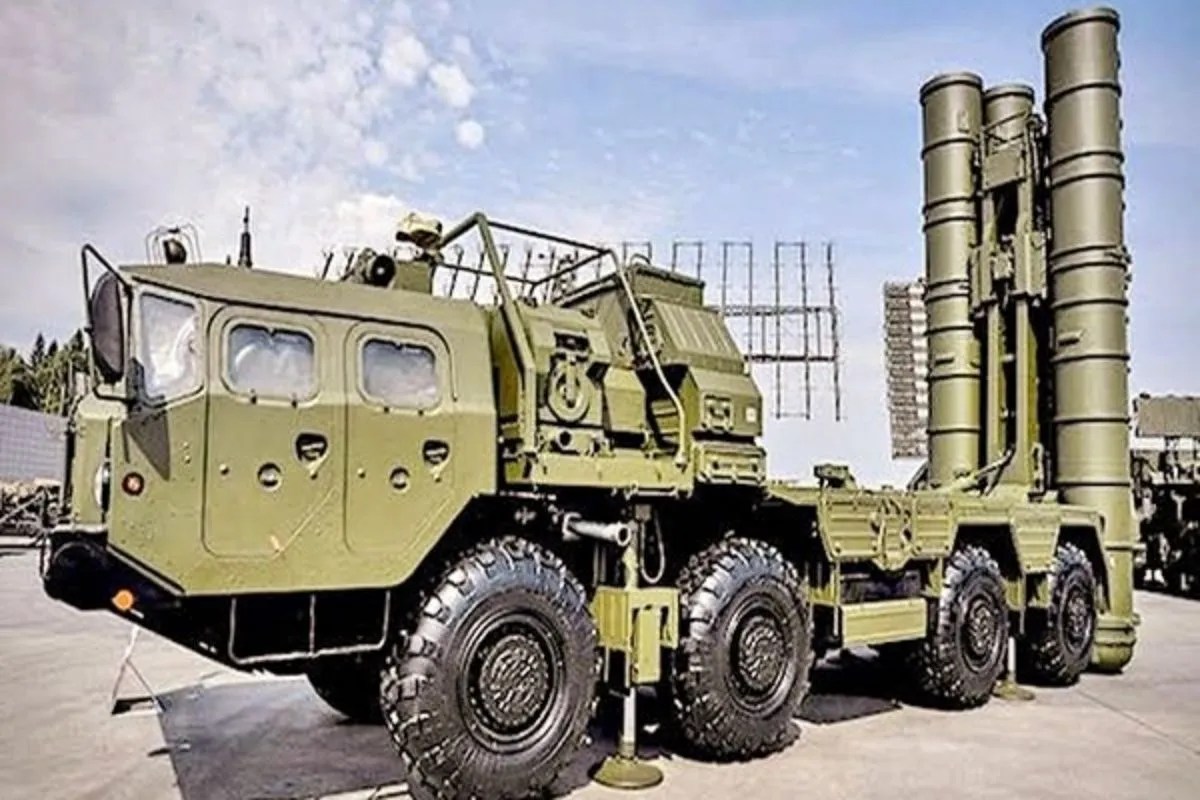
The defense commentary circuit loves a good spy thriller. Whenever a high-stakes military deployment hits the headlines, the lazy consensus immediately pivots to human intelligence, deep-cover sleeper cells, and whispered tradecraft. When reports circulate about intelligence sweeps hunting for operatives trying to pinpoint the location of strategic air defense assets like the S-400 during tensions, analysts rush to write about James Bond villains operating in the shadows. It makes for gripping reading. It also displays a total, dangerous ignorance of modern electronic warfare and orbital mechanics.
Pakistan did not need a single human asset on the ground dodging local patrols with a burner phone to calculate the positioning of a long-range surface-to-air missile system. Pretending that high-value strategic positioning relies on traditional HUMINT in the twenty-first century is a comforting delusion for defense bureaucrats who understand espionage better than they understand radio frequency emissions.
The Signal is the Target
Modern military hardware does not hide in radio silence. An integrated air defense system of this magnitude operates as a node within a massive, breathing network. Radars emit pulses. Data links chatter. Command posts bounce telemetry back and forth.
Imagine a scenario where a multi-million-dollar air defense battery sits quietly under a camouflage net, its human operators sworn to absolute secrecy. The moment its acquisition or engagement radar spins up to track airspace, it becomes a literal lighthouse in the electromagnetic spectrum. Electronic Intelligence (ELINT) collection platforms do not care about sleeper cells. They care about sidelobes, pulse repetition intervals, and frequency hopping patterns.
Signals intelligence aircraft, orbital reconnaissance, and ground-based listening posts monitor these emissions continuously. Pinpointing a radar source through triangulation requires microseconds, not months of espionage. When a country possesses signals intercept architecture, relying on a guy with a pair of binoculars sitting near an air base is the tactical equivalent of using a horse and buggy to chase a fighter jet.
The Orbital Panopticon
We live in an era of commercial and military high-resolution satellite imagery that renders traditional camouflage largely obsolete for fixed or semi-fixed installations. Synthetic Aperture Radar (SAR) satellites see right through darkness, weather, and basic visual concealment.
When a heavy transporter-erector-launcher rolls into a prepared site, it leaves tracks. It alters the thermal signature of the terrain. It requires specific logistical footprints—heavy supply trucks, dedicated power generation units, and specific security details that stand out to overhead sensors like a neon sign.
Intelligence agencies do not need to bribe a local tea vendor to find out where a battery is parked when commercial providers routinely sell imagery detailed enough to read serial numbers off a chassis. The idea that a spy network provided the coordinates implies that aerial and orbital assets were somehow blind. They were not blind. They never are.
Why the Spy Narrative Persists
Governments love the sleeper cell narrative for internal consumption. Catching, or claiming to hunt, human spies serves a domestic political purpose that admitting electronic vulnerability never will.
When a security apparatus announces the dismantling of an espionage ring linked to strategic asset tracking, it projects competence against a tangible, human enemy. It gives the public a villain to boo. Admitting that an adversary can map your entire air defense layout purely through passive radio frequency monitoring and spectral analysis does not play well on the evening news. It forces uncomfortable conversations about emission control discipline, frequency management, and electronic counter-countermeasures.
I have spent decades watching defense programs waste billions on physical perimeter security while completely ignoring how loudly their hardware screams across the electromagnetic spectrum. Securing the perimeter against a man with a notepad is easy. Forcing operators to maintain strict emission control during a crisis requires operational discipline that many militaries simply fail to enforce under pressure.
The Real Vulnerability
The danger to strategic assets is not the guy hiding in the bushes with a camera. The danger is cognitive laziness within your own ranks.
If operators leave their radars active longer than necessary, if communication protocols slip, or if supply chains broadcast predictable patterns of movement, the adversary wins without ever planting a single agent. The real battleground is not human loyalty; it is the invisible war of signals, spectrum dominance, and digital footprint management.
Stop worrying about the sleeper cells under the bed. Start worrying about the gigawatts of electronic noise your own hardware is broadcasting to the entire hemisphere.