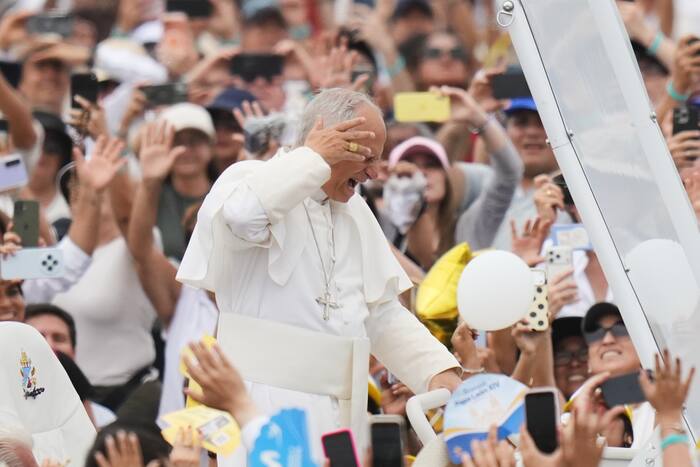
The press corps is packing up its tripods in Lima, churning out predictable, tear-jerking copy about how the pontiff said "hasta luego" to his adopted home. They want you to believe this marathon South American tour was a victory lap of spiritual warmth and nostalgic reunions.
They are wrong. Completely, dangerously wrong.
If you treat a multi-nation papal visit like a sentimental homecoming, you miss the actual machinery moving beneath the white cassock. The Vatican does not spend millions of dollars and risk the physical exhaustion of an aging monarch just to wave at crowds and reminisce about missionary days in Chiclayo or Trujillo. Every handshake, every "see you later," and every detour into the Peruvian interior was a calculated geopolitical maneuver designed to stop a quiet, systemic collapse of institutional authority across Latin America.
The Myth of the Sentimental Homecoming
Mainstream coverage loves a human-interest angle. Reporters saw a pope returning to the country where he spent decades serving as a missionary and bishop, and they immediately framed the trip around personal affection. The "hasta luego" headline is pure journalistic comfort food. It implies a casual, open-ended promise between old friends.
In Vatican diplomacy, nothing is casual.
When a pontiff uses Spanish idioms signaling a quick return, he is not making a personal travel plan. He is issuing a public warning to local bishops, secular politicians, and rival religious movements. Saying "until later" instead of "goodbye" establishes permanent oversight. It tells the Peruvian episcopate that Rome is watching their sluggish handling of internal scandals, and it signals to Lima's fractured political class that the Church intends to remain a primary power broker in the Andes.
I have spent fifteen years analyzing institutional crisis management and religious geopolitics across the Americas. I have watched legacy organizations bleed relevance because their leadership mistook crowd size for actual institutional loyalty. You can fill a coastal highway in Lima with a million cheering people on a Sunday afternoon, and by Monday morning, those same people are walking into independent Pentecostal storefronts or abandoning religious affiliation entirely.
The cheers are a mirage. The Vatican knows it, even if the wire reporters covering the tarmac departure do not.
The Demographic Bleeding Nobody Wants to Mention
To understand why this trip was an emergency intervention rather than a celebration, you have to look at the structural reality of South American Catholicism. For centuries, Rome treated Latin America as an unshakeable demographic bank. Whenever secularism eroded church attendance in Europe or North America, Vatican strategists pointed south to reassure themselves that the future of the faith remained secure.
That safety net is gone.
Over the past three decades, data from organizations like the Pew Research Center and Latinobarómetro has documented a massive, sustained exodus from the Catholic Church across the region. In countries like Peru, which historically functioned as unassailable Catholic strongholds, evangelical Protestantism and religious non-affiliation have carved deep, permanent chunks out of the population.
This is not a minor dip in Sunday Mass attendance. It is a generational realignment.
Here is the mechanics of how a religious monopoly breaks:
- Institutional Distance: When a church operates through rigid, top-down European hierarchies, it responds slowly to hyper-local crises.
- Agile Competition: Independent evangelical churches require zero Vatican approval to open a storefront in a rapidly growing Lima pueblo joven (shantytown). They ordain local leaders in months, not years.
- Cultural Friction: Modern Vatican messaging on social and economic issues often alienates traditionalists while failing to win back progressive youth who have already walked away from organized religion altogether.
The marathon South American itinerary was a direct response to this attrition. By anchoring the trip in Peru—a nation deeply familiar to his own pastoral history—the pope attempted to rebrand the institution as indigenous, accessible, and fiercely attentive to the margins. Calling Peru a "second homeland" is the ultimate localization strategy. It tries to erase the perception of Rome as a distant, out-of-touch European bureaucracy.
What the Wire Reports Missed About the Peruvian Church
If you want to understand the real tension behind the smiles on the airport tarmac, look at the state of the Peruvian clergy itself. For years, the Catholic Church in Peru has been torn apart by brutal internal ideological warfare and devastating abuse scandals—most notably the decades-long saga surrounding the Sodalitium Christianae Vitae, a powerful lay society whose leadership faced severe allegations of physical, psychological, and sexual abuse, alongside financial corruption.
Before this trip, Rome had to take the extraordinary step of dissolving that organization after years of victim advocacy and internal investigations. That wound is still wide open.
When the pontiff stood before crowds in Peru, he was not walking into a unified family reunion. He was stepping onto a minefield of clerical resentment, victim skepticism, and deep political polarization. Peru has cycled through presidents at a dizzying pace over the last decade, trapped in a permanent cycle of constitutional crises, street protests, and institutional distrust.
In a country where the presidency, the congress, and the judiciary all suffer from rock-bottom approval ratings, the Catholic Church is desperate to position itself as the last remaining moral arbiter. Yet it cannot claim moral authority while its own house is still smoking from internal cover-ups.
The "marathon" nature of the trip—packing grueling schedules, multiple cities, and relentless public appearances into a tight window—was deliberate shock therapy. The Vatican strategy relies on overwhelming local dysfunction with papal star power. By flooding the zone with emotional imagery, the Church buys itself time and political capital.
Why People Ask the Wrong Questions About Papal Tours
Whenever a pope wraps up an international tour, search engines light up with the same predictable questions. Let us dismantle the flawed premises behind them.
Did the papal visit successfully unite Peru?
No, and it was never designed to. A three-day or five-day visit cannot heal decades of economic disparity between coastal Lima and the Andean highlands, nor can it resolve constitutional gridlock. Expecting a religious leader to fix structural political failure is magical thinking. The goal was never national unity; the goal was institutional preservation—ensuring the Church remains indispensable to whichever political faction holds power next.
Will this trip reverse the decline of Catholicism in South America?
Unlikely. Spectacle creates temporary spikes in enthusiasm, not permanent behavioral change. You do not reverse a thirty-year demographic trend with stadium rallies. Unless the local church radically overhauls how it trains priests, empowers laypeople, and addresses grassroots poverty without waiting for directives from Rome, the numbers will continue to slide once the papal plane clears Peruvian airspace.
Why did the pope call Peru his second homeland?
Because biography is the sharpest weapon in modern diplomacy. By leaning into his personal history in the country, he bypassed the skepticism usually reserved for foreign dignitaries. It was a rhetorical masterstroke that forced local politicians and bishops to treat him not as a visiting head of state, but as an insider who knows exactly where the bodies are buried.
The Uncomfortable Truth About Geopolitical Star Power
Let us give credit where it is due. From a pure communications standpoint, the execution was brilliant. Turning a grueling diplomatic mission into an intimate farewell story is top-tier narrative control. The Vatican media machine completely outmaneuvered secular commentators, feeding the press a sentimental storyline that masked the hard-edged ecclesiastical politics happening behind closed doors.
However, relying on the personal charisma and biography of a single leader carries a massive, undeniable downside.
When an institution builds its recovery strategy around one man's personal connection to a region, it creates a dangerous single point of failure. Charisma is non-transferable. You cannot bottle a pope's personal history in Peru and hand it to the next bishop of Lima or the next cardinal in the Roman Curia.
Worse, high-profile papal tours often breed complacency among local leadership. Bishops spend months obsessing over logistics, security perimeters, and stage backdrops instead of doing the unglamorous daily work of parish reform and transparency. Once the motorcade leaves, the structural rot remains untouched, and the disillusionment hits twice as hard because expectations were artificially inflated.
How to Actually Read Institutional Power Moves
If you want to stop falling for surface-level media narratives—whether you are analyzing the Vatican, a Fortune 500 turnaround, or a geopolitical summit—stop listening to the farewell speeches. Apply a stricter filter:
- Follow the organizational pain points. Look at where the institution is losing market share or facing legal and moral liability. The itinerary will always map directly onto those vulnerabilities.
- Separate crowd size from conversion. High attendance at a free, historic public event measures curiosity and cultural habit, not long-term commitment. Watch the metrics six months after the cameras leave.
- Decode the idioms of permanence. When powerful leaders say "see you soon" instead of "goodbye," they are rarely being poetic. They are asserting jurisdiction.
The press will spend the next forty-eight hours writing soft-focus retrospectives on the warmth of the Peruvian crowds and the emotional weight of a "hasta luego" at the airport. Ignore the sentimentality. A global institution fighting for its demographic survival just deployed its highest-ranking asset to hold the line in South America—and the real battle starts the moment the cabin doors lock.