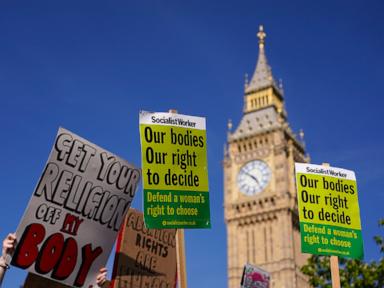
The envelope sits at the bottom of a kitchen drawer, tucked beneath expired warranties and stray rubber bands, yellowing at the edges like an old tooth.
Inside is a piece of paper that smells faintly of damp wool and municipal ink. For decades, that single sheet has dictated where a woman could work, where she could travel, and how loudly she dared to laugh in a crowded room. It carries a criminal record. Not for theft, not for violence, not for fraud, but for ending a pregnancy under a law written when Queen Victoria still sat on the British throne and doctors still prescribed leeches for a fever.
Erasure.
That is the word legal scholars use when a state decides to wipe a conviction from the books, though anyone who has carried the weight of a criminal file knows that ink stains deeper than paper. Yet across England and Wales, a quiet, seismic shift is underway as British women convicted of ending their own pregnancies prepare to receive automatic pardons, clearing away a legal shadow that has lingered over lives for generations.
A Law Out of Time
To understand why a modern democracy is only now issuing pardons for abortion convictions, you have to look at the strange, Frankenstein architecture of British law. Most people assume abortion became entirely legal in Britain in 1967, when Parliament passed the landmark Abortion Act. That assumption is understandable, logical, and entirely wrong.
The 1967 Act did not repeal the criminal offense of abortion. Instead, it carved out narrow medical exemptions to a much older, much harsher statute—the Offences Against the Person Act 1861. Under Sections 58 and 59 of that Victorian legislation, intentionally ending a pregnancy outside strict clinical rules remained a felony punishable by up to life imprisonment.
Think of the 1967 Act not as tearing down a prison wall, but as installing a heavy iron door with a very specific set of keys. Only two doctors could turn those keys, and only under specific conditions within a clinical setting. If a woman stepped outside that doorway—whether out of sheer desperation, coercive abuse, poverty, or the isolating panic of a locked bathroom during a global pandemic—she was instantly thrust back into 1861.
Consider a hypothetical scenario that mirrors the real-world cases brought before British courts in recent years. Imagine Sarah, a mother of two working double shifts in a Midlands warehouse during the lockdowns of 2020. Terrified of losing her job, unable to get a timely in-person appointment, and trapped in a volatile relationship, she orders abortion pills online, miscalculating how far along she is. When complications send her to the hospital, the doctors do not just treat her; under suspicion of an illegal termination, the police are called. Her phone is seized. Her search history is read aloud in a magistrate's court. By the time the gavel falls, Sarah is a felon.
This is not an exaggeration of Victorian morality play. In recent years, police investigations into women suspected of illegal abortions surged across England and Wales, turning emergency rooms into crime scenes and grieving or frightened women into criminal defendants.
The Invisible Sentence
When lawmakers debate criminal justice, they tend to focus on the dramatic moments: the arrest, the trial, the prison cell. They rarely talk about the Tuesday mornings five years later.
A criminal conviction under the 1861 Act does not end when a suspended sentence expires or a community order is completed. It becomes a permanent tether. Whenever a woman applies for a job at a school, a hospital, or a care home, a standard Disclosure and Barring Service check pulls that Victorian ghost out of the archive. She has to sit across a desk from a stranger in human resources and explain the worst, most private crisis of her life just to earn minimum wage.
Living with that kind of mark changes the way you occupy space. You stop applying for promotions because you know a promotion triggers a deeper background check. You hesitate before booking a flight abroad because visa applications ask if you have ever been convicted of an offense. You flinch every time the doorbell rings unexpectedly, conditioned to believe that authority figures arrive only to take things away.
I have sat across from women navigating the fallout of criminalized reproductive care, and the most striking thing isn't their anger. It is their exhaustion. The sheer, grinding fatigue of carrying a secret that the state has notarized and filed away. One woman described the feeling to me as walking around with a pane of glass balanced on her head—if she moved too fast, spoke too loudly, or drew any attention to herself, the whole thing would shatter.
Advocates, medical organizations, and legal experts spent years arguing that prosecuting vulnerable women served no public interest whatsoever. Even the Royal College of Obstetricians and Gynaecologists warned that criminalization was actively deterring women from seeking urgent medical care, turning treatable complications into life-threatening emergencies out of sheer terror of handcuffs.
How the Pardons Work
So how do you undo a century and a half of legal inertia? You start by admitting the law was pointing its weapon at the wrong people.
Under the legislative reforms moving through Westminster to decriminalize women who end their own pregnancies, the government moved beyond simply changing the rules for the future. Changing the law tomorrow does nothing for the woman whose career was derailed yesterday. To address that stain, provisions were introduced to grant automatic pardons to women convicted under the archaic abortion statutes in England and Wales.
Let us be clear about what an automatic pardon actually is, and what it is not. In British legal tradition, a pardon does not mean the state is graciously forgiving a guilty person; rather, it acts as a formal moral and legal acknowledgment that the conviction should never have occurred in the first place. Crucially, making the pardons automatic removes the cruelest bureaucratic hurdle of all.
Without automatic erasure, a woman would have to petition the Home Office, fill out forms, hire a solicitor, and relive her trauma in writing just to ask for her name back. Most wouldn't do it. The shame and the paperwork would act as a second prison wall. By making the clearance automatic, the state takes the burden of administrative repair onto its own shoulders, scrubbing the convictions from criminal record databases without forcing women to step forward and out themselves all over again.
Does this mean the UK has suddenly abandoned all regulations around abortion? Not at all, and this is where public confusion often clouds the debate. Medical professionals, clinics, and third parties who perform unauthorized procedures or coerce women into ending pregnancies remain fully subject to criminal law. The reform draws a sharp, humane boundary: it takes the handcuffs off the woman herself while keeping strict safeguards around clinical care and abusive partners.
The Weight of Mercy and Justice
There is a tempting neatness to political victories. A bill passes, headlines declare a historic milestone, and the news cycle moves on to the next crisis by dinnertime.
Yet if we are honest, a pardon is an imperfect tool. It cannot give back the years spent in a prison cell, as happened to Carla Foster, whose 2023 imprisonment under the 1861 Act sparked national outrage and forced Parliament to confront the brutality of its own statute books. A piece of legislation cannot un-seize a mother's phone, cannot un-traumatize children who watched police officers search their bedrooms, and cannot erase the memory of sitting in a courtroom dock while strangers debated your uterus.
I wrestled with this tension while following the debates in the House of Commons. Is an automatic pardon enough, or is it merely a polite apology for an inexcusable cruelty? Perhaps it is both. Law is a blunt instrument; it can stop a harm, and it can scrub a record, even if it cannot heal a scar.
Still, do not underestimate what happens when the official ledger is wiped clean. Think of the precedent set decades ago when Britain pardoned thousands of men convicted under defunct laws criminalizing homosexuality. For many of those men, and for the families of those who had already died, the pardon did not rewrite history, but it changed the air they breathed. It meant the state finally stopped calling them criminals.
The Kitchen Drawer
Imagine that kitchen drawer again.
Somewhere in a terraced house in Manchester, or a flat in Bristol, or a quiet village in Wales, a woman hears the news on the morning radio while waiting for the kettle to boil. She listens to the presenter explain that the old Victorian charges are being wiped away, automatically, quietly, without her having to sign a single form or answer a single question.
She walks over to the counter, pulls open the drawer, and pushes aside the rubber bands and the expired warranties until her fingers touch that yellowing envelope. She pulls it out, looks at the official stamp that once held the power to ruin her life, and realizes it is nothing more than scrap paper now.
She tears it down the middle, drops the pieces into the bin, and pours her tea.