.
pass
The Grade That Broke the Student

news, lifestyle

The blue book sat on the edge of the linoleum desk, bleeding red ink from the margins down to the bottom corner. A seventy-four.

To an outsider, it was a passing mark. To eighteen-year-old Maya, staring at the page through a blur of fluorescent campus light, it was an eviction notice from her future. Her chest tightened. Her fingers went cold. She remembered the three nights she had spent hunched over a laptop in the basement of the Shapiro Undergraduate Library, surviving on stale coffee and a low-grade panic that hummed behind her eyes like a dying fluorescent bulb. She had written about post-war economic policy. She had cited four academic journals. She had tried to say something true.

Instead, she got a C-plus. And in the brutal arithmetic of the modern freshman year, a C-plus was not an invitation to think harder. It was a permanent mark on a permanent ledger, a weight pulled around the ankles for the next four years.

Then came the quiet shift in Ann Arbor.

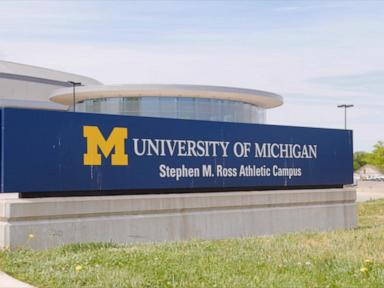
The University of Michigan, an institution built on the formidable machinery of academic competition, stepped back from the precipice. For incoming freshmen, the traditional letter grading system began to undergo a radical reevaluation. The administration, watching generations of brilliant minds fracture under the weight of grade point averages, decided to test a different path. They chose curiosity over compliance.

Consider what happens when you remove the letter.

For decades, higher education has operated on a transaction. Pay tuition, ingest data, regurgitate it on a Tuesday morning, receive a letter. A is elite. B is acceptable. C is a warning shot. D is failure. F is an abyss. We treat these letters as objective truths about human intelligence, when in reality, they are crude approximations. They measure a student's ability to guess what a specific professor wants to hear in a fifty-minute window. They measure compliance, obedience, and the sheer endurance required to sit still under fluorescent lights.

They do not measure courage. They do not measure the willingness to be wrong.

When every mistake carries a permanent tax, students stop taking risks. They avoid the difficult seminar on modern philosophy because the grading curve is notoriously unforgiving. They skip the experimental engineering lab because a failed prototype ruins a GPA. They become risk-averse optimization machines, trading intellectual adventure for safety.

Maya knew this exhaustion intimately. By October of her first semester, she had stopped reading for pleasure. Every book was a chore, scanned exclusively for quotes she could weaponize into an essay to appease the grading rubric. The joy of discovery had been engineered out of her life, replaced by a dull, persistent terror of falling below a 3.5.

The shift at Michigan points toward a different horizon. By recalibrating how first-year students are evaluated, the university is attempting to solve a crisis of mental health that has hollowed out campuses nationwide. When anxiety becomes the baseline emotional state for teenagers entering higher education, learning ceases. The brain, locked in a perpetual state of defensive survival, cannot form deep conceptual connections. It can only store enough information to pass the next test, and then purge it to make room for the next wave of data.

Critics call this softening. They argue that the real world does not hand out participation trophies, that the corporate ladder is ruthless, and that shielding freshmen from harsh letters leaves them unprepared for the carnivorous realities of the job market.

They misunderstand the point entirely.

This is not about coddling. This is about calibration. A surgeon does not let a medical student perform an appendectomy on day one without supervision, nor do they grade a first-year resident by breaking their spirit. They train them. They create an environment where failure is treated as diagnostic data rather than a moral failing. Why should intellectual growth be treated any differently?

When a freshman is allowed to stumble without permanently staining their academic transcript, something remarkable happens. The shoulders drop. The breath comes easier. Students begin to raise their hands not because they know the precise answer that earns full credit, but because they have a question that keeps them awake at night.

Think about the best ideas in human history. They were born of missteps, failed experiments, half-formed hypotheses, and wild detours into intellectual blind alleys. Thomas Edison did not fail ten thousand times and receive a C-minus on each attempt; he gathered data. If every one of those initial failures had been permanently logged onto a digital transcript that threatened his future employment, he would have stopped tinkering after week two.

The University of Michigan's pivot recognizes a fundamental truth about late adolescence. The transition from home to university is violent. Young adults are navigating independence, identity, neurochemistry, and academic rigor all at once. To drop the anchor of a punitive grading system onto them during their first two semesters is like handing a child learning to ride a bicycle a heavy iron backpack and telling them not to fall.

The old guard defends the letter grade with religious fervor. They argue it maintains standards. But standards and punishment are not the same thing. High standards mean demanding rigorous thought, careful evidence, and honest inquiry. Punishment means branding a nineteen-year-old with a permanent numerical blemish because they struggled to synthesize three centuries of political theory during a semester when their grandfather was in the hospital.

Institutions are slow to change because they are built out of history and habit. Every syllabus is an echo of a syllabus from fifty years ago. Every grading scale is a ghost from an era of industrial manufacturing, where humans were sorted into categories of efficient or inefficient.

Yet the world outside the ivied gates has changed. The economy no longer rewards the person who can memorize the most facts. Information is free, searchable, and instantly accessible in the palm of any smartphone. What the world demands now is adaptability, emotional resilience, and the capacity to think across rigid boundaries. You cannot train those muscles in a gymnasium where every misstep brings a penalty.

Maya watched the news about Michigan from her apartment miles away, years after her own undergraduate ordeal. She thought about the classes she didn't take because she was too afraid of the GPA drop. She thought about the midnight breakdowns over a single lost point on a biology quiz.

She felt a quiet surge of envy for the incoming class. They would get to walk across that sprawling campus in Ann Arbor and look at a syllabus not as a minefield, but as a map. They would have the rare, radical luxury of being bad at something before they became good at it. They would have space to figure out who they were when nobody was grading their performance.

The red ink on Maya's blue book eventually faded in the drawer, but the memory of the fear never quite did. It lingers in the minds of millions of graduates who learned too early that their worth could be reduced to a decimal point.

The university has made its move. The letters are stepping back. The human beings are stepping forward. And in the quiet lecture halls of the Midwest, a different kind of education is finally beginning.
💡 You might also like: The Real Reason Big Law Failed to Knock Out Trump's Octagon Appearance