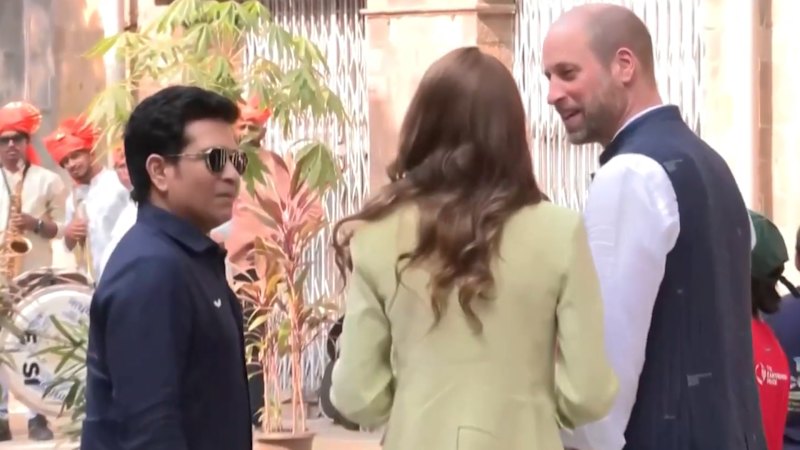
Royal tours usually run on stiff handshakes, ribbon cuttings, and carefully scripted small talk. That is why the footage from Mumbai's Oval Maidan in April 2016 still hits differently a decade later. When Prince William and Catherine, then the Duke and Duchess of Cambridge, picked up wooden bats in the middle of a humid Sunday afternoon, they weren't just ticking a box on a diplomatic itinerary. They stepped straight into the beating heart of India's most obsessive pastime, and honestly, the photos alone don't capture how high the stakes actually were.
If you've ever watched a match at Oval Maidan, you know it isn't some manicured stadium with velvet ropes. It is a sprawling 22-acre public ground in South Mumbai where dozens of overlapping games happen at once, balls fly across adjacent pitches without warning, and nobody pauses for a breather. For British royals to walk onto that dusty grass during their first official visit to India and Bhutan was a calculated gamble. One awkward air-swing in front of Sachin Tendulkar and Dilip Vengsarkar would have lived on Indian television loops forever.
Why the Oval Maidan Match Mattered So Much
Diplomacy often fails because visitors treat local culture like a museum exhibit. You look, you nod, you leave. William and Kate did the exact opposite on April 10, 2016, just hours after arriving in Mumbai and laying a wreath at the Taj Mahal Palace Hotel to honor victims of the 2008 terror attacks.
The shift in mood was intentional. Organized in partnership with the British High Commission and local charities including Magic Bus, Childline, and Doorstep, the afternoon brought disadvantaged children from Mumbai's slums onto the same turf as global icons. Magic Bus uses sport to mentor young people out of poverty, and having the royal couple play alongside those kids turned a standard charity photo-op into genuine community theater.
Watching Kate step up to the crease remains the moment everyone talks about. She wasn't wearing athletic gear. She wore a patterned Anita Dongre tunic dress—a deliberate nod to an Indian designer—paired with Monsoon wedge heels. Most people can barely walk across uneven grass in wedges, let alone face a delivery bowled by a local teenager while photographers crowd the boundary.
She didn't just tap the ball defensively. She swung hard, connected cleanly, and sent the ball flying into the outfield before jogging between the wickets with a grin that looked completely unscripted. William took his turn too, facing deliveries from both the kids and Tendulkar himself, though he admitted afterward that he wasn't nearly as sharp with the bat as his wife.
Street Cricket vs. Stadium Cricket in India
To understand why Indian fans loved that afternoon so much, you have to understand the massive gap between formal stadium cricket and maidan or gully cricket. International matches at Wankhede Stadium, located just a short walk away from Oval Maidan, are multi-million-dollar broadcasts governed by strict Marylebone Cricket Club rules. Street cricket operates on an entirely different code.
Here is how the game works on Mumbai's public grounds and narrow lanes:
- Shared territory. At Oval Maidan, up to 20 or 30 amateur matches run simultaneously on weekends, meaning a fielder chasing a cover drive from one game routinely dodges a bowler's run-up from another.
- Improvised equipment. Kids grow up using heavy tennis balls wrapped in electrical tape to create swing, flattened wooden planks instead of willow bats, and plastic crates or stacked bricks for stumps.
- Flexible rules. One-hand, one-bounce catches often count as out in tight spaces, hitting the ball directly into a neighbor's window ends your innings immediately, and the owner of the bat usually gets to bat first regardless of talent.
When William and Kate joined a simplified match using soft balls and basic wickets, they were playing the exact version of the sport that raised every Indian superstar from Tendulkar to Rohit Sharma. It stripped away the colonial baggage that sometimes lingers around formal Commonwealth cricket tours.
The Soft Power Strategy Behind the Photographs
British royal tours to former colonies always walk a tightrope. Show up with too much pomp, and the visit feels tone-deaf; stay too guarded, and the trip feels cold. Kensington Palace clearly understood that sport was the fastest bridge between Britain and modern India.
Having Sachin Tendulkar on the pitch wasn't just a celebrity flex. In India, Tendulkar isn't merely a retired athlete—he is practically cultural royalty. By placing William and Kate beside Tendulkar and former Indian captain Dilip Vengsarkar, the organizers signaled mutual respect rather than top-down charity. Tendulkar later remarked that the couple showed genuine enthusiasm and picked up the rhythm of the game quickly, which gave the event instant credibility across Indian media.
Even the wardrobe choices carried weight. Within hours of photos hitting the internet, Anita Dongre's website famously crashed from global traffic surge as shoppers hunted down the exact floral tunic Kate wore while batting. That single outfit blended British royal diplomacy with Indian fashion craftsmanship, generating millions in organic publicity for local designers without a single press release needed.
What Most Coverage Misses About That Afternoon
Tabloids focused almost exclusively on Kate's wedge heels and William's competitive banter, which misses the real reason the event worked. The kids from Doorstep and Magic Bus weren't treated as passive props standing behind a podium. They bowled at the future King of England, shouted fielding adjustments, and celebrated wickets right in front of international news crews.
That matters because street cricket in Mumbai is one of the few spaces where rigid social hierarchies temporarily dissolve. On a Sunday morning at Oval Maidan, corporate lawyers, college students, and kids from low-income neighborhoods share the same patch of dirt. For ninety minutes, the Duke and Duchess of Cambridge entered that ecosystem on the kids' terms rather than forcing the kids into a formal palace reception.
If you ever travel to Mumbai and want to see that energy firsthand, skip the standard tourist bus tour around South Mumbai and walk past Oval Maidan early on a Sunday morning between 7:00 AM and 10:00 AM. Stand near the edge of the grass along Maharshi Karve Road, watch how five different games overlap without colliding, and you'll immediately see why two British royals looked so genuinely thrilled to pick up a bat there.