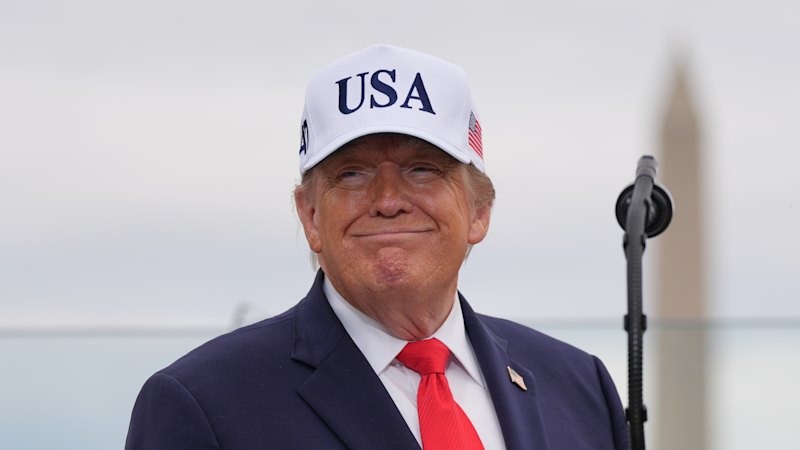
Everyone obsessed over gas prices and inflation for months. Then Donald Trump stepped up to the podium for his final closing arguments before the 2026 midterm elections and threw a massive curveball about Iran.
Most political pundits missed the real story here. They treated his sudden hesitation over further military strikes on Iran as a random off-script moment. It wasn't. Watching how campaign war rooms operate during the final stretch of a midterm cycle makes one thing painfully obvious. When a sitting president starts walking back hawkish rhetoric days before voters head to the polls, internal polling is flashing bright red. Don't miss our previous article on this related article.
Right now, Republican control of both the House and the Senate hangs by a razor-thin thread. Democrats smell blood in the water, and they're using foreign policy anxiety alongside domestic frustration to pry away swing-district voters who usually stay home during non-presidential years. If you want to understand why the 2026 midterms suddenly feel like a toss-up rather than a predictable referendum, you have to look at how Middle East brinkmanship collided with kitchen-table politics.
Why Trump Suddenly Cooled on Iran Strikes
Let's be honest about how modern campaign messaging works. Candidates don't pivot on national security in the final week because they had a sudden philosophical awakening. They pivot because focus groups in Pennsylvania, Michigan, and Arizona told pollsters they're terrified of getting dragged into another endless Middle Eastern war. If you want more about the context here, Reuters offers an in-depth breakdown.
For months, the administration projected maximum pressure toward Tehran. Hawks inside the party cheered every escalation, betting that looking tough abroad would project strength at home. That math falls apart the second oil markets twitch or rumors of troop deployments hit local news broadcasts. Trump knows his base better than almost anyone in Washington, and a huge chunk of his coalition voted for him specifically because he promised to keep America out of foreign entanglements.
By raising public doubts about ordering additional strikes on Iran during his final pitch to voters, Trump was trying to neutralize a massive Democratic talking point before Election Day. Democrats had spent weeks framing GOP lawmakers as eager to sleepwalk into a wider regional conflict. Trump basically tried to yank the rug out from under that attack by reminding voters that he's the one holding the brakes.
Does it work? Partially. Hardcore loyalists buy it immediately. Independent suburban women—the exact demographic deciding control of the House—are much harder to convince once anxiety about global instability sets in.
The Razor-Thin Math Threatening Republican Control
You don't need a degree in political science to see why GOP strategists are sweating right now. Midterm elections historically punish the party holding the White House. It's the closest thing to an iron law in American politics, with only rare exceptions like 1998 and 2002 breaking the streak.
Heading into November 2026, Republicans didn't have a comfortable cushion to absorb normal midterm headwinds. They entered the cycle defending one of the narrowest House majorities in modern history, where losing just a handful of seats flips the gavel back to Democratic leadership. In that kind of environment, a two-point swing in turnout or a minor shift among independent voters wipes out an entire legislative agenda overnight.
The House Battlefield Comes Down to Two Dozen Seats
Forget national generic ballot polls. Control of the House is being decided in roughly twenty-five districts scattered across New York, California, the Rust Belt, and a few rapidly changing Sun Belt suburbs.
In places like New York's Hudson Valley and Southern California's Orange County, moderate Republicans have spent two years walking an impossible tightrope. They need Trump's base to turn out in massive numbers, yet they can't afford to alienate college-educated moderates who recoil at chaotic headlines. When foreign policy crises dominate the final news cycle, those vulnerable incumbents get stuck answering questions they never wanted to touch. Either they back Trump's shifting rhetoric and look inconsistent, or they break with him and risk depressing conservative turnout at home.
Why the Senate Map Isn't a Guaranteed Safety Net
For most of 2025 and early 2026, conventional wisdom held that the Senate map favored Republicans enough to insulate them from a bad night in the House. That comfort evaporated fast.
Democrats poured staggering amounts of small-dollar cash into key battleground states, forcing the National Republican Senatorial Committee to spend millions defending seats they assumed were locked down months ago. When outside groups have to burn cash in states that should be safe, it starves challengers in true toss-up races of the television ad buys they need in the final stretch.
What Live Election Updates Actually Tell You vs Noise
If you're glued to live midterm coverage right now, half of what you're seeing is pure theater designed to keep you refreshing the page. Campaign spokespeople always claim momentum is surging in their direction during the final forty-eight hours. Ignore the spin and watch three specific indicators instead.
First, look at where principals travel in the final seventy-two hours. Presidents and party leaders don't visit states they're winning comfortably, and they rarely waste precious flight hours in states they've already written off. If Trump or top surrogates make last-minute stops in districts that went comfortably red two years ago, that's a distress flare.
Second, pay attention to early vote demographic breakdowns published by state election boards, particularly in states like North Carolina, Georgia, and Nevada. Don't fall for partisan hype claiming one side is "crushing" early voting just because raw ballot counts look high. Look at the age and past-voting-history splits. Midterms are won by persuading low-propensity voters—people who skipped 2022—to actually cast a ballot.
Third, watch the tone of closing ads. Parties that think they're ahead run positive, forward-looking spots about stability and growth. Parties staring at internal polling deficits switch almost entirely to fear-based contrast ads in the final week. Look at the sudden flood of national security warnings and economic doom spots airing across swing media markets right now—both sides know the margins are microscopic.
How Foreign Policy Actually Moves Midterm Voters
A common misconception among armchair analysts is that Americans never vote on foreign policy during midterms. That's only true when the world feels quiet.
Voters don't sit around reading think-tank white papers on Iranian enrichment levels or Strait of Hormuz shipping lanes. They process foreign crises through two very personal filters:
- Wallet impact: Anything that threatens Middle East oil supply immediately triggers fears of four-dollar or five-dollar gas. Voters blame whoever is currently in charge when fuel prices spike, regardless of global supply chains.
- Sacrifice anxiety: Working-class families in rural and small-town America bear a disproportionate share of military enlistment. When talk of strikes and retaliation fills evening news broadcasts, those families hear one thing—their kids could get deployed.
Trump's instinct to pump the brakes on further strikes directly targets both of those fears. He knows that projecting restraint right before Election Day is way safer politically than promising military action that could spiral out of control before ballots are even counted.
What Happens If Democrats Flip One or Both Chambers
If Democrats manage to claw back control of the House—or pull off an upset in the Senate—Washington grinds into a completely different gear starting in January 2027.
For starters, divided government immediately kills any major partisan legislation dead on arrival. Tax policy extensions, regulatory overhauls, and border enforcement bills suddenly require bipartisan compromises that neither base actually wants. Expect government funding deadlines to become brutal, high-stakes standoffs every few months.
More importantly, winning the House hands Democrats subpoena power. Congressional oversight committees would pivot immediately toward investigating administration decisions, foreign policy communications, and agency appointments. Even without Senate votes to convict or pass bills, constant committee hearings dominate media cycles and define the narrative heading straight into the 2028 presidential race.
On the flip side, if Republicans hold both chambers despite the late-cycle turbulence over Iran, it validates Trump's unconventional closing strategy. It would prove that his ability to shift positions on the fly—and keep voters guessing—still outweighs traditional political gravity.
How to Cut Through the Noise Before Results Drop
Don't let pundits panic you with early precinct returns once polls close. Because different states process mail-in and early ballots on completely different schedules, early numbers almost always create temporary illusions—known as "red mirages" or "blue shifts"—that vanish once full county totals report.
Instead of refreshing national maps every thirty seconds, pick five bellwether House districts on the East Coast that report fast, such as competitive seats in Virginia, North Carolina, or Pennsylvania. Track how Democratic and Republican candidates perform in those specific suburban counties compared to 2022 and 2024 margins. Those early bellwethers will tell you whether the late shift on Iran saved the GOP majority—or whether Democrats quietly built the exact coalition they needed to take back Congress—long before the West Coast even finishes counting.