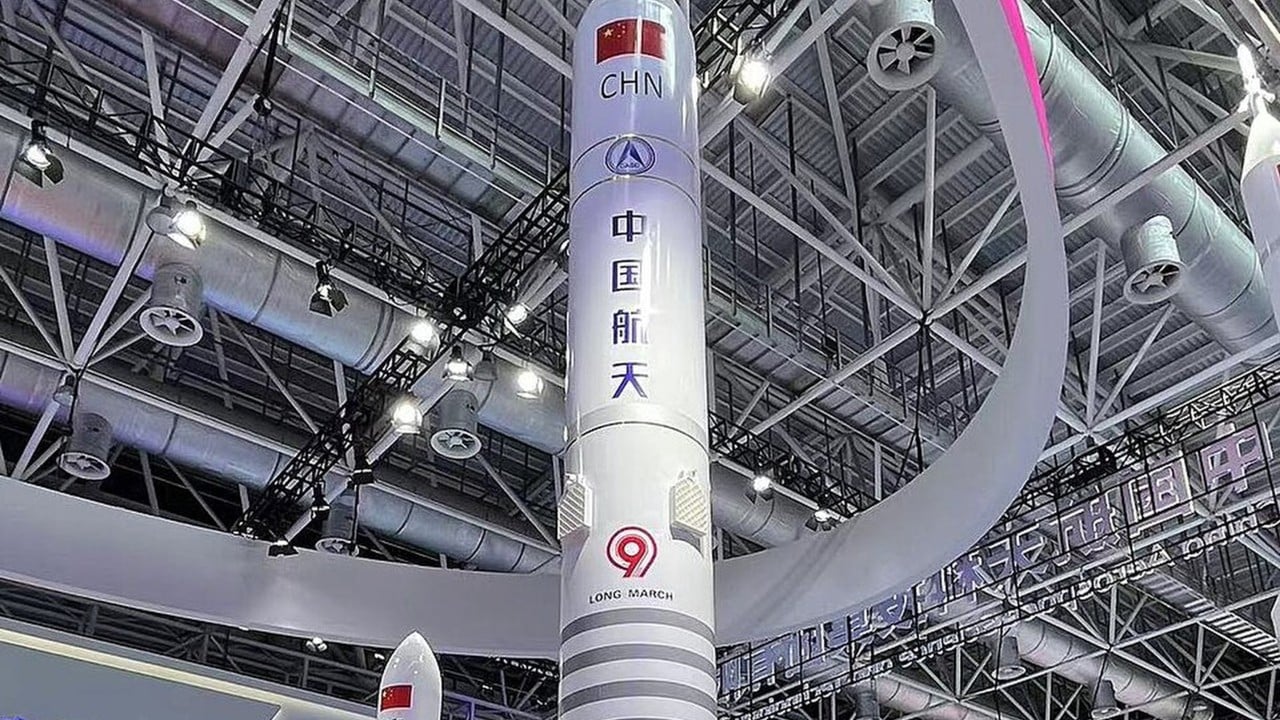
Beijing didn't just approve another big rocket. They signed off on a complete architectural overhaul that turns the Long March 9 into China's direct answer to SpaceX's Starship.
For years, space analysts watched the China Academy of Launch Vehicle Technology (CALT) pitch a traditional, expendable heavy-lift vehicle. That old design used solid boosters and kerosene engines to throw massive payloads toward the Moon once and burn up in the atmosphere. That plan is dead.
The approved Long March 9 architecture is a two-stage, fully reusable, stainless-steel heavy lifter powered by methane and liquid oxygen. If you haven't paid close attention to Chinese aerospace shifts lately, that pivot changes everything about the timeline for a permanent lunar base and deep-space exploration.
Why Beijing Scrapped the Original Long March 9 Design
Let's be honest about why the original blueprint got tossed. Building a single-use super-heavy rocket in the 2020s makes zero economic sense when competitors are landing orbital boosters on mechanical chopsticks.
Chinese engineers spent over a decade refining the initial Long March 9 concept. It looked a lot like NASA's Space Launch System (SLS)—a giant core stage flanked by four massive boosters. It could lift roughly 140 metric tons to low Earth orbit (LEO) and 50 metric tons to translunar injection (TLI). Impressive on paper. Terrible for cadence.
You can't build a permanent Moon base if every launch costs hundreds of millions of dollars and throws away hardware at the bottom of the ocean. Beijing realized this. By 2022, senior designers at the China Aerospace Science and Technology Corporation (CASC) started showing revised models at the Zhuhai Airshow that looked suspiciously like a Starship clone.
Now that formal approval is locked in, the engineering path is clear. The new Long March 9 ditches the side boosters entirely. It relies on a single, 10.6-meter-diameter core powered by a cluster of 30 YF-215 engines.
That engine choice matters.
The Shift to Full Flow Methane Engines
Moving from kerosene to liquid methane (methalox) isn't just a trendy engineering choice. Kerosene leaves sticky carbon deposits—coking—inside engine components after a burn. Cleaning that out between flights slows down turnaround times and drives up maintenance costs.
Methane burns clean. It also boils off at temperatures close to liquid oxygen, which simplifies tank insulation and structural design inside the rocket body.
The YF-215 engine powering the Long March 9's first stage uses a full-flow staged combustion cycle. Only a handful of engines in human history have pulled this off, most notably SpaceX's Raptor. In a full-flow cycle, both oxidizer-rich and fuel-rich preburners drive separate turbines, sending gaseous propellants straight into the main combustion chamber.
Here's what that gives China's heavy-lift program:
- Higher chamber pressures that squeeze maximum thrust out of every kilogram of propellant.
- Lower turbine temperatures, which keeps metal components from wearing out across dozens of reuses.
- Simpler propellant management for long-duration deep-space missions where boil-off normally ruins mission math.
Each YF-215 generates around 200 metric tons of thrust. Put 30 of them under a 10.6-meter hull, and you get roughly 6,000 metric tons of thrust at liftoff. That puts the Long March 9 squarely in the same weight class as Starship and well ahead of the Saturn V or NASA's SLS.
How the Long March 9 Actually Flies to the Moon
People often assume a bigger rocket just flies straight to the Moon, lands, and comes home. Physics doesn't work that way. The rocket equation is brutal, and even a 150-ton-to-LEO monster runs out of gas fast once it leaves Earth's gravity well.
To support the International Lunar Research Station (ILRS)—the joint lunar base project China is leading alongside partners like Russia, Pakistan, and South Africa—the Long March 9 has to operate in two distinct configurations.
First, there's the expendable or partially reusable variant aimed at sheer volume. Without reserving fuel for a landing burn, the Long March 9 can haul roughly 150 metric tons to LEO or push 50 metric tons directly toward the Moon. That's enough mass to drop nuclear power modules, pressurized habitats, and heavy mining rovers onto the lunar south pole in single-launch packages.
Second, there's the fully reusable variant. When both the first-stage booster and the upper-stage spacecraft return to Earth, LEO payload capacity drops to roughly 100 metric tons.
Still massive.
To send that upper stage to the Moon or Mars, China plans to use orbital refueling. Just like SpaceX's architecture, tanker variants of the Long March 9 upper stage will launch into LEO, dock with a waiting lunar lander or deep-space tug, and transfer cryogenic methane and oxygen before the translunar burn.
If you're tracking spaceflight milestones, watch China's progress on in-orbit cryogenic fluid transfer over the next three years. Hardware bends metal, sure, but orbital refueling is the real gatekeeper for deep-space logistics.
Long March 9 vs Starship and SLS
It's impossible to look at the approved Long March 9 without comparing it to what's already flying—or struggling to fly—in the United States.
NASA's Space Launch System proved it works during Artemis I, delivering 95 metric tons to LEO (with Block 1B pushing toward 105 tons). Yet SLS relies on legacy Space Shuttle engines and solid rocket boosters. Every single flight expends the entire vehicle at a cost analysts peg north of $2 billion per launch. You simply can't sustain a lunar settlement at two billion bucks a pop.
SpaceX's Starship sits on the opposite end of the spectrum. Built from 30X stainless steel, measuring 9 meters wide, and powered by 33 Raptor engines, it's designed for rapid, airline-style reusability. SpaceX already has flight hardware in the air, catching boosters and testing orbital reentry, years ahead of China's timeline.
Where does Long March 9 land? Right in Starship's slipstream.
China isn't trying to out-invent SpaceX here. They're executing a fast-follower strategy backed by state-level industrial scale. While private commercial startups in China like LandSpace and Space Pioneer are racing to build Falcon 9 equivalents, CASC has the state funding to absorb the massive R&D costs of a 10-meter-class vehicle without worrying about quarterly investor calls.
One key difference lies in the upper stage design. Early renders of the reusable Long March 9 upper stage show forward and aft flaps very similar to Starship's belly-flop reentry profile, alongside grid fins on the booster for vertical tower catches or propulsive pad landings. However, China has historically been conservative with human-rating new boosters. Don't be surprised if Chinese astronauts launch to lunar orbit on the smaller, man-rated Long March 10 while the Long March 9 handles the heavy cargo runs.
What This Means for the International Lunar Research Station
Approval of the Long March 9 isn't an isolated engineering milestone. It's the logistical backbone for China's broader geopolitical push in cislunar space.
China plans to land taikonauts on the Moon before 2030 using two launches of the Long March 10—one for the Mengzhou crew spacecraft and one for the Lanyue lunar lander. That's an Apollo-style flags-and-footprints mission, albeit with smarter hardware.
You can't build a base with the Long March 10.
The International Lunar Research Station requires permanent infrastructure near the lunar south pole, specifically around Shackleton, Haworth, or Cabeus craters where water ice hides in permanently shadowed regions. Setting up automated solar arrays, surface nuclear reactors, comms relays, and oxygen-extraction plants requires moving hundreds of tons of equipment across 384,000 kilometers of vacuum.
With the Long March 9 cleared for full development ahead of a target maiden flight around 2033, CASC can finally freeze the dimensions of those lunar surface modules. Engineers designing habitats and ISRU (in-situ resource utilization) rigs now know their exact fairing volume and mass budgets.
The Real Bottlenecks Nobody Mentions
Approval on paper doesn't put a rocket on the pad. Anyone who has followed heavy-lift aerospace programs knows that powerpoint rockets fly flawlessly, while real ones blow up test stands.
China faces three massive hurdles between now and the Long March 9's maiden launch:
- Engine production scale. Building one YF-215 engine in a lab is hard. Building 30 of them for a single booster—plus backups for static fires and flight failures—requires automated manufacturing lines China is still scaling up.
- Launch pad infrastructure. A rocket producing 6,000 tons of thrust will obliterate a standard concrete pad. China has to build massive water-deluge systems, reinforced flame trenches, and cryogenic tank farms at the Wenchang Space Launch Site in Hainan, all while dealing with coastal typhoons and high humidity.
- Thermal protection during reentry. Getting a 10.6-meter upper stage back through Earth's atmosphere at orbital velocities without melting requires thousands of interlocking ceramic heat-shield tiles. Even SpaceX has spent years fighting tile loss during Starship reentry tests.
None of these problems are unsolvable. China went from zero space station modules in orbit to completing the three-module Tiangong station in roughly 18 months. When Beijing commits budget and engineering talent to a strategic priority, hardware moves fast.
How to Track China's Heavy-Lift Progress Yourself
If you want to separate genuine aerospace progress from state-media hype over the next few years, stop reading breathless headlines and watch the specific hardware milestones.
Keep an eye on test-stand firings from the Academy of Aerospace Liquid Propulsion Technology (AALPT). When you see full-duration, multi-hundred-second hot fires of the YF-215 engine—especially clustered tests—the propulsion side is maturing.
Watch satellite imagery of the Wenchang Space Launch Site on Hainan Island. Construction of ultra-wide vertical assembly buildings and massive launch mounts next to the existing LC-101 and LC-201 pads will tell you when ground infrastructure is catching up to rocket development.
Finally, track China's commercial methane rockets like LandSpace's Zhuque-2 and the upcoming Zhuque-3. Beijing routinely lets private Chinese launch firms absorb the early trial-and-error pain of reusable methalox boosters before rolling those lessons into state-run CASC flagships. Every time a commercial Chinese stainless-steel booster nails a hop test, the Long March 9 gets one step closer to the pad.