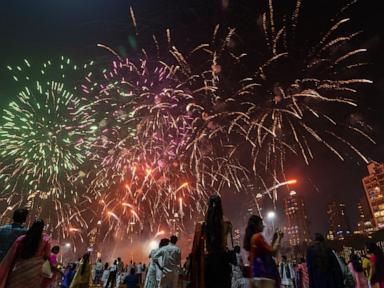
Every autumn, the sky across northern India turns into a thick, metallic-tasting soup right around Diwali. People blame the firecrackers entirely, buy a cheap cloth mask, light a few scented candles to cover the smell, and hope for the best.
That approach doesn't work. In fact, some of those habits actually trap more toxic particles inside your lungs.
When Diwali celebrations coincide with worsening air, you're dealing with a chemical collision. Firecracker smoke doesn't exist in a vacuum. It mixes with seasonal agricultural crop-residue burning, cold autumn temperatures that trap pollutants close to the ground, and stagnant winds. If you want to protect your respiratory system during this week, you need to stop treating Diwali smog like regular dust and start treating it like an acute chemical event.
Why Diwali Air Is Uniquely Dangerous
Most people check the Air Quality Index (AQI) on their phones, see a number north of 400, and think it just means "extra dusty." It's way worse than that.
Standard urban air pollution comes mostly from vehicle exhaust and construction dust. Firecrackers introduce a completely different cocktail of heavy metals and toxic gases into the atmosphere in a matter of hours. When pyrotechnics explode, they release high concentrations of PM2.5 (particulate matter smaller than 2.5 micrometers) alongside sulfur dioxide, nitrogen oxides, and heavy metals used to create bright colors—like barium for green, strontium for red, and copper for blue.
Because PM2.5 particles are roughly 30 times smaller than the width of a human hair, your nose and throat can't filter them out. They travel straight down into your alveoli, the tiny air sacs in your lungs, and cross directly into your bloodstream.
Here is the real kicker. Diwali almost always falls between late October and mid-November. During this exact window, weather patterns across the Indo-Gangetic Plain shift toward temperature inversions. Normally, warm air near the ground rises and carries pollution away. During a temperature inversion, a layer of warm air acts like a lid over cooler air near the surface, locking firecracker smoke, vehicle emissions, and agricultural smoke from neighboring states right at breathing height.
The Biggest Mistakes People Make Trying to Stay Safe
I've watched friends spend thousands of rupees on wellness routines during festival week while completely ignoring the physics of how polluted air enters their homes and bodies. If you're doing any of the following, stop immediately.
Relying on surgical masks or wet handkerchiefs
A loose-fitting blue surgical mask or a damp cloth tied around your face does almost nothing against PM2.5. Fine particulate matter flows right through the gaps around your nose and cheeks. If you have to step outside during peak fireworks hours, only a properly fitted N95, KN95, or FFP2 respirator will actually filter out 95% of airborne particles. Check the seal around your nose bridge. If your glasses fog up, air is leaking in, and the mask isn't doing its job.
Burning incense, diyas, or scented candles indoors
It's Diwali, so lighting oil lamps and incense feels non-negotiable. Just understand the trade-off you're making. Burning paraffin candles, incense sticks, and even traditional oil diyas inside a closed room spikes indoor PM2.5 levels dramatically. When outdoor air is already hazardous and your windows are shut tight, adding indoor combustion turns your living room into a gas chamber. Keep traditional lamps on outdoor balconies or near well-ventilated doorways rather than inside bedrooms where you sleep.
Running an air purifier with the windows cracked
You'd be surprised how many people run a HEPA air purifier on max speed while leaving a bathroom exhaust fan running or a balcony door slightly open. Exhaust fans create negative pressure, pulling dirty outdoor air through every tiny crack under your doors and windows. Close your doors, seal obvious gaps with rolled-up towels or weather stripping, and turn off bathroom exhaust fans when you aren't actively using them.
Exercising outdoors in the early morning
Morning walks feel virtuous. During Diwali week, they're terrible for your lungs. Because overnight temperatures drop, pollutants settle closest to the ground between 5:00 AM and 8:00 AM. When you jog or do brisk yoga outdoors in that window, your breathing rate increases, pulling heavy concentrations of toxic smoke deep into your lower respiratory tract. Move your workouts indoors until afternoon sunlight warms the ground and lifts the smog layer, or skip cardio entirely for three or four days.
How to Actually Protect Your Lungs During Diwali Week
Forget complicated detox teas or miracle supplements. Protecting yourself comes down to mechanical filtration, timing, and basic respiratory hygiene.
Create one clean-air room in your house
You don't need an expensive air purifier in every single room of your home. Pick the room where you spend the most hours—usually your bedroom—and make it your clean-air sanctuary.
- Check the CADR rating: Make sure your purifier uses a true HEPA filter (H13 or H14 grade) with a Clean Air Delivery Rate matched to your room's square footage.
- Run it continuously: Don't turn the purifier off at night to save electricity or avoid fan noise. Keep it running on medium or auto mode 24/7 during festival week so particle levels never get a chance to rebound.
- Skip the ionizer feature: Many purifiers include an "ionizer" or "plasma" button. Turn it off. Ionizers can generate trace amounts of ozone, which irritates lung tissue and worsens asthma symptoms.
Time your ventilation carefully
Keeping windows shut 24 hours a day eventually causes carbon dioxide levels to spike inside your home, making you feel groggy and giving you headaches. You still need fresh air, so open your windows strategically. Watch your local air quality monitor—apps like AirVisual or government CPCB dashboards work well—and crack your windows open for 20 to 30 minutes between 1:00 PM and 4:00 PM. That's usually when afternoon warmth disperses ground-level smog the most. Once the sun goes down and fireworks start up again, seal everything back up.
Switch from sweeping to wet mopping
Heavy metal particles and soot from firecrackers eventually settle onto your floors, furniture, and bedsheets. If you use a dry broom or a feather duster, you're just kicking those settled toxins right back into the air you breathe. Use a damp microfiber cloth on surfaces and mop floors with water daily during the festival week. Wash your pillowcases and curtains once the worst of the smog clears.
Flush your airways with basic saline
When fine particulate matter coats your nasal passages, it triggers inflammation, sinus headaches, and that familiar scratchy throat. Use a simple sterile saline nasal spray or a neti pot filled with distilled, boiled, or filtered water every evening before bed. It physically washes trapped soot and allergens off your mucous membranes before they cause overnight congestion.
What About "Green" Firecrackers?
You've probably heard local authorities and vendors promote "green crackers" developed by CSIR-NEERI (Council of Scientific and Industrial Research – National Environmental Engineering Research Institute) as a safe alternative. Let's be clear about what they actually are.
Green crackers eliminate banned heavy metals like barium and reduce particulate emissions by roughly 30% compared to conventional fireworks. That's an improvement, sure. They also release water vapor to help suppress some of the dust they generate.
Still, a 30% reduction in toxic smoke is still a massive cloud of smoke. When thousands of people light green crackers simultaneously in dense neighborhoods during a temperature inversion, the cumulative pollution still pushes local AQI readings straight into the "Severe" category. Don't let the green label fool you into standing over them without a mask or letting kids with asthma play right next to the sparklers.
High-Risk Groups Need a Different Playbook
Healthy adults might walk away from Diwali week with a mild cough, watery eyes, and a few days of fatigue. For vulnerable groups, the same air triggers medical emergencies.
According to the World Health Organization and pulmonologists across major Indian hospitals, emergency room visits for acute respiratory distress spike sharply in the 48 to 72 hours following Diwali night. If you or someone in your family falls into one of these categories, take extra precautions:
- People with asthma or COPD: Keep rescue inhalers (like salbutamol) within arm's reach at all times, even if your symptoms have been quiet for months. Talk to your doctor ahead of the festival about temporarily adjusting your controller inhaler dose.
- Older adults and people with heart disease: PM2.5 doesn't just hurt lungs. Once those microscopic particles enter your bloodstream, they trigger systemic inflammation, constrict blood vessels, and raise the risk of arrhythmias, high blood pressure spikes, and heart attacks. Monitor blood pressure daily during heavy smog days.
- Pregnant women and infants: Developing lungs and fetuses are far more sensitive to heavy metals and carbon monoxide. Keep infants strictly indoors during peak evening hours and maintain indoor humidity around 40% to 50% so dry winter air doesn't compound respiratory irritation.
Immediate Steps to Take Before the Fireworks Start
Don't wait until the smoke is already pouring under your front door to prepare. Handle these four things today:
- Inspect your air purifier filters. If the pre-filter is caked in grey dust, vacuum it gently outside, and replace the HEPA filter if it's been running for over six months.
- Buy a fresh box of certified N95 or FFP2 masks so everyone in your household has one that actually fits snugly over their nose and chin.
- Stock up on sterile saline nasal spray and lubricating eye drops to rinse out grit and chemical irritation after any unavoidable time outdoors.
- Move your workouts indoors and plan grocery runs or errands for mid-afternoon rather than early morning or late evening.