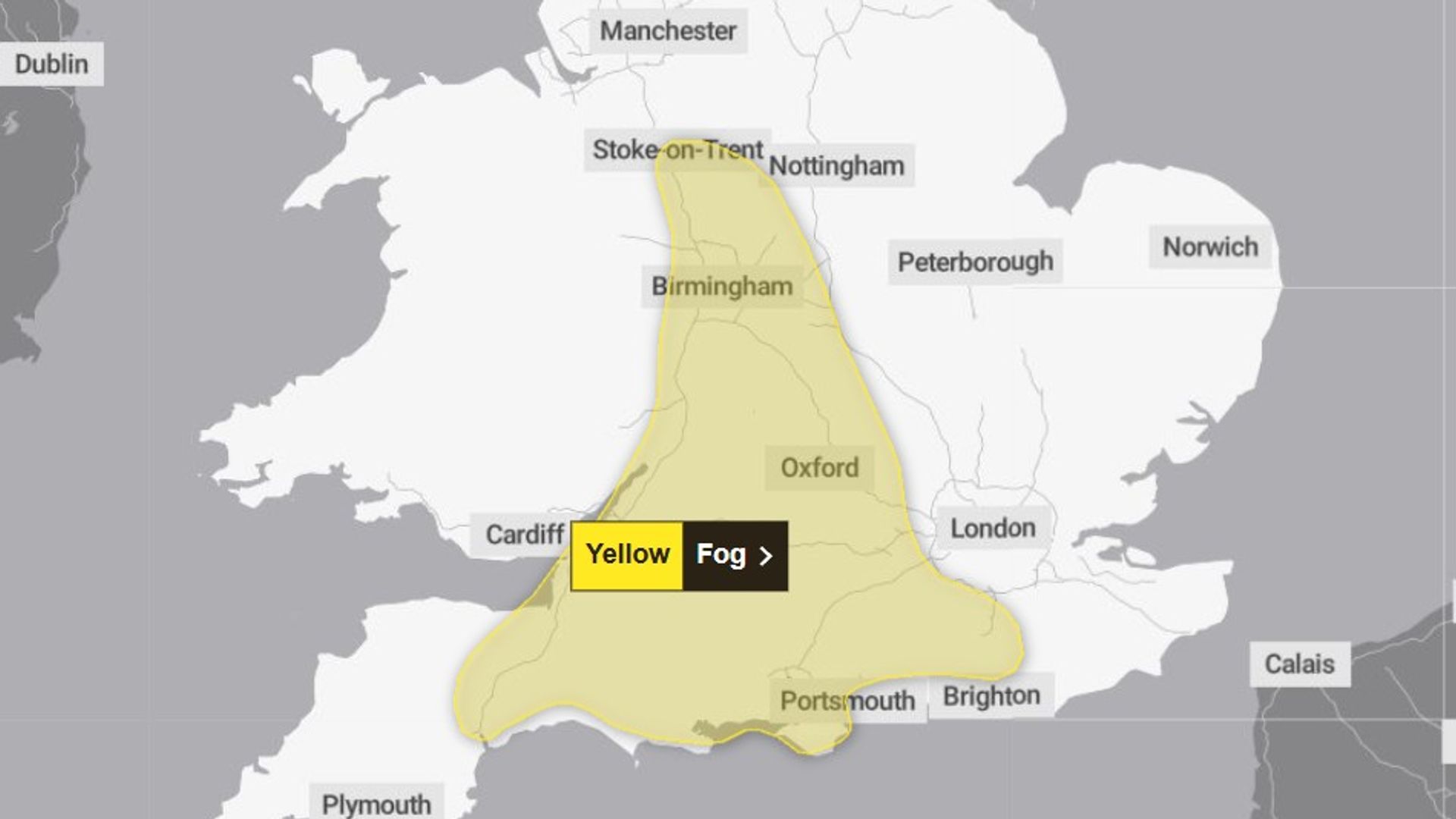
Most drivers see a yellow weather warning for fog across England and immediately brush it off. It isn't snow. It isn't a named storm tearing roofs off sheds in Devon. It's just a bit of mist, right?
Wrong. Honestly, dense fog causes some of the most chaotic, frustrating travel delays across the UK transport network, and it catches commuters completely off guard every single autumn and winter. When the Met Office issues a fog warning for parts of England, they aren't just predicting a gloomy morning walk. They're flagging conditions where visibility drops below 100 metres—sometimes down to 50 metres—turning routine motorway runs and regional flight schedules into an absolute standstill. Learn more on a similar topic: this related article.
I've lost count of the times I've watched people leave twenty minutes late for a morning flight out of Heathrow or Manchester, assuming they could make up the time on the M4 or M6, only to sit behind a wall of red brake lights for two hours. Fog doesn't just slow you down. It breaks the rhythm of modern transit.
Why Fog Wrecked Your Commute Before You Even Left the House
You might wonder why a bit of low-lying cloud disrupts an entire country's infrastructure so badly. Rain doesn't stop planes. Light snow barely slows down a commuter train. Fog is different because it targets human perception and strict safety spacing protocols simultaneously. Further journalism by Travel + Leisure explores similar perspectives on this issue.
When the Met Office puts out a yellow fog warning across central, southern, or eastern England, meteorologists are tracking a very specific setup. Usually, it's high pressure sitting directly over the UK. Skies clear overnight, winds drop to nearly nothing, and the ground radiates away its daytime heat. The air right above the tarmac cools until water vapour condenses into thick, stubborn droplets. This is radiation fog, and it loves river valleys, low-lying motorways, and open rural stretches like the Fens or the Thames Valley.
The problem isn't just the fog itself. It's how long it hangs around. During late autumn and winter, the sun sits low in the sky and lacks the thermal punch to burn off that cold air layer quickly. A warning issued for midnight often stretches well past the morning rush hour, sometimes lingering until noon in sheltered valleys.
The Aviation Bottleneck Nobody Talks About
If you're flying out of or into England during a fog warning, your flight might get cancelled even when the runway looks totally fine to the naked eye. People get furious at airline staff over this, thinking it's an excuse for poor scheduling. It isn't.
Airports like London Heathrow, Gatwick, Stansted, and Birmingham operate under strict Low Visibility Procedures (LVPs) whenever cloud ceilings drop or runway visual range falls below roughly 550 metres. Under normal clear-sky operations, Heathrow can land around 40 to 45 aircraft per hour. The second LVPs kick in, Air Traffic Control has to double or triple the spacing between incoming jets so ground radar and instrument landing systems don't suffer signal interference from planes taxiing too close to the runway.
Arrival rates plummet instantly. Suddenly, an airport built to handle 45 landings an hour can only safely accept 20 or 25.
Airlines don't cancel flights because pilots can't fly in fog—modern commercial jets have Category III autoland systems that can literally touch down in zero visibility. They cancel flights because the airport simply runs out of physical slots to put the planes down. Short-haul domestic and European routes always take the hit first so airlines can protect long-haul intercontinental flights. If you're flying from Manchester to London or Amsterdam to Birmingham on a foggy morning, your seat is the first one on the chopping block.
What Actually Happens on England's Roads During Dense Fog
Driving in England during a Met Office fog alert exposes two completely opposite—and equally dangerous—types of motorists.
First, you've got the overconfident commuter barreling down the outside lane of the M1 or M25 at 75 mph with nothing but dim daytime running lights on. Because modern dashboards light up automatically, thousands of drivers forget to actually turn on their dipped headlights. From behind, their car is completely invisible until you're fifty feet away from their rear bumper.
Second, you've got the driver who panics, slams their rear fog lights on the moment visibility dips slightly, and leaves them blinding everyone behind them long after the fog clears.
National Highways and the Highway Code are crystal clear on this, yet people ignore the rules constantly:
- Switch to dipped headlights immediately. Never rely on automatic lights in fog. Sensors often read bright, diffused fog as daylight and leave your rear lights totally dark.
- Use fog lights only when visibility drops below 100 metres. A good rule of thumb is the length of a football pitch. If you can see further than that, keep your fog lights off so you don't dazzle following traffic or mask your brake lights.
- Drop your speed and double your gap. You need to be able to stop within the distance you can clearly see ahead. On damp winter tarmac, braking distances already increase. Add poor visibility and you've got zero margin for error.
- Avoid hard braking. If someone is tailgating you in the mist, tap your brakes lightly early on to warn them you're slowing down.
One minor shunt on a foggy stretch of the A14 or M62 triggers a chain reaction. Emergency services have to crawl to the scene, lanes get closed for hours, and surrounding A-roads instantly gridlock as sat-navs reroute thousands of cars onto narrow country lanes that weren't built for heavy goods vehicles.
Trains, Ferries, and the Hidden Knock-On Delays
Rail passengers often assume they're immune to fog. Trains run on tracks, after all. Signals tell the driver when to stop.
In reality, fog still throws spanners into the rail network across England. While modern signalling systems like the European Train Control System operate inside the cab, huge chunks of the UK rail network still rely on lineside colour-light signals. When thick mist blankets the tracks, train drivers have to approach signals more cautiously to ensure they spot yellow and red aspects in time to brake smoothly.
Autumn and winter fog also coincides with damp rails—a slippery film of moisture and crushed leaf residue that ruins wheel adhesion. Network Rail drivers brake earlier and accelerate slower to prevent wheel spin and overshoot. Five minutes lost here and three minutes lost there quickly snowball into missed connections at major hubs like Birmingham New Street, Crewe, or London Euston.
Ferry crossings across the English Channel and the Solent face similar headaches. Ports like Dover and Portsmouth rely on strict visual and radar protocols to manoeuvre massive vessels through narrow harbour entrances. When fog rolls over the cliffs, port authorities frequently pause movements altogether, backing up freight lorries along the M20 and delaying foot passengers for hours.
How to Actually Prepare When a Fog Warning Drops
Checking the weather app on your phone and seeing a little grey cloud icon doesn't tell you anything useful. If you want to avoid getting stranded when fog warnings hit England, you need a slightly smarter routine the night before you travel.
Start by checking the actual Met Office warning map rather than generic weather widgets. Look at the specific timing window and the affected counties. Fog is notoriously patchy. One village in Oxfordshire might sit in bright sunshine while a town three miles away in the valley floor is locked in a whiteout.
If you're catching a flight, download your airline's official app and turn on push notifications before going to bed. Airlines typically make proactive cancellation decisions late the evening before a major fog event so they don't end up with planes and crews stranded in the wrong cities. If your morning flight gets axed at 10 PM, rebooking immediately from your sofa beats standing in a two-hour customer service queue at Terminal 5 at 6 AM.
For drivers, check National Highways live traffic feeds before turning the key. If there's already an incident on your usual motorway route, take the hit and delay your departure by an hour if your schedule allows. Sitting at home with a second cup of coffee beats idling on a cold slip road burning fuel.
Pack a few basic essentials in the boot during winter months just in case a foggy pile-up closes the road ahead of you. A warm coat, a bottle of water, a high-visibility vest, and a working phone charging cable cost almost nothing, yet they turn a miserable three-hour standstill from a genuine safety risk into a minor inconvenience.
Fog warnings across England rarely make dramatic headlines compared to gales or blizzards, which is precisely why they trip so many travellers up. Treat low visibility with the exact same respect you'd give ice or heavy snow, build an extra thirty minutes into your morning schedule, and check your car's manual light switches before you pull out of the driveway.