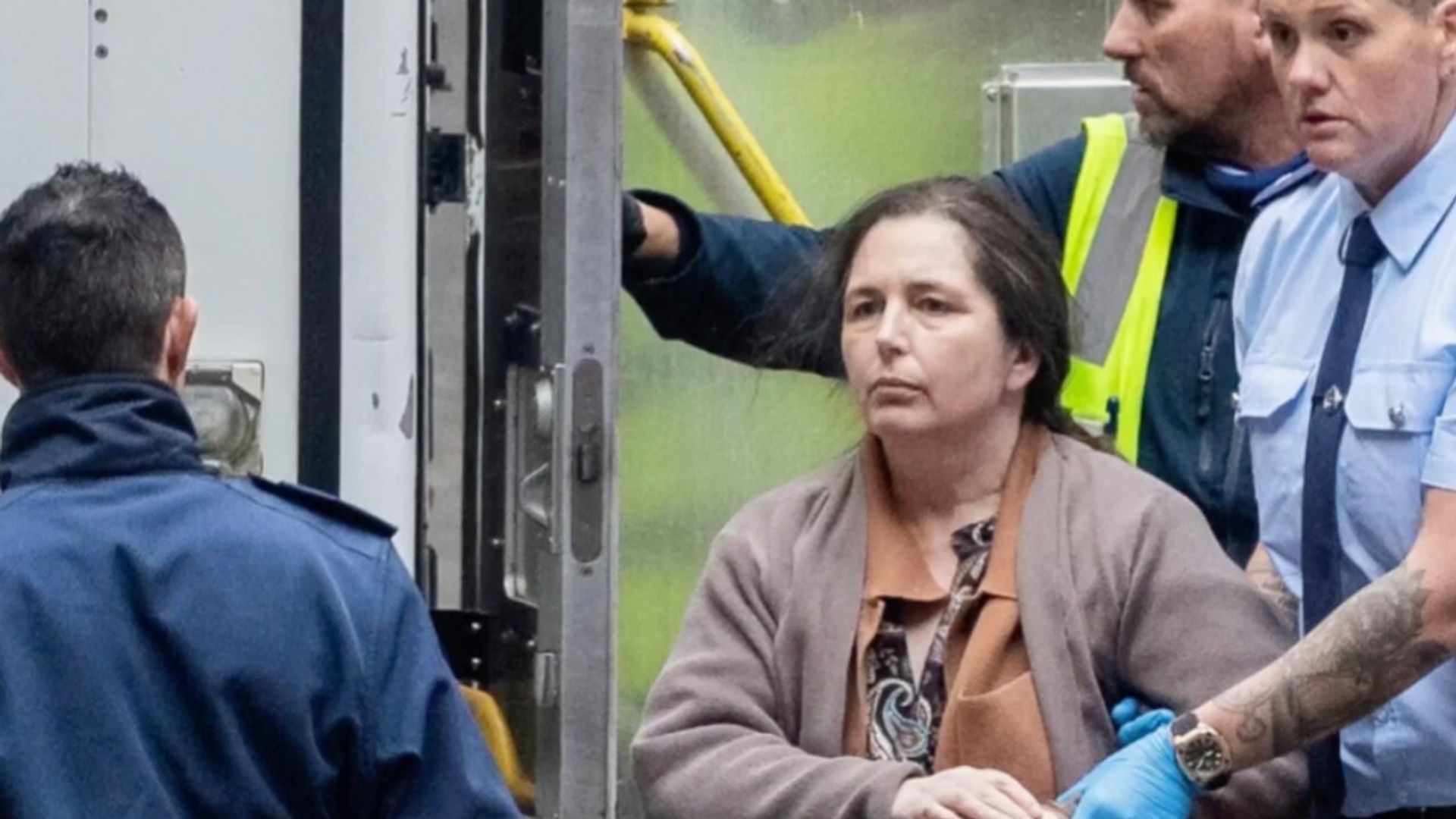
Most people following the Erin Patterson case think an appeal means a complete do-over of the trial. That's not how the Australian legal system works.
As the court prepares to rule on Erin Patterson’s appeal in the infamous Leongatha mushroom murders case, public speculation has reached a fever pitch. People are dissecting every detail of the July 2023 beef Wellington lunch that left three people dead and a fourth fighting for his life. Yet the actual legal battle happening in the Victorian Court of Appeal has very little to do with re-arguing whether death cap mushrooms were in the food.
Appellate judges don't sit there weighing witness credibility from scratch. They're looking for specific errors of law, procedural missteps, or verdicts that simply cannot be supported by the evidence presented to the jury. If you want to understand what happens next, you have to strip away the true-crime sensationalism and look at the cold mechanics of appellate law.
The Reality of the Leongatha Mushroom Case
To understand the appeal, you have to look at the sheer weight of the original case. In July 2023, Erin Patterson hosted a lunch at her home in Leongatha, a quiet town in Victoria's Gippsland region. Her former parents-in-law, Don and Gail Patterson, along with Gail's sister Heather Wilkinson and Heather's husband Ian Wilkinson, attended.
Days later, Don, Gail, and Heather were dead. Ian survived after spending weeks in a critical condition, eventually undergoing a liver transplant. Toxicology pointed to Amanita phalloides, commonly known as death cap mushrooms.
Victoria Police arrested Patterson in November 2023, charging her with three counts of murder and multiple counts of attempted murder. From day one, Patterson maintained her innocence, claiming the poisonings were a tragic accident involving mushrooms bought from an Asian grocery store and a major supermarket.
Prosecutors built a case around digital forensics, phone tower data, and the mysterious disappearance of a food dehydrator dumped at a local tip. The media frenzy was relentless. Every court mention, every bail application, and every pre-trial hearing became front-page news across Australia and the globe. That intense scrutiny sits right at the heart of why the appeal process is so legally delicate.
Why Appellate Courts Rarely Overturn Convictions
Here's a hard truth about criminal appeals in Victoria. The bar is ridiculously high.
When a defense team files an appeal in the Supreme Court of Victoria's Court of Appeal, they aren't asking three senior judges to decide if they personally believe the defendant is guilty. Under the Criminal Procedure Act 2009, the court generally only intervenes under three strict conditions:
- The jury's verdict is unreasonable or cannot be supported having regard to the evidence.
- There was a wrong decision on any question of law by the trial judge.
- There was a substantial miscarriage of justice for any other reason.
Notice that phrase. Substantial miscarriage of justice. Even if a trial judge makes a minor technical mistake during a multi-week trial, the appellate court can still dismiss the appeal if they believe the error didn't actually change the outcome.
I've watched countless high-profile criminal appeals collapse on this exact point. Defense lawyers spend months combing through thousands of pages of trial transcripts, hunting for a single misspoken jury direction or a questionable evidentiary ruling. Finding an error is hard enough. Convincing three appellate judges that the error poisoned the entire verdict is another beast entirely.
The Pre-Trial Publicity Problem in High-Profile Trials
One of the biggest battlegrounds in any modern sensational trial is the jury pool. You can't lock twelve people in a cave for two years before a trial starts. By the time the Erin Patterson case moved through the Latrobe Valley Magistrates' Court and up to the Supreme Court, almost everyone in Victoria knew the phrase "mushroom lunch."
Defense teams routinely argue that relentless media coverage makes a fair trial impossible. They point to social media speculation, armchair detectives on Reddit, and 24-hour news cycles dissecting the accused's demeanor outside court.
Does pre-trial publicity actually get convictions overturned? Almost never.
Australian courts operate on a strong assumption that juries take their oaths seriously. Judges give explicit, repeated instructions telling jurors to ignore everything they've read online or seen on television, and to decide the case strictly on the evidence presented inside the courtroom. Unless the defense can prove that specific, egregious prejudice infected the jury room—or that the trial judge refused a necessary stay or venue change without proper reasoning—publicity arguments usually hit a brick wall.
Circumstantial Evidence vs. Direct Proof
Another massive misconception surrounds the type of evidence used in poisoning cases. People love asking where the "smoking gun" is. In poisoning trials, there rarely is one. Nobody films themselves foraging for death cap mushrooms and grinding them into a paste.
Instead, prosecutors rely on a strand-in-a-cable approach. One piece of circumstantial evidence on its own might look innocent. Maybe someone throws away a kitchen appliance because they're cleaning out the pantry. Maybe someone deletes data from a phone to protect their privacy. Maybe someone foraging in a certain area was just out for a walk.
Taken individually, each point has an innocent explanation. Woven together, prosecutors argue, those strands form an unbreakable cable of guilt.
On appeal, the defense has to attack that cable. They have to argue that an alternative hypothesis—namely, an accidental poisoning—remained reasonably open on the evidence. If the Court of Appeal agrees that a rational jury must have entertained a reasonable doubt based on the evidence, they have the power to quash the conviction and enter an acquittal. That's the ultimate goal for any appellant, though it remains the rarest outcome in criminal law.
What Happens When the Judges Hand Down Their Ruling
When the Court of Appeal convenes to deliver its judgment, the courtroom dynamic is completely different from a trial. There is no jury. There are no witnesses taking the stand, no cross-examinations, and no dramatic emotional outbursts from the gallery. It's dry, clinical, and fast.
Usually, the presiding judge reads a brief summary of the court's orders while publishing a massive, detailed written judgment running dozens or even hundreds of pages. When that gavel drops, only three real outcomes exist:
- The Appeal is Dismissed: The convictions stand. The original sentence remains intact, and the appellant stays behind bars. The defense's only remaining legal avenue is seeking special leave to appeal to the High Court of Australia in Canberra, which accepts only a tiny fraction of criminal applications each year.
- A Retrial is Ordered: If the judges find a serious legal error—for instance, flawed jury directions on intent or improperly admitted evidence—they can set aside the convictions and order a brand-new trial. The whole grueling process starts over with a new jury.
- An Acquittal is Entered: If the court rules the verdict was entirely unreasonable based on the evidence, the convictions are quashed and the appellant walks free. Double jeopardy rules prevent the state from trying them again on the same charges.
How to Read the Court's Decision Without Getting Misled
When the ruling drops, news alerts will flood your phone within seconds. Headlines will be short, punchy, and designed to maximize clicks. If you actually care about the legal reality rather than the media circus, skip the initial hot takes and look directly at the judgment summary published by the Supreme Court of Victoria.
Look for the specific grounds of appeal listed at the very beginning of the document. Courts break down the defense's arguments cleanly—Ground 1, Ground 2, Ground 3—and rule on each one individually. Pay close attention to whether the judges found an error of law but applied the "proviso," which is the legal mechanism allowing them to uphold a conviction despite a mistake because no substantial miscarriage of justice occurred.
Follow the primary court documents through the official Supreme Court of Victoria website or trusted legal reporting outlets rather than social media threads. Understanding the difference between a procedural technicality and a factual vindication will tell you everything you need to know about what the court actually decided.