Handing a massive American automaker hundreds of millions of public dollars during a tariff war sounds like corporate welfare at its worst. Look closer at the math, though, and you’ll see a brutal game of industrial survival playing out on Canadian soil.
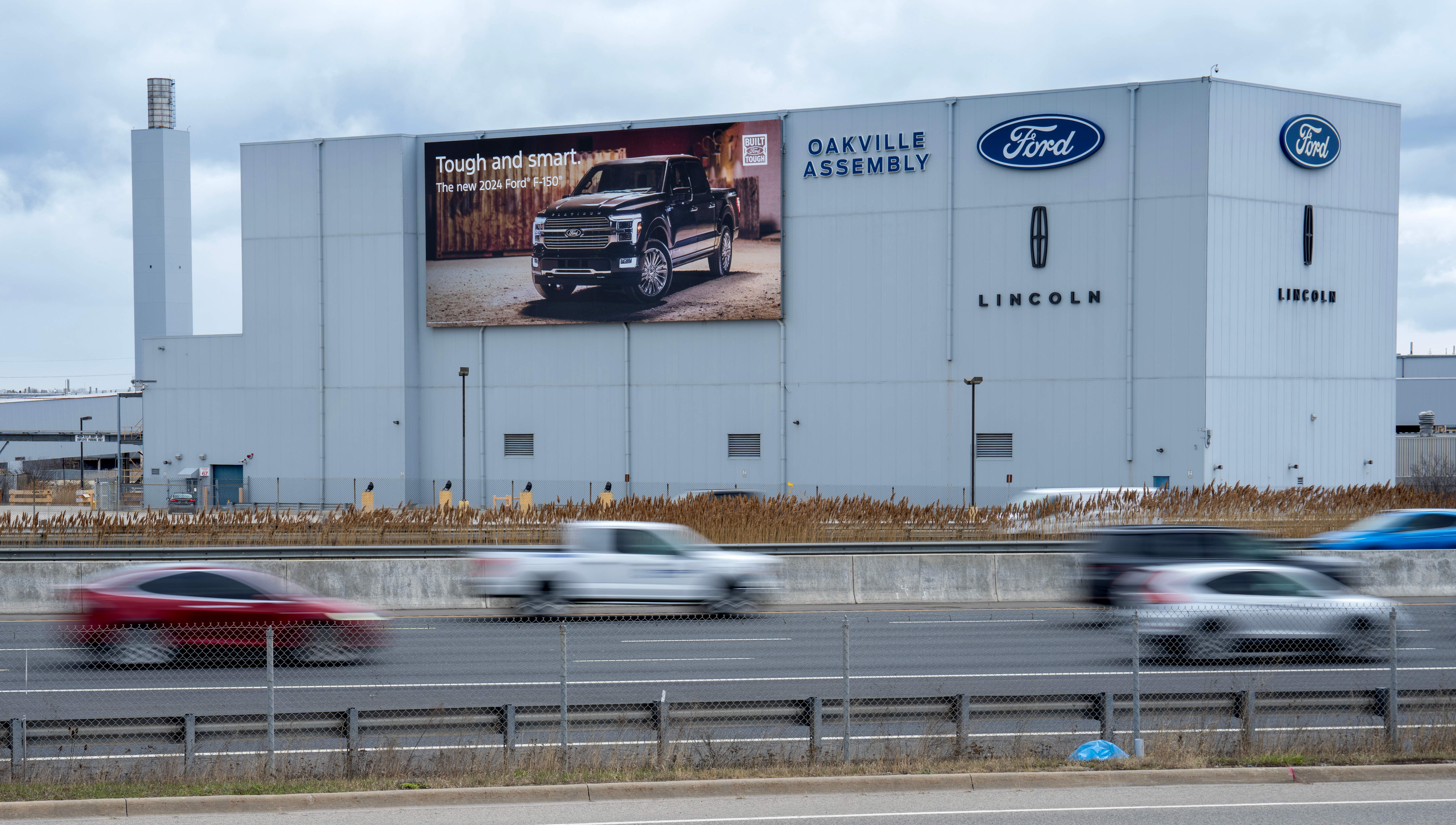
In November 2026, Ottawa and the Ontario government pledged roughly $760 million—specifically $759.6 million in combined public funds—to back Ford Motor Company of Canada’s nearly $5-billion overhaul of its Oakville Assembly Complex. (Some initial media tallies cited a higher $928.5 million figure when combining different provincial and federal envelope announcements, though the direct project commitment sits right around the $760 million mark). Headlines immediately framed the payout as a desperate reaction to Donald Trump’s tariff threats hammering the North American auto sector.
They missed half the story. Yes, U.S. trade hostility forced Canada’s hand. No, this isn't just a handout to keep a legacy factory on life support. It’s an aggressive pivot away from a failing electric vehicle bet toward high-margin heavy trucks, backed by a much tougher enforcement stance from Ottawa than taxpayers are used to seeing.
Why Ottawa and Queen's Park Wrote the Check
Canada’s automotive industry isn't a niche sector you can afford to let bleed out. According to federal data from 2025, auto manufacturing directly employs more than 120,000 Canadians, supports roughly 700 specialized parts suppliers, and pumps $17.1 billion into national GDP. When Washington threatens tariffs on imported vehicles and parts, Canadian assembly lines sit directly in the crosshairs.
The Oakville deal breaks down into a calculated risk-sharing agreement:
- Federal contribution: Ottawa is putting up to $464.5 million on the table through its Strategic Response Fund.
- Provincial backing: Ontario is matching that commitment with its own major capital injection.
- Corporate skin in the game: Ford is spending roughly $4.2 billion of its own capital to bring total project investment to nearly $5 billion.
That ratio matters. Taxpayers are covering roughly 15 percent of the total capital cost to anchor a multi-billion-dollar industrial footprint. If Oakville had gone dark permanently, the ripple effects across southern Ontario’s tool-and-die shops, steel mills, and logistics firms would have cost governments far more in lost tax revenue and employment insurance payouts.
Premier Doug Ford didn't mince words at the November 2026 reopening ceremony, bragging that Ontario was going to give Ford’s Kentucky truck plant "a run for their money" and "kick their butts". Behind the political bravado lies a real shift in cross-border manufacturing leverage. By turning Oakville into a third North American hub for F-Series Super Duty pickups—alongside facilities in Kentucky and Ohio—Canada has embedded itself into Ford’s most profitable product line.
The Quiet Retreat From an All-EV Oakville
To understand why this deal exists at all, you have to look at what failed first.
Back in 2023 and early 2024, the entire North American industrial policy consensus centered on rapid, government-subsidized battery-electric vehicle transitions. Oakville was originally slated to become a dedicated EV assembly hub. Workers were sent home, lines were torn down, and billions were earmarked for three-row electric SUVs.
Then reality hit the showroom floor. EV demand cooled faster than automakers projected, battery costs stayed stubbornly high, and Ford bled billions on its electric division. By July 2024, Ford scrapped the all-EV plan for Oakville and pivoted back to F-Series Super Duty trucks.
Honestly, that pivot saved the plant. Had Ottawa insisted on pure-play battery vehicles as a condition for public money, Oakville might still be sitting idle while consumer demand lagged. Instead, the November 2026 funding agreement embraces a pragmatic compromise. Oakville will churn out up to 100,000 Super Duty trucks annually—including gas-powered models running 7.3-litre V8 engines built down the highway in Windsor, Ontario—while preparing the assembly lines for future "multi-energy" hybrid and electrified variants.
You get immediate job security for over 2,000 Unifor assembly workers today, plus an on-ramp for lower-emission powertrains when the market actually wants them.
How the Stellantis Crackdown Changed the Rules
For years, the biggest criticism of corporate subsidies in Canada has been simple: companies take the check, pocket the public cash, and quietly shift production south or overseas a few years later.
That critique isn't theoretical. Right alongside the Ford celebration in November 2026, Industry Minister Mélanie Joly was publicly fighting a war on another front with Stellantis. Ottawa formally declared Stellantis in default of its funding obligations over stalled commitments at its Brampton, Ontario plant, slapping the automaker with a 30-day ultimatum to fix the breach or face clawbacks of hundreds of millions of taxpayer dollars.
The timing wasn't an accident.
By pairing the Ford announcement with a legal threat against Stellantis, the federal government sent a blunt message to every boardroom in Detroit and Europe. Public subsidies in 2026 come with teeth. You don't get to treat Canadian taxpayer funds as an unconditional signing bonus.
Still, skepticism remains warranted. Clawback clauses look great in press releases, yet enforcing them against multinational corporations takes years of litigation. Furthermore, subsidies don't make a factory immune to punitive U.S. border tariffs if Washington decides to tear up continental trade rules.
What Happens When Tariffs Hit an Export Plant
Here is the uncomfortable math nobody in Ottawa wants to highlight. Canada built more than 1.2 million vehicles in 2025, ranking 14th globally, and the overwhelming majority of those cars and trucks roll straight across the border into the United States.
Oakville’s new capacity of 100,000 Super Duty trucks isn't meant solely for Canadian construction crews. It exists to feed hungry American commercial and retail buyers. If U.S. trade negotiators slap steep tariffs on Canadian-built pickups, Ford faces an immediate margin squeeze on every truck leaving Oakville.
Why would Ford invest $4.2 billion of its own money into an export plant facing tariff risk? Three practical reasons drive that calculation:
- Capacity constraints in the U.S.: Ford’s Kentucky and Ohio truck plants are already maxed out. Super Duty trucks are among the highest-margin vehicles in the entire global auto industry, and leaving orders unfulfilled costs Ford more than paying a moderate tariff.
- Integrated supply chains: Parts cross the Windsor-Detroit corridor multiple times before a truck is finished. Tariffs hurt American parts suppliers in Michigan and Ohio almost as fast as they hurt Canadian assemblers in Oakville.
- Currency and labor advantages: A weaker Canadian dollar combined with Ontario’s publicly funded healthcare system lowers Ford’s per-vehicle labor overhead compared to equivalent U.S. facilities.
Even so, government subsidies act as a buffer—not a shield. The $760 million package sits inside a broader $2.5-billion joint federal-provincial trade action plan launched in October 2026 to help manufacturers modernize equipment and absorb trade shocks. It buys time and lowers upfront capital costs, but it cannot repeal basic trade economics.
How to Track Whether Taxpayers Actually Win
If you’re a Canadian taxpayer—or an investor watching North American industrial policy—don't judge this deal by ribbon-cutting speeches. Watch three hard metrics over the next 24 months:
- Actual unit volume against the 100,000 cap: Announcements promise capacity, not guaranteed output. Check quarterly production reports from Ford Motor Company to see if Oakville actually hits full two-shift or three-shift volume.
- Windsor engine plant integration: True domestic value comes from local parts. Track whether Ford’s Windsor and Essex engine plants scale up 7.3-litre V8 shipments to Oakville as promised, rather than importing powertrains from U.S. facilities.
- Stellantis enforcement follow-through: Keep an eye on Innovation, Science and Economic Development Canada filings regarding the Stellantis default notice. If Ottawa backs down and lets Stellantis off the hook without repayment, the supposed accountability rules protecting Ford’s $760 million deal won't be worth the paper they're printed on.