Congress wants answers on American AI chips ending up in places they shouldn't be. That's the real story behind reports of Jensen Huang agreeing to questioning by U.S. lawmakers.
Hold on a second. Notice the phrasing in that viral headline floating around right now—"Former Nvidia CEO." Let's clear that up immediately because factual accuracy actually matters when you're reading tech news. Jensen Huang co-founded Nvidia in 1993 and serves as its President and Chief Executive Officer. When headlines slap "former" onto his title, they're either pushing unverified rumors or confusing executive roles entirely. Either way, if you don't separate real congressional oversight from sloppy internet clickbait, you'll completely miss what's happening in Washington. Meanwhile, you can find related stories here: How One Software Flaw Let Hackers Slip Malware Onto CNN, BBC, and Zoom.
I've spent years tracking semiconductor export controls and the messy collisions between Silicon Valley executives and Capitol Hill. Watching lawmakers grill tech founders follows a very specific playbook. It's rarely about fixing a single shipment of graphics processors. It's about leverage, national security anxiety, and proving to voters that Congress isn't asleep at the wheel while artificial intelligence reshapes global power.
Why US Lawmakers Are Pressing Nvidia Right Now
Washington has spent the last few years building a regulatory wall around advanced computing hardware. The U.S. Department of Commerce, through its Bureau of Industry and Security, rolled out sweeping export restrictions designed to keep high-end AI accelerators out of China and other restricted jurisdictions. To see the full picture, check out the excellent article by The Verge.
Nvidia sits dead center in that storm. Why? Because its data center GPUs—chips like the A100, H100, and newer Blackwell architectures—are the primary engines training frontier AI models across the globe.
Lawmakers on committees like the House Select Committee on the Chinese Communist Party and the Senate Commerce Committee have zeroed in on a persistent headache. Even with strict licensing rules in place, restricted Nvidia chips keep surfacing in overseas markets through gray-market smuggling networks, shell companies, and third-party cloud rentals.
Here's what Congress actually wants to know when they bring Nvidia's leadership to the table:
- Supply chain visibility. How much does Nvidia truly know about where its chips land after they leave contract manufacturers like TSMC and pass through distributors and server makers?
- Compliance enforcement. Are Nvidia's Know Your Customer protocols strong enough to stop shell companies in Southeast Asia or the Middle East from buying servers and shipping them onward?
- Custom chip workarounds. When Commerce tightens performance thresholds, Nvidia engineers modified versions like the A800, H800, and H20 to stay legally compliant. Some lawmakers view that as smart business, while others treat it like regulatory dodging.
You can see the friction immediately. Nvidia operates as a commercial enterprise obligated to maximize shareholder value within the boundaries of the law. Congress writes laws with broad national security goals, then gets furious when engineers design products that sit right on the legal line.
The Myth of the "Former CEO" Headline
Before you share any breaking news about Jensen Huang stepping down or testifying as an ex-executive, check the primary filings. Under Securities and Exchange Commission rules, any change to the chief executive role at a publicly traded company worth trillions of dollars requires an immediate Form 8-K filing.
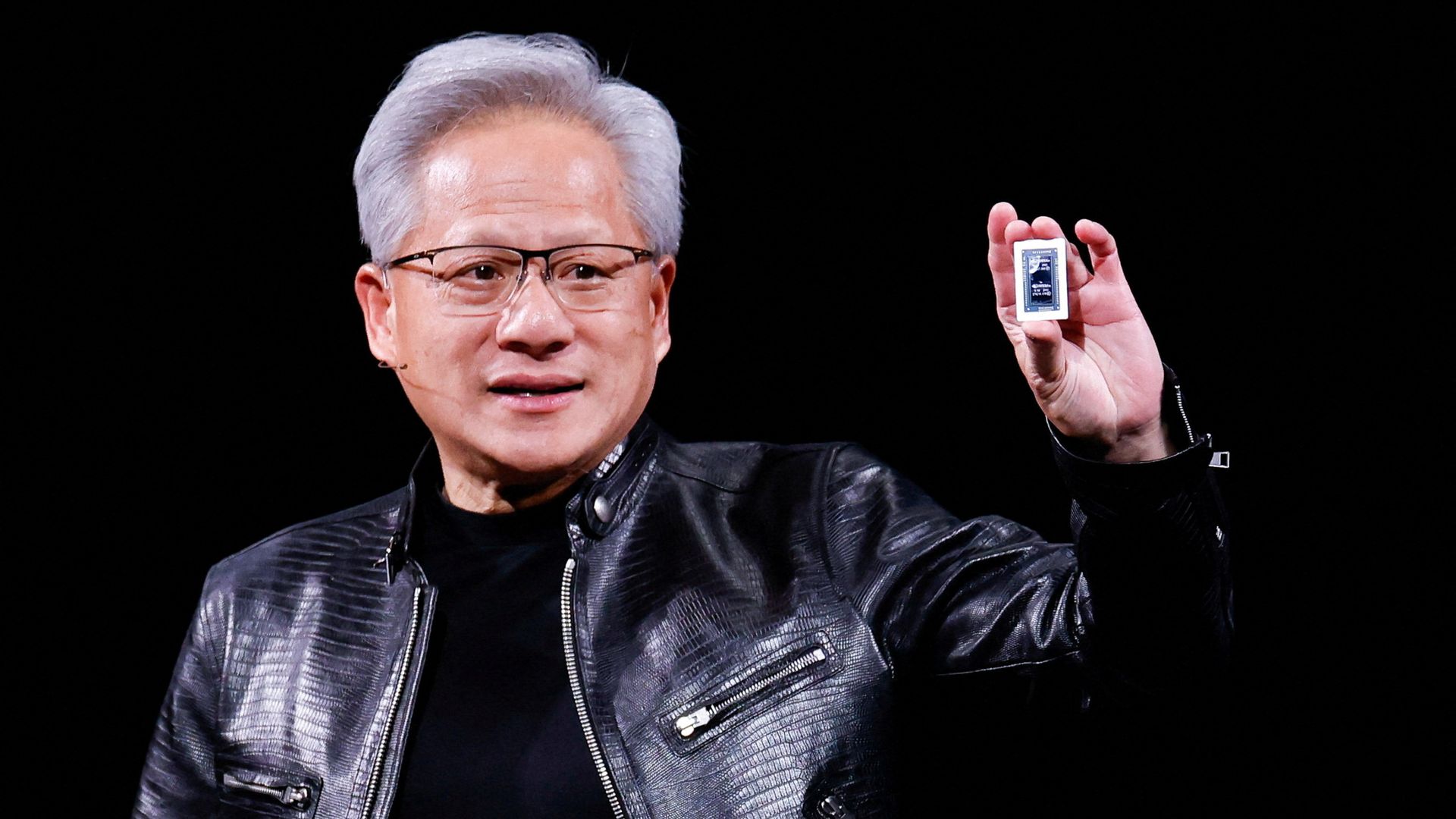
There hasn't been one. Huang remains at the helm of Nvidia, wearing the same black leather jacket he's worn to keynotes for over a decade.
So why do titles like "Former Nvidia CEO Jensen Huang agrees to questioning" pop up in search feeds and social media aggregators? Usually, it comes down to three things.
First, automated content farms scrape half-baked rumor threads and rewrite them with garbled entity tags. Second, people frequently confuse Nvidia's leadership transitions with other chipmakers—Intel, for instance, went through high-profile CEO exits that dominated headlines. Third, bad actors sometimes test false executive departure claims to see if algorithmic trading bots will twitch on the headline.
If you're following semiconductor policy or investing in AI infrastructure, falling for mislabeled headlines costs you credibility. Always verify executive status through Nvidia's investor relations page or official congressional committee witness lists before treating a viral link as gospel.
How Congressional Questioning Actually Works Behind the Scenes
Most people picture a televised Senate hearing where senators yell at a billionaire for five-minute soundbites. That's theater. The real questioning happens long before cameras ever roll.
When U.S. lawmakers seek answers from a tech leader like Huang, the process usually starts with formal letters of inquiry. Committee chairs send detailed questions demanding internal emails, shipment logs, and compliance audits by a strict deadline.
Next come transcribed interviews or closed-door briefings with committee staff. Honestly, those private sessions are way tougher than public hearings. There are no five-minute clocks running out. Committee counsels—many of them former federal prosecutors—can press on a single contract clause or distributor relationship for hours.
Only after staffers build a factual record do lawmakers decide whether to hold a public hearing. And when an executive "agrees to questioning," it almost always means their legal team and government affairs office negotiated the exact scope, format, and ground rules of that appearance. Nobody walks into a congressional briefing blind.
What Nvidia Brings to the Table
Don't mistake cooperation for surrender. Nvidia isn't walking onto Capitol Hill without massive leverage of its own.
The company's hardware underpins the entire U.S. AI ecosystem. Every major American cloud provider—Microsoft, Amazon, Google, Meta—relies on Nvidia clusters to stay ahead of international competitors. National laboratories run nuclear simulations and scientific research on Nvidia supercomputers.
When Huang or his senior executives speak with lawmakers, their core argument is straightforward and hard to dismiss. Over-regulating American chipmakers doesn't freeze global AI development; it just hands market share to foreign rivals. If U.S. companies can't sell compliant products globally, they lose the revenue needed to fund the next generation of research and development right here in America.
Lawmakers know this tension well. Push too hard, and you kneecap a flagship American technology leader. Push too little, and you risk letting adversaries build military and intelligence capabilities on U.S.-designed silicon.
The Real Stakes Behind Chip Export Hearings
If you strip away the political posturing, these inquiries boil down to three practical realities that affect tech businesses, investors, and everyday software users.
First, export compliance is getting way more expensive. Chipmakers and server vendors like Supermicro, Dell, and HPE face mounting pressure to track hardware all the way to the final data center rack. That means serial-number tracking, physical inspections, and stricter vetting of cloud service providers. Those compliance costs eventually trickle down into enterprise hardware pricing.
Second, sovereign AI is becoming a diplomatic bargaining chip. Countries across Europe, the Middle East, and Asia are buying up GPU clusters to build national AI infrastructure. U.S. lawmakers want assurances that selling thousands of chips to a foreign sovereign fund won't create a backdoor for restricted nations to rent that compute remotely. Expect Washington to attach tighter strings to international data center deals.
Third, software locks and hardware telemetry are on the table. Lawmakers and policy think tanks have openly discussed requiring chipmakers to build geographic verification or usage monitoring directly into high-end processors. Privacy advocates and enterprise customers hate the idea of hardware phone-home features, while national security hawks see it as the only reliable way to enforce export rules.
How to Read Tech Policy News Without Getting Played
Whenever headlines break about a major tech CEO facing lawmakers, pause before reacting. Political coverage of Silicon Valley thrives on drama, and half the noise online misses the actual legal mechanics.
Start by checking official congressional committee websites—specifically the House Foreign Affairs Committee, House Select Committee on Strategic Competition, and Senate Commerce Committee—to see if a formal hearing notice or witness list actually exists. Cross-check corporate leadership claims against recent SEC filings rather than trusting syndicated aggregator headlines. Finally, look past the soundbites and read the actual legislative text or Commerce Department rules being debated, because the real impact on tech companies always hides in the technical thresholds, not the opening statements.