You've probably seen the headlines lately claiming that mangrove forests are making a massive comeback, and honestly, the truth is way more complicated than a feel-good news blurb. Yes, global mangrove loss has slowed down dramatically over the last two decades. Some coastlines are even gaining ground.
That's huge news. For a deeper dive into similar topics, we recommend: this related article.
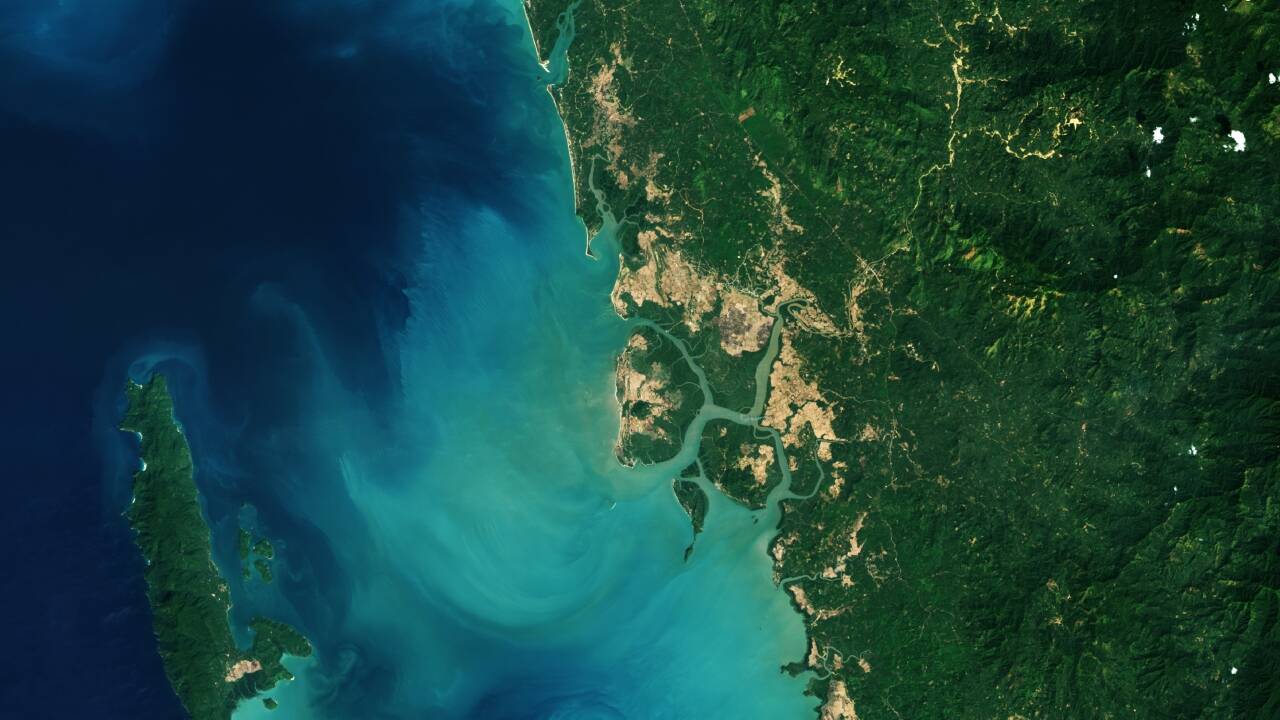
If you've ever walked through a thriving coastal mangrove swamp at low tide, you know how alive the mud feels—crabs clicking in the roots, juvenile snappers darting through brackish channels, and tangled prop roots holding back the ocean like natural rebar. For decades, we tore these ecosystems apart for shrimp farms, coastal hotels, and timber. Now, satellite data from the Global Mangrove Alliance shows deforestation rates have dropped sharply since the early 2000s, and natural regeneration is actually outpacing human destruction in several key regions.
Before you start celebrating that we've solved coastal climate resilience, you need to understand what's actually happening on the mudflats. Planting a million baby mangrove trees for a corporate photo op doesn't fix a broken coastline. In fact, most mass-planting projects fail within five years because people treat coastal ecology like a standard tree-planting drive in a city park. For further context on this issue, comprehensive coverage is available at The Washington Post.
Why Mangrove Forests Are Actually Recovering
The turnaround didn't happen by accident, and it definitely didn't happen just because politicians made nice speeches at climate summits. Three very specific shifts changed the math on the ground.
First, remote sensing technology got terrifyingly good. Twenty years ago, an illegal shrimp farm could clear-cut five hundred hectares of coastal forest in Southeast Asia and nobody outside the local village would notice for years. Today, high-resolution satellite monitoring tracks canopy changes almost in real time. Organizations like the Global Mangrove Watch publish open-access maps that expose illegal clearing immediately, making it much harder for developers to quietly bulldoze protected shorelines.
Second, local communities realized that tearing down their coastal buffer was suicidal. When Cyclone Nargis hit Myanmar in 2008 or Typhoon Haiyan slammed into the Philippines in 2013, villages behind intact mangrove belts survived at vastly higher rates than villages sitting behind bare concrete seawalls. That wasn't an abstract climate model. People watched their neighbors' homes vanish while trees absorbed up to 66% of the wave energy before it hit dry land.
Third, the economics of shrimp farming shifted. Early aquaculture relied on clearing fresh mangrove forest, digging ponds, pumping them full of antibiotics, and abandoning the toxic, acidified mud five years later to cut down another patch of trees. Modern intensive aquaculture produces way more shrimp on a tiny fraction of the footprint, which took massive pressure off untouched coastal wetlands.
The Carbon Storage Superpower Nobody Explains Properly
You hear all the time that mangroves store more carbon than rainforests, and people usually throw around numbers like "four times more" without explaining why. It sounds like environmental hype until you look at the soil.
A tropical rainforest on dry land stores most of its carbon in wood and leaves. When a tree dies in the Amazon, fungi and bacteria break it down quickly in the oxygen-rich air, releasing that carbon right back into the atmosphere.
Mangroves cheat the system.
Their roots trap nutrient-rich sediment washing down from rivers and sweeping in with the tides, burying organic matter under thick, waterlogged mud where there's almost no oxygen. Without oxygen, decomposition slows to a crawl. That carbon doesn't just sit there for a century—it stays locked underground for millennia, building peat layers that can reach several meters deep. Scientists call this "blue carbon," and while mangroves cover less than 1% of tropical forest area globally, they account for a disproportionate share of coastal carbon sequestration.
The catch? When you dig up that mud to build a marina or a salt pan, oxygen hits those ancient peat layers and triggers a carbon bomb. Protecting old-growth mangrove mud matters infinitely more than planting new seedlings on bare sand.
Where Restoration Goes Terribly Wrong
I've seen dozens of well-funded coastal restoration projects turn into expensive graveyards of dead sticks, and the culprit is almost always the same. People plant the wrong species in the wrong tidal zone.
Mangroves aren't a single type of tree. They're a group of roughly 80 salt-tolerant plant species that occupy strict elevation zones along the shoreline. Red mangroves (Rhizophora) love deep, daily tidal inundation with their iconic stilt roots. Black mangroves (Avicennia) prefer higher ground with saltier soil, pushing up snorkel-like breathing roots called pneumatophores. White mangroves sit even further back from the water's edge.
When NGOs or government agencies rush to hit an arbitrary target—say, planting 500,000 propagules in a single weekend—volunteers usually wade out onto open mudflats at low tide and jam red mangrove pods straight into the silt. It looks great for the cameras.
Six months later, every single seedling is dead.
Open mudflats naturally lack trees because the wave energy is too violent or the water stays too deep for young roots to breathe. Meanwhile, the actual degraded mangrove habitat sits further inland behind an abandoned shrimp pond dike that blocks natural tidal flow. If you simply breach that old earthen dike and let the tide flow in and out naturally, wild mangrove seeds floating on the water will colonize the mud on their own within two years—for free, in the exact species mix that belongs there.
Biologist Robin Lewis figured this out decades ago with a method called Ecological Mangrove Restoration. His core rule is brutally simple: fix the hydrology first, and only plant trees if natural seed sources can't reach the site. Yet billions of dollars in climate finance still flow toward monoculture seedling nurseries because donors want to count planted trees on a spreadsheet.
What the Latest Global Data Actually Shows
If you look closely at recent assessments from the International Union for Conservation of Nature (IUCN) and the Global Mangrove Alliance, the picture splits sharply depending on where you look on the map.
Between 1996 and 2020, the world still lost a net area of roughly 5,245 square kilometers of mangroves—an area larger than the state of Delaware. That's a sobering baseline. However, the rate of loss dropped by more than half in the second decade of that timeframe. In places like the Sundarbans straddling India and Bangladesh, or parts of the Sunda Shelf in Indonesia, active enforcement and community forestry programs have stabilized huge tracts of coastline.
Even better, natural expansion is happening in surprising places. Along parts of the Gulf Coast in Florida and Texas, warming winters have allowed black mangroves to push northward into salt marshes that used to freeze back every few years. In West Africa and parts of Central America, abandoned agricultural lands are reverting to lush estuarine forests faster than researchers predicted ten years ago.
Still, over half of the world's mangrove ecosystems remain at risk of collapse according to the IUCN Red List of Ecosystems, largely because rising sea levels are squeezing them from the ocean side while concrete cities and seawalls block them from migrating inland.
How to Spot Real Conservation vs Greenwashing
Whether you're donating to an environmental nonprofit, evaluating a company's carbon offset claims, or pushing for coastal protection in your own region, you don't need a marine biology degree to separate real restoration from expensive theater. Look for these specific markers before trusting any mangrove recovery claim:
- Hydrology over headcount: Legitimate projects talk about restoring tidal channels, removing dikes, and measuring soil salinity. Greenwashers brag strictly about the raw number of seedlings planted.
- Five-year survival audits: Planting takes a weekend, while survival takes half a decade. Ask for independent monitoring data showing canopy cover three to five years after planting, not photos from planting day.
- Local land tenure: Projects succeed when local fishers and coastal villagers hold legal management rights and share in eco-tourism, sustainable crab harvesting, or blue carbon revenue. Top-down projects fenced off from locals almost always get cut down again within a decade.
- Species diversity: A healthy forest mixes multiple native species matched to tidal elevation. Rows of identical red mangroves lined up like cornfields signal an amateur operation that won't survive a major storm or disease outbreak.
Taking Action on Coastal Resilience
If you live near a coast, work in sustainability, or simply want your charitable dollars to actually keep carbon in the ground, skip the generic "plant a tree for a dollar" checkout prompts at retail stores. Redirect your support toward organizations that fund community-led hydrological restoration and long-term satellite monitoring, such as the Global Mangrove Alliance or Wetlands International.
For businesses looking at blue carbon credits to offset emissions, demand Verra Verified Carbon Standard (VCS) certification paired with Climate, Community & Biodiversity (CCB) standards, and insist on inspecting the project's baseline hydrology plans before signing a contract. Protecting the ancient, carbon-packed mud we already have—and letting the tide do the heavy lifting to heal the rest—is the only way mangrove recovery stays permanent.