Najib Razak walked out of Kajang Prison and straight back into his upscale Kuala Lumpur mansion, and half the country immediately assumed the 1MDB saga was over. It isn't.
If you've been following the headlines from November 2026, the surface story sounds simple enough. On November 10, the Kuala Lumpur High Court cleared the final administrative hurdle, ordering Malaysia's former prime minister to serve the remainder of his prison sentence under house arrest at his Langgak Duta residence. Police sealed off the road leading to his compound. His lead lawyer, Muhammad Shafee Abdullah, told reporters outside the courthouse that it was a massive relief after a long wait. If you liked this piece, you should read: this related article.
Most wire reports stopped right there. They treated the High Court ruling like the end of a movie. Honestly, if you've watched Malaysian politics and constitutional law up close over the past eight years, you know nothing about Najib's legal battles ever wraps up neatly. The High Court order didn't erase his conviction, it didn't halt his other trials, and it immediately triggered a fresh constitutional showdown between the Malaysian Bar and the Attorney-General's Chambers.
How Najib Razak's House Arrest Actually Happened
To understand why the High Court stepped in on November 10, you have to look at the chain of events leading up to that morning. Najib didn't just ask a judge for a change of scenery and get lucky. For another perspective on this event, check out the recent update from NPR.
The legal foundation for this transfer dates back to September 18, 2026. During the 64th meeting of the Federal Territories Pardons Board—covering Kuala Lumpur, Labuan, and Putrajaya—Malaysia's King, Sultan Ibrahim, granted Najib a conditional pardon. That royal decree allowed the 73-year-old former leader to serve the rest of his sentence in the SRC International Sdn Bhd corruption case under home detention until August 23, 2028.
There was a massive catch attached to that royal grace. Najib had to pay off his RM50 million fine before he could pack his bags at Kajang Prison.
Remember where that RM50 million figure came from. Back in July 2020, High Court Judge Mohd Nazlan Mohd Ghazali found Najib guilty on all seven counts of abuse of power, criminal breach of trust, and money laundering involving RM42 million stolen from SRC International, a former unit of the state fund 1Malaysia Development Berhad. The original sentence was 12 years behind bars and a crushing RM210 million fine. Najib entered Kajang Prison in August 2022 after the Federal Court upheld that verdict. Then, in January 2024, the previous King and the Pardons Board cut his prison term in half to six years and slashed the fine to RM50 million.
Even at a discount, RM50 million is a staggering sum to clear in cash. On November 6, 2026, Najib's party, UMNO, stepped in and settled the RM50 million fine on his behalf.
Everyone in Najib's camp expected him to go home right away. Instead, the transfer stalled. The Attorney-General intervened and held up his release over administrative ambiguities in the paperwork. For four days, Najib remained stuck inside Kajang Prison while lawyers scrambled to iron out the exact terms of the order. That's why the November 10 High Court session mattered so much. The court issued a finalized rectifying order that cleared those technical roadblocks, forcing the Prisons Department to execute the transfer immediately.
Why the Transfer Sparked an Immediate Constitutional Clash
If you think the drama ended when the police barricades went up around Langgak Duta, look at what happened just two days later.
On November 12, the Malaysian Bar walked back into court. They filed an application for leave to seek a judicial review challenging the legality of the Pardons Board's house arrest decision. Their argument cuts straight to the heart of Malaysian governance: can a conditional pardon invent a form of detention—specifically, house arrest for a convicted white-collar criminal—that doesn't neatly sit inside existing prison statutes?
The Attorney-General's Chambers pushed back hard. Prosecutors raised a formal objection arguing that any decision decreed by the Yang di-Pertuan Agong under Article 42 of the Federal Constitution is completely beyond the reach of court review. In their view, royal prerogative of mercy isn't open to judicial second-guessing, no matter how unpopular the outcome might be with legal associations or the public.
The High Court set March 17, 2027, to hear full submissions from both sides on whether the Malaysian Bar even has the legal standing to challenge the King's decree. Until that hearing plays out—and potentially winds its way through appeals—Najib stays right where he is in Langgak Duta.
The Leaked Minutes Controversy
Adding fuel to the fire, minutes from the Federal Territories Pardons Board meeting mysteriously leaked and began circulating on social media. Opposition lawmakers wasted no time grilling Prime Minister Anwar Ibrahim in Parliament, demanding to know how confidential royal board documents ended up online.
Anwar flatly denied that his administration leaked the records, pointing out that once sensitive documents are tendered in open court filings, they inevitably enter the public domain. Still, he acknowledged that the Home Ministry should investigate how the initial circulation happened. Meanwhile, police indicated they hadn't ruled out questioning former DAP lawmaker Tony Pua in connection with the leak. It's a messy reminder that in Malaysia, legal procedure and political theater are permanently tangled together.
What House Arrest Actually Means for Najib
A lot of people hear "house arrest" and picture a retired politician hosting lavish dinner parties, giving press conferences from his living room, and running political campaigns from his study. That's a massive misconception.
Under Malaysian correctional oversight, serving the remainder of a custodial sentence at home is still legally classified as serving time. Najib remains under the strict supervision of the Malaysian Prisons Department until August 23, 2028.
Here is what the reality of his detention looks like based on court disclosures and security protocols:
- Strict perimeter control: Police and prison officers control access to his Langgak Duta property. Visitors must be vetted and logged by correctional authorities, not waved through by private security.
- No free movement: He cannot leave the compound for political rallies, social events, or business meetings. His only authorized trips outside the gate are for scheduled court appearances or approved medical care.
- Monitoring and compliance: Breaking any condition set by the Prisons Department or the Pardons Board gives authorities grounds to revoke the arrangement and send him straight back to a cell in Kajang.
- Living arrangements: Even his household setup drew public scrutiny after reports surfaced clarifying the specific conditions under which he resides at the mansion.
He traded a concrete cell for a gilded cage, not freedom.
The Bigger Picture Everyone Misses
The biggest blind spot in casual coverage of this story is treating the SRC International case as Najib's only problem. It never was.
SRC International involved RM42 million—a tiny fraction of the estimated $4.5 billion looted from 1MDB itself in a scheme that triggered criminal probes from the US Department of Justice to Switzerland and Singapore. Najib is Malaysia's first former leader ever imprisoned, and his legal docket remains packed with other 1MDB-linked charges.
If he receives a fresh conviction and custodial sentence in any separate trial, a house arrest order tied specifically to the SRC International pardon won't automatically shield him from a new prison term. Every case carries its own statutory penalties.
There's also the political fallout inside Anwar Ibrahim's unity government. Anwar relies on a fragile coalition that includes both Najib's old party, UMNO, and reformist blocs like DAP whose voters spent years campaigning against 1MDB corruption. Every time Najib catches a legal break—first the sentence reduction in 2024, then UMNO paying his RM50 million fine, and now the High Court clearing his move home—coalition partners have to walk a tightrope. UMNO leaders celebrate the decision as long-overdue justice for their former boss, while reform-minded lawmakers face furious constituents asking why an ordinary citizen who steals a few hundred ringgit sits in a crowded prison while a former prime minister serves time in an upscale mansion.
How to Track What Happens Next
If you want to separate real legal shifts from political noise over the coming months, keep your eye on three concrete milestones instead of social media rumors:
- Watch the March 17, 2027 High Court hearing. That's when the court hears arguments on the Attorney-General's objection to the Malaysian Bar's judicial review. If the judge rules that Article 42 pardons are completely non-justiciable, the Bar's challenge dies right there unless they take it to the Court of Appeal.
- Follow the separate 1MDB trial verdicts and appeals. Track the status of Najib's remaining corruption and money laundering cases independently of his SRC sentence. A new sentence changes his custody status immediately.
- Monitor the Home Ministry's leak investigation. Watch whether police file charges under the Official Secrets Act over the leaked Pardons Board minutes, which could drag prominent political figures back into court.
Check primary court filings and statements from the Attorney-General's Chambers rather than partisan commentary, because in Malaysian constitutional law, the fine print always decides who stays home and who goes back behind bars.
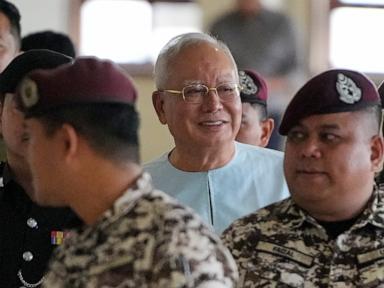
For visual context on the court proceedings and legal reactions surrounding the ruling, watch Malaysian high court clears final hurdle for former Prime Minister Najib's transfer to house arrest, which captures Najib arriving at the Kuala Lumpur courthouse alongside remarks from his defense lawyer following the transfer order.