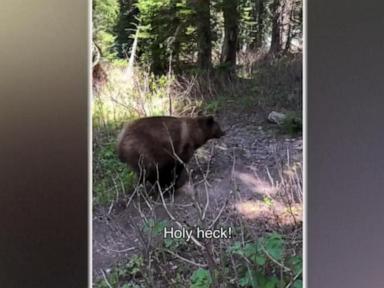
You're hiking up a steep, pine-scented trail in Glacier National Park, the sun warm on your back and the mountain air crisp. Then, you round a sharp bend. Your stomach drops. Twenty-five yards away, three massive grizzly bears are staring right at you.
It sounds like a nightmare, but it's exactly what happened to hikers Linda and Thomas. In an interview with ABC News, they recounted the terrifying seconds when the apex predators bore down on them. They survived to laugh about it later, but their experience highlights a massive problem. Most advice about surviving a bear encounter is completely detached from reality. If you liked this post, you should look at: this related article.
When you see a thousand pounds of muscle rushing you at 35 miles per hour, your brain short-circuits. Outrunning them isn't an option. You won't win a fistfight. So what actually works when you're face-to-face with a grizzly?
Let's look at what happened on that trail and why the usual survival talking points might get you killed. For another look on this event, refer to the latest coverage from National Geographic Travel.
The Illusion of the 100 Yard Rule
National Park Service rangers constantly preach the 100-yard rule. Stay the length of a football field away from bears. It's great advice on paper. In reality, backcountry trails are full of blind spots, dense brush, and rushing rivers that drown out the sound of your footsteps.
Linda and Thomas didn't break the rules. They simply crested a rise and stumbled into the bears' living room. Surprise encounters cause the vast majority of bear attacks in places like Glacier and Yellowstone. When visibility drops, your safety margin vanishes.
If you surprise a grizzly at close range, its instinct isn't necessarily to eat you. It's to neutralize the threat. The bear is terrified too, it just happens to have four-inch claws and a bite force that can crush a bowling ball.
Why Bear Spray Fails and How to Fix It
Everyone tells you to carry bear spray. What they don't tell you is that having it buried in your backpack is the same as not having it at all. You have roughly two seconds to react when a bear charges.
Even when you do everything right, bear spray isn't a magic wand. Recent data from a microburst of encounters in the Rocky Mountain parks showed that several victims deployed spray, yet the bears still made contact. Wind direction, distance, and adrenaline all factor into how well that cloud of capsaicin works.
If you carry spray, it needs to be on your hip or chest harness. You need to know how to pull the safety clip in the dark. Practice the motion until it's muscle memory.
The Right Way to Deploy the Cloud
- Don't aim high. Aim slightly downward at the ground in front of the charging bear.
- Create a wall of spray. Let the bear run into the cloud.
- Don't stop spraying if they keep coming. Use the whole can.
The Fetal Position is a Last Resort
When the bears charged Linda and Thomas, Linda dropped behind a tree and immediately took the fetal position, covering her vital organs. It saved her life.
But timing is everything. If you drop to the ground the moment you see a bear, you're inviting it to investigate you like a free meal. Standing your ground is the hardest, most counterintuitive thing you will ever do, but it's your best initial defense.
Grizzlies frequently execute bluff charges. They will barrel toward you, kicking up dirt, only to stop ten feet away to see if you run. If you run, you trigger their predatory chase instinct. You can't outrun a horse, and you definitely can't outrun a grizzly. Stand your ground, talk in a calm, assertive voice, and pull your spray. Only when the bear actually makes contact do you drop, interlock your fingers behind your neck, and protect your stomach.
Spotting the Warning Signs Before the Sightings
Experienced backcountry guides don't just look for the bear. They look for the story the trail is telling. If you're scanning the horizon for a massive brown silhouette, you're missing the immediate warning signs right under your feet.
Watch the mud. Fresh tracks with deep claw marks far out from the toes mean a grizzly passed through recently. Look at the bushes. Huckleberry patches with torn branches and overturned boulders mean a bear is actively foraging.
Perhaps the most overlooked sign is scat. If you see large, steaming piles of waste filled with berries or hair, the bear is close. Turn around. It's honestly that simple. There's no shame in abandoning a summit attempt because the trail is hot with wildlife activity.
Practical Next Steps for Your Next Hike
Don't let fear keep you out of the backcountry, but stop hiking like you're walking through a city park. If you're heading into grizzly territory this weekend, change your routine immediately.
First, buy a canister of inert practice bear spray. You need to feel the trigger pull and see how the wind catches the mist before you face a real animal. Second, stop hiking in pairs or alone in high-density areas. Groups of three or more rarely get attacked because humans are loud and intimidating en masse. Finally, make noise. Don't use bear bells—they don't work and sound like background noise to wildlife. Use your voice. Shout "Hey bear" around every blind corner. It feels goofy until it saves your life.
Safety in bear country isn't about luck. It's about minimizing surprises and knowing exactly what your body will do when panic sets in.
For a closer look at how these massive animals behave in the wild, check out this Yellowstone bear encounter video where wildlife experts break down recent incidents and share critical survival tips. This clip provides excellent visual context on how quickly these situations escalate and what the division of wildlife resources recommends for staying safe on the trail.