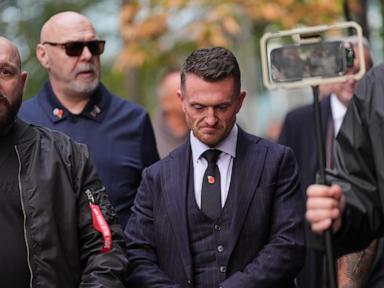
Stephen Yaxley-Lennon, better known by his alias Tommy Robinson, has spent years framing himself as a silenced truth-teller fighting an unfair system. That narrative just hit another massive legal brick wall.
When news broke that Yaxley-Lennon was found guilty of harassing British journalists, the internet split into its usual predictable camps. Supporters screamed about free speech and state censorship. Critics celebrated another notch on a very long rap sheet. Both sides missed the actual legal reality of what happened in that courtroom.
If you've followed UK media law over the past decade, you know that British courts set an extraordinarily high bar before criminalizing behavior directed at the press. This wasn't about someone hurting a reporter's feelings on social media. It was about a sustained, targeted campaign designed to intimidate working journalists out of doing their jobs.
Let's strip away the partisan noise and look at what actually happened, why the court ruled the way it did, and what this means for press freedom in Britain right now.
Why the Tommy Robinson Harassment Case Matters Beyond the Headlines
Most people hear the word "harassment" and assume it means someone sent a few mean tweets or shouted across a street. Under English law, specifically the Protection from Harassment Act 1997, the threshold is way higher than that.
To secure a conviction, prosecutors have to prove a "course of conduct" — meaning at least two separate occasions — that the defendant knew, or ought to have known, amounted to harassment. And when the targets are accredited journalists investigating a public figure, judges weigh Article 10 of the European Convention on Human Rights, which protects freedom of expression, heavily in the defendant's favor.
I've watched dozens of media-related disputes play out in magistrates' courts and the High Court in London. Judges bend over backward to avoid criminalizing aggressive political commentary or sharp criticism of the mainstream press. Journalists are expected to have thick skins.
So when a British court finds someone like Yaxley-Lennon guilty of harassing reporters, it's a massive signal. It means the behavior crossed well past robust criticism and landed squarely in the territory of targeted intimidation.
The Fine Line Between Criticism and Criminal Intimidation
You can call a journalist biased. You can tear apart their reporting on a livestream, mock their outlet, and tell your followers to boycott their newspaper. None of that is illegal in the UK.
What crosses the line is turning a massive online following into a weapon aimed at a specific individual's personal safety and private life. When doorstepping turns into stalking, or when publishing personal details triggers a wave of credible threats, the law steps in.
In this case, the court examined how Yaxley-Lennon interacted with the British journalists covering his activities. Rather than engaging with their reporting through normal channels — or even standard public pushback — his actions created an environment of genuine fear and distress. The legal test isn't whether the target felt mildly annoyed. It's whether a reasonable person in possession of the same information would think the course of conduct amounted to harassment.
Common Misconceptions About Free Speech in UK Courts
Every time Stephen Yaxley-Lennon lands in legal trouble, a wave of commentary rolls in from people applying American First Amendment logic to British courtrooms. That's a fundamental mistake.
The UK doesn't have a written constitution with an absolute free speech clause like the United States. Instead, British law balances the right to free expression against other fundamental rights, including the right to private life, safety, and the ability of a free press to operate without physical or psychological coercion.
Myth 1 Journalists Are Protected by Special Laws
A popular talking point among Yaxley-Lennon's defenders is that mainstream reporters enjoy some kind of elite legal shield unavailable to ordinary citizens. That's completely false.
The Protection from Harassment Act 1997 applies to everyone equally. Whether you're a BBC correspondent, a freelance investigative reporter, or a guy working at a local grocery store, the statutory elements of the offense are identical. What makes cases involving journalists unique isn't special protection — it's actually the opposite. Defendants routinely argue that their actions were part of a legitimate political debate or "citizen journalism," forcing the Crown Prosecution Service to prove the conduct went way beyond political discourse.
Myth 2 Calling Yourself a Citizen Journalist Excuses Everything
Yaxley-Lennon frequently describes himself as an independent journalist exposing stories the legacy media won't touch. Even if you take that label at face value, journalism isn't a magic shield against criminal law.
Accredited reporters in the UK operate under strict legal and regulatory frameworks. If a reporter from The Guardian or The Times repeatedly showed up at a private residence, filmed someone's family without consent, and broadcast their location to hundreds of thousands of agitated followers, they'd face arrest too. In fact, British reporters have been prosecuted and jailed in the past for unlawful phone hacking and intrusive behavior. The law doesn't care what press badge you wear — or print yourself.
A Pattern of Legal Collisions with the Media and Courts
To understand why this guilty verdict happened, you can't look at it in isolation. Stephen Yaxley-Lennon has a documented, years-long history of clashing with both the British judiciary and the press.
Consider his past legal record. In 2018, he was held in contempt of court after filming defendants outside Leeds Crown Court during an ongoing trial, nearly collapsing a major criminal prosecution. After an initial procedural appeal succeeded, he was retried in 2019 at the Old Bailey and sentenced to nine months in prison.
Then came the 2021 libel defeat. Yaxley-Lennon made false, defamatory claims about Jamal Hijazi, a Syrian schoolboy who had been assaulted at a school in Huddersfield. A High Court judge ordered Yaxley-Lennon to pay £100,000 in damages plus massive legal costs, ruling that his video accusations had severely damaged the teenager's life and forced his family to flee their home. When he repeated those false claims later, he ended up facing contempt proceedings all over again in 2024, resulting in an 18-month prison sentence.
Notice the pattern here. It's rarely about a single slip of the tongue. It's about a repeated refusal to accept legal boundaries when targeting specific individuals — whether that's a teenager in Yorkshire, defendants entering a courthouse, or British journalists doing their jobs.
How Harassment Campaigns Actually Affect Working Reporters
People often picture British journalists as powerful, untouchable media moguls sitting in glass towers in Canary Wharf. The reality on the ground looks very different.
Most reporters covering far-right activism, protests, and court cases are mid-career or junior journalists earning modest salaries. They work alone or in tiny teams. When someone with a massive online megaphone targets them by name, the fallout hits immediately and brutally.
Here is what actually happens behind the scenes when a journalist becomes a target:
- Immediate digital pile-ons: Within minutes of a video going live, the reporter's email inbox, phone, and social media accounts flood with death threats and violent imagery.
- Physical security risks: Reporters have to change their commuting routes, scrub their home addresses from electoral rolls, and sometimes hire private security just to cover public protests safely.
- Chilling effects on coverage: Editors start pulling reporters off beats because the insurance costs and physical risks outweigh the editorial budget.
That last point is the real danger. When harassment works, the public loses out on independent reporting. Smaller regional outlets simply can't afford to protect their staff from coordinated intimidation campaigns, so certain stories just stop getting covered altogether.
The Role of Police and Crown Prosecutors in Press Safety
For years, British journalists complained that police forces treated online and in-person harassment as a low-priority nuisance. Reporters would file complaints after being chased down streets or threatened online, only to be told it was "just part of the job."
That attitude started shifting around 2021 when the UK government launched the National Action Plan for the Safety of Journalists. Working alongside the National Union of Journalists (NUJ), the Society of Editors, and police forces across England and Wales, authorities established dedicated police liaison officers specifically trained to handle threats against media workers.
Because of those structural changes, cases that used to get dropped at the local station level are now reaching the Crown Prosecution Service with solid evidentiary files. Prosecutors have clearer guidelines on how to demonstrate the cumulative impact of online incitement combined with real-world confrontation.
Yaxley-Lennon's conviction is a direct product of this sharper legal focus. Law enforcement no longer treats a livestreamed rant outside someone's workplace as harmless internet theater when it carries clear intent to intimidate.
What You Should Watch for Next in UK Media Law
If you follow UK politics, journalism, or free speech debates, this case won't be the last of its kind. The collision between social media personalities and traditional reporters is only accelerating.
Keep an eye on three specific developments over the coming months:
- Sentencing guidelines and restraining orders: In UK harassment cases, the financial fine or custodial sentence is only half the story. Courts routinely issue strict restraining orders banning any direct or indirect contact, including naming or filming the victims online. Breaching a restraining order carries up to five years in prison.
- Online Safety Act enforcement: As Ofcom rolls out enforcement powers under the Online Safety Act, platforms hosting content that facilitates targeted harassment face much heavier scrutiny in Britain.
- Civil injunctions alongside criminal charges: More news organizations are funding civil injunctions on behalf of their staff to create exclusion zones around offices and reporters' homes before situations escalate to criminal trials.
Don't fall for the oversimplified spin whenever a high-profile figure cries censorship after a courtroom loss. Read the actual statutory tests, look at the evidence presented before the bench, and pay attention to the distinction between criticizing the press and trying to terrorize individual reporters into silence.


