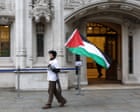
When the United Nations steps in to warn a major Western democracy about abusing its own terror laws, you know something has gone seriously sideways. That's exactly what happened when UN human rights experts sounded the alarm over the UK government weighing a formal ban on Palestine Action, a direct-action protest network known for targeting defense contractors.
Most headlines treat this like a routine clash between rowdy activists and frustrated lawmakers. It isn't. The debate over a UK Palestine Action ban cuts right to the heart of how governments define terrorism, where protest ends, and what happens when property damage gets treated like mass violence.
Why the UN Stepped Into the UK Debate
Let's be clear about what actually triggered the international pushback. UN special rapporteurs—independent human rights experts appointed by the Human Rights Council—issued sharp warnings against using counter-terrorism legislation to outlaw direct-action protest groups.
Their argument isn't complicated. Under international human rights standards, terrorism laws exist to stop severe violence aimed at killing or injuring civilians to coerce a government. Spray-painting a building, blocking a factory gate, or smashing windows at an arms manufacturer might be illegal. Police already have plenty of criminal statutes to arrest and prosecute people for criminal damage, aggravated trespass, and conspiracy.
Stretching the Terrorism Act 2000 to cover those acts changes the legal reality entirely.
Once the Home Secretary proscribes an organization under UK law, everything shifts. Membership becomes a criminal offense carrying up to 14 years in prison. Wearing a T-shirt with the group's logo, sharing a supportive post online, or organizing a meeting can land ordinary citizens in front of a counter-terrorism judge. The UN's message to Westminster is blunt: don't use a sledgehammer meant for armed extremists to crack down on disruptive protesters.
What Palestine Action Actually Does
To understand why UK ministers have even considered proscription, you have to look at the group's tactics. Founded in 2020, Palestine Action doesn't do polite marches with cardboard signs. They focus on sustained direct action aimed primarily at Elbit Systems UK, a subsidiary of an Israeli defense company, along with financial institutions and suppliers linked to the defense sector.
Their playbook is specific and repetitive:
- Occupying factory rooftops for days at a time to halt production.
- Spraying red paint across corporate offices and manufacturing plants.
- Smashing glass facades and disabling machinery inside facilities.
- Blocking access roads to prevent deliveries and shift changes.
For the companies involved, these actions cost millions of pounds in repairs, security upgrades, and lost production. Ministers and defense industry lobbyists argue this goes way beyond peaceful demonstration. They call it economic sabotage and intimidation.
From the group's perspective, they're disrupting the supply chain of weapons used in Gaza. Regardless of where you stand on the politics, the legal friction is obvious. UK prosecutors have repeatedly charged activists with criminal damage and burglary. Yet juries in several high-profile UK trials have actually acquitted Palestine Action activists after hearing their defense arguments—a trend that has visibly infuriated government officials and right-leaning commentators.
The Danger of Blurring Protest and Terrorism
Here's the part most casual observers miss. When juries won't convict protesters under standard criminal law, changing the label to "terrorism" isn't just a tougher penalty. It's an end-run around normal judicial safeguards.
I've watched legal debates around public order bills in Britain for years, and the pattern is always the same. A government faces an annoying, persistent protest movement. Existing police powers feel too slow. So politicians reach for emergency or national security statutes because those laws bypass normal evidentiary hurdles and scare off casual supporters instantly.
Under the Terrorism Act 2000, the definition of terrorism includes serious damage to property if it's designed to influence the government or intimidate the public for a political or ideological cause. Notice that wording. On paper, the statutory definition is already wide enough that a Home Secretary can argue property destruction fits the bill.
That broad wording is precisely what worries civil liberties groups like Liberty, Amnesty International, and UN rapporteurs. If breaking windows at a defense factory qualifies as terrorism, what stops a future government from applying the exact same logic to climate activists glued to an oil refinery, or striking workers who sabotage equipment during a bitter industrial dispute?
Nothing. Literally nothing in the statute stops that expansion once the precedent is set.
How Proscription Works Under UK Law
People throw around the word "ban" loosely, so let's look at the mechanics. In Britain, proscribing an organization isn't a casual press release. It requires a formal order laid before Parliament by the Home Secretary under Schedule 2 of the Terrorism Act 2000.
Both the House of Commons and the House of Lords have to approve the order. Once it passes, the consequences are immediate and sweeping:
- Criminalizing association. Anyone who belongs to, or professes to belong to, the group commits a serious offense.
- Silencing expression. Expressing an opinion or belief that is supportive of a proscribed organization—if you're reckless as to whether others will be encouraged to support it—becomes a crime.
- Freezing resources. Fundraising, donating, or even managing property that might be used by the group carries heavy prison sentences.
- Expanding police powers. Counter-terrorism officers gain broader stop-and-search capabilities and extended detention windows without charge.
Think about what happens to journalism, academic research, and public debate when a protest network enters that category. Suddenly, student unions, solidarity coalitions, and everyday social media users have to worry whether reposting a flyer violates counter-terrorism statutes.
What Critics and Supporters Are Saying
It would be dishonest to pretend there's only one side to this argument inside the UK. The pressure to crack down didn't appear out of thin air.
The Case for Tougher Action
Supporters of a ban—including several Conservative lawmakers, defense industry representatives, and security commentators—point out that staff at targeted factories have felt threatened and harassed. Lord Walney, the UK government's former independent adviser on political violence and disruption, specifically recommended creating new mechanisms to restrict extreme protest groups that repeatedly use criminal tactics to achieve political goals.
Their core argument is simple: democracy requires the rule of law, and small groups shouldn't be allowed to shut down lawful businesses through repeated property destruction just because they feel strongly about a foreign conflict. When activists boast about forcing factories to close permanently, critics say the state has a duty to protect workers and lawful enterprise.
The Warning From Legal and UN Experts
On the other side, UN experts, human rights lawyers, and veteran civil liberties advocates argue that the UK already has some of the strictest public order laws in Europe. Between the Police, Crime, Sentencing and Courts Act 2022 and the Public Order Act 2023, British police already have sweeping powers to arrest protesters for "locking on," interfering with key national infrastructure, or causing serious disruption.
Using terror laws on top of those statutes isn't about filling a legal vacuum. It's about stigma and deterrence through extreme punishment. UN special rapporteurs explicitly reminded the UK that counter-terrorism measures must never be weaponized to stifle political dissent or punish non-lethal civil disobedience, even when that disobedience involves illegal property damage.
Why This Matters Far Beyond One Protest Group
Even if you have zero sympathy for Palestine Action's methods, you should pay close attention to how this plays out. Legal precedents don't stay neatly inside the box politicians build for them.
Over the past decade, Britain has steadily narrowed the space for disruptive protest. Every new public order bill was sold to the public as a targeted fix for one specific nuisance—first Extinction Rebellion, then Just Stop Oil, now Palestine Action. Each time, police powers grew wider, court defenses grew narrower, and sentences grew longer.
Crossing the line into terrorism proscription is a whole different leap. Once a Western democracy normalizes labeling domestic property-damage protesters as terrorists, authoritarian governments around the world take notes. Why wouldn't they? When London calls vandals terrorists, autocrats in other capitals use that exact precedent to justify jailing their own political opposition under national security laws. That is why UN human rights monitors watch the UK so closely. Britain's legal standards carry global weight.
How to Follow and Evaluate Developments Like a Pro
If you want to track this story without getting swept up in partisan spin from either side, focus on the actual legal mechanisms rather than the political rhetoric.
- Watch parliamentary orders, not anonymous briefings. Government leaks to newspapers often float extreme options to test public reaction or appease backbenchers. Check whether a formal proscription order is actually laid before Parliament under the Terrorism Act 2000.
- Read the UN Special Procedures statements directly. The Office of the High Commissioner for Human Rights (OHCHR) publishes full communications sent to governments. Reading the exact legal citations gives you far more clarity than a two-sentence summary in a tabloid.
- Separate criminal damage trials from terror designations. Pay attention to how ordinary juries treat these cases under existing criminal law versus what happens when ministers try to bypass jury discretion through executive orders.
- Track the definition of "serious violence." Whenever politicians debate public order or national security legislation, look closely at whether they equate physical harm to people with financial harm to property. That single distinction tells you everything about where civil liberties are heading.
Keeping your eye on those four benchmarks will tell you immediately whether the UK is upholding basic democratic guardrails or quietly rewriting the rules of political dissent.


