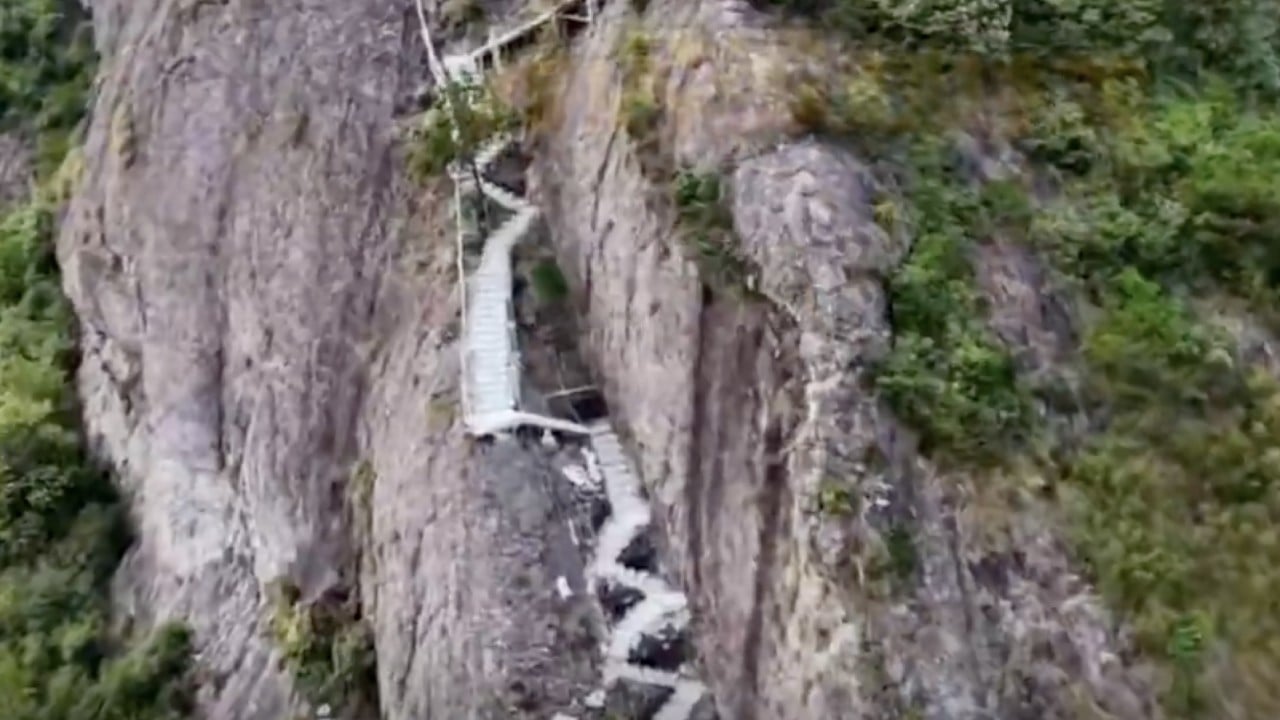
Most viral stories about filial piety miss the actual point. You see a heartwarming headline about adult children doing something extraordinary for an aging parent, smile for five seconds, and keep scrolling.
That's a mistake here. When a group of Chinese siblings built a 430-step concrete staircase—widely dubbed a "sky ladder"—up a steep mountain slope so their elderly mother wouldn't have to leave her rural home, they weren't just making a sweet gesture. They were solving a brutal demographic and infrastructure problem that millions of families across rural China face every single day.
Let's get the facts straight first. In rural mountainous regions of China, particularly in provinces like Sichuan, Chongqing, and Guizhou, steep terrain isolates entire villages. When young adults migrate to cities for work, elderly parents frequently refuse to follow them. To accommodate their mother's refusal to relocate to an urban apartment, these siblings constructed a 430-step concrete staircase directly into the mountain path leading to her home, replacing a treacherous, muddy slope with safe footing and handrails.
People online immediately praised the siblings' devotion. Others asked why the mother wouldn't just move to the city where life is easier. Both reactions miss the reality of rural aging, mountain engineering, and why forcing an elderly parent into a city apartment often does more harm than good.
Why Elderly Parents Refuse to Leave the Mountains
If you've never spent time in a rural farming community, stubbornness looks like the obvious answer. It isn't. Moving an 80-year-old from a lifelong mountain homestead to a high-rise apartment in a bustling metropolis is basically uprooting a mature tree and expecting it to thrive in a plastic pot.
In the countryside, an elderly person has autonomy. They know every neighbor, every turn in the path, and every rhythm of the seasons. They can step outside their front door onto solid ground, tend a small vegetable patch, and talk to people who speak their exact local dialect.
Put that same parent in a 20th-floor city apartment, and their world shrinks to four walls. Many rural seniors can't read elevator buttons or navigate city traffic. Their children work long hours, leaving the parent isolated all day with nothing to do but stare at a television. Gerontologists call this "relocation stress syndrome," and it triggers rapid cognitive decline, depression, and physical deterioration.
The mother in this story knew what she was doing. Staying in her mountain home meant keeping her independence and her sanity. Her children understood that dragging her to the city against her will wasn't actually caring for her—it was just making life more convenient for themselves.
The Brutal Reality of Building a 430-Step Mountain Staircase
Building 430 steps on flat ground is a major construction project. Building them up a steep, rural mountain path without heavy commercial machinery is an exhausting feat of grit and practical engineering.
Think about the logistics involved. On a steep incline, you can't just drive a cement mixer up to the work site. Every bag of cement, every load of sand, every bucket of water, and every piece of rebar has to be hauled up the slope manually or via makeshift pulleys.
Here is what goes into a mountain staircase build like this:
- Excavation by hand: Workers have to cut flat ledges into uneven rock and packed earth so the concrete doesn't slide down the mountain during heavy summer rains.
- Drainage management: Without proper runoff channels, monsoon rains turn concrete steps into a waterfall, eroding the soil underneath until the stairs crack and collapse.
- Step geometry: For an elderly person, step height matters enormously. Standard building codes usually aim for a riser height around 7 inches, while steep mountain trails often force builders into shorter treads and higher risers that punish aging knees.
- Handrail anchoring: Concrete steps without sturdy railings are still a death trap in wet or frosty weather. Anchoring metal or thick wooden rails into mountain rock requires deep drilling and solid footing.
When you look at that 430-step sky ladder, don't just see a symbol of love. See thousands of pounds of raw material hauled up an incline by people who refused to let their mother risk a fatal fall every time she walked to the main road.
How This Fits Into China's Broader Rural Aging Crisis
This family's DIY infrastructure project didn't happen in a vacuum. According to data from China's National Bureau of Statistics, hundreds of millions of people have migrated from rural areas to urban centers over the last four decades. That massive demographic shift left behind a massive population of "left-behind elderly" (liushou laoren) in villages with shrinking tax bases and rugged geography.
In recent years, the Chinese government has poured billions of yuan into rural revitalization and poverty alleviation programs, including paving thousands of miles of rural roads. Yet "last-mile" infrastructure—the final stretch connecting a scattered homestead on a ridge to the nearest paved village road—often falls outside municipal budgets.
When local governments can't justify spending public funds to build a private road to a single house on a cliffside, families have to step in. We've seen similar stories emerge across southwestern China over the past decade:
- Sons carving dirt roads through rocky hills over several years so ambulances can reach their aging parents.
- Families installing solar-powered streetlights along dark mountain trails so elderly relatives don't trip at dusk.
- Siblings pooling their city wages to hire local masons to reinforce crumbling stone pathways before winter hits.
These projects highlight a glaring gap between macro-level infrastructure development and micro-level human needs. A highway ten miles away doesn't help an elderly woman if she breaks her hip walking fifty yards down a muddy slope from her front porch.
The Hidden Risks Nobody Mentions in Feel-Good Viral Stories
As admirable as the 430-step sky ladder is, we need to be honest about its limitations. A staircase is a massive upgrade over a slippery dirt trail, yet 430 steps is still roughly equivalent to climbing a 35-to-40-story building.
For a healthy 30-year-old, climbing 40 flights of stairs is a solid cardio workout. For an elderly person with aging joints, reduced lung capacity, or balance issues, 430 steps remains a formidable physical barrier. If she experiences a sudden medical emergency—like a stroke or a heart attack—paramedics still have to haul a stretcher up and down those 430 steps.
There's also the maintenance problem. Mountain weather is unforgiving. Freeze-thaw cycles, shifting soil, and encroaching vegetation constantly attack outdoor concrete. Without regular upkeep, moss grows on the treads, turning concrete into an ice rink after a light drizzle.
That's why physical modifications to a rural home can't be the only solution. Families who choose to support an aging parent in a remote area have to build a safety net around the infrastructure:
- Install non-slip textures: Smooth concrete is dangerous when wet. Broom-finishing the wet cement or adding rubberized grip strips dramatically reduces fall risks.
- Create resting landings: Long stretches of stairs without flat resting platforms exhaust seniors quickly. Adding wider landings every 20 to 30 steps gives them a safe spot to catch their breath.
- Set up remote monitoring and neighbor check-ins: Security cameras with two-way audio at the doorway and a paid arrangement with a nearby younger neighbor ensure someone notices immediately if the parent doesn't come outside by a certain hour.
- Stockpile essentials before bad weather: Keeping a three-month supply of non-perishable food, clean water, and chronic medications inside the house prevents the parent from attempting the climb during storms or icy conditions.
What Adult Children Everywhere Can Learn From This
You don't need to live at the base of a mountain in rural China to face this exact dilemma. Almost every adult child eventually hits a wall where their parent's desire for independence collides with reality.
Most families handle this poorly. We default to two bad options: we either force our parents into an environment they hate because it makes us feel less anxious, or we ignore the safety hazards at their current home until a catastrophic fall forces our hand.
The Chinese siblings who built that 430-step ladder found a third path. They respected their mother's agency enough to accept her choice, and then they put in the hard, unglamorous physical labor required to make her choice as safe as possible.
If you're dealing with an aging parent who refuses to leave a home that's becoming hard to navigate, stop arguing with them about moving. Look at their environment with cold, practical eyes instead. Walk the exact paths they walk every day—from the bedroom to the bathroom, from the kitchen to the front porch, from the driveway to the mailbox. Find the friction points where a slip, a steep step, or poor lighting could end their independence permanently, and fix those physical barriers directly.