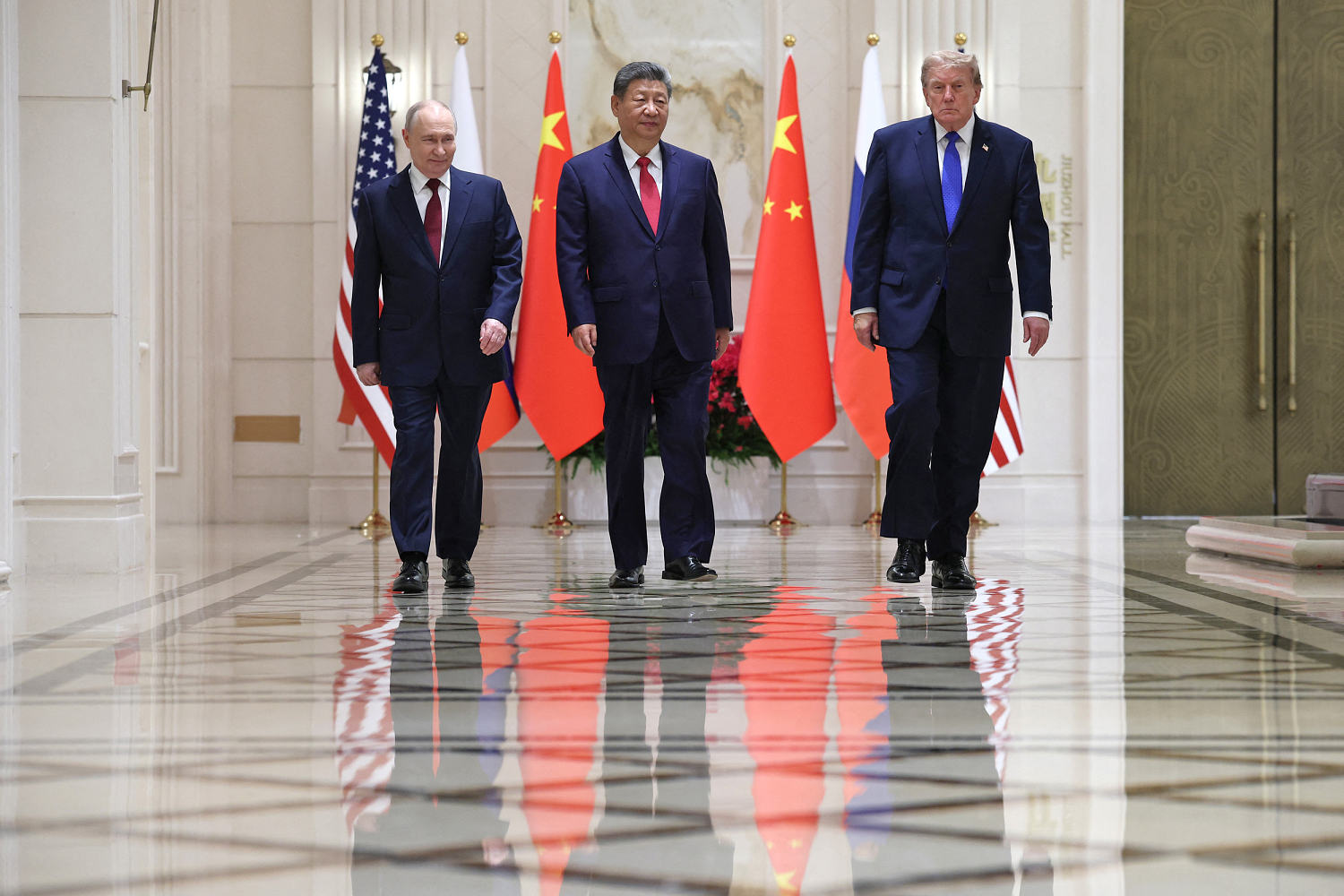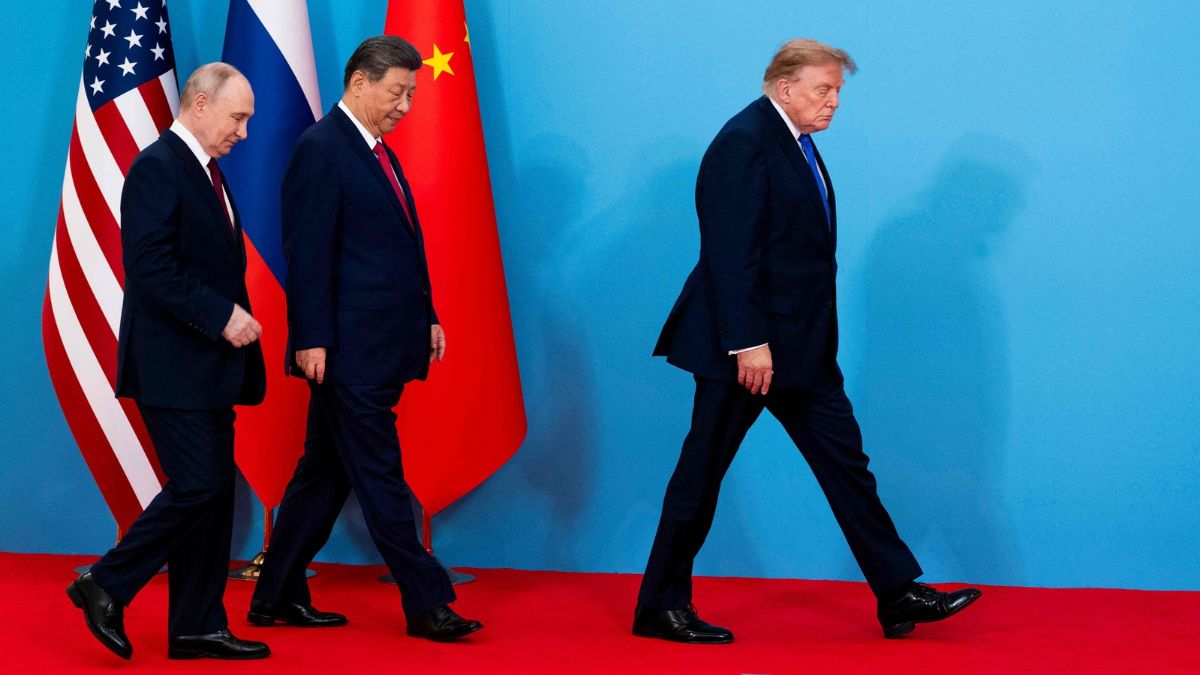
Everybody saw the photo op from Kylin Villa in Shenzhen. Donald Trump, Xi Jinping, and Vladimir Putin standing shoulder to shoulder on November 19, 2026, smiling for the cameras on the sidelines of the Asia-Pacific Economic Cooperation (APEC) summit. Headlines immediately crowned it a historic breakthrough for nuclear disarmament and global security.
They got the story half-right.
Yes, it was the first time the leaders of the United States, China, and Russia ever sat down for a formal trilateral summit. And yes, they walked out with a four-point document titled the "U.S.-Russia-China Heads of State Declaration toward Peace". But if you actually read the fine print of that declaration—and look at what got left off the table—a very different picture emerges.
The real story isn't that the three nuclear superpowers solved global security. The real story is why three men with deeply conflicting agendas suddenly needed to stand in the same room right now, and why the hardest problems were quietly swept under the rug.
The Reality Behind the Shenzhen Peace Declaration
Let's look at what the three leaders actually signed in Shenzhen. According to the official text released by the White House, the declaration hits four specific notes:
- Reforming the United Nations: As permanent members of the UN Security Council, all three pledged to overhaul the organization so it responds faster to international crises.
- Boosting energy supplies: They agreed to increase the production and flow of refined petroleum products to stabilize global markets.
- Shielding state officials from international courts: In a pointed swipe at the International Criminal Court (ICC), the trio affirmed "state consent" and immunity for sitting officials, warning judicial bodies not to abuse their jurisdiction.
- Opening a nuclear risk dialogue: They revived the classic Reagan-Gorbachev line that "a nuclear war cannot be won and must never be fought," committing to talks on preventing proliferation and reducing nuclear risks.
Read that list again. Notice what's missing?
There is zero mention of the war in Ukraine. Zero mention of the conflict involving Iran. Zero binding caps on nuclear warheads, delivery vehicles, or missile testing.
In diplomacy, vague language is a feature, not a bug. When three rivals issue a joint statement promising to "conduct a dialogue" rather than sign a treaty, they're buying time and political cover. Experts at the Council on Foreign Relations (CFR) summed up the Shenzhen outcome bluntly as "much ado about nothing, at least for now". That doesn't mean the meeting was pointless. It means the real value happened behind closed doors and in the optics each leader carried home.
Why Nuclear Disarmament Talks Hit a Wall Before They Even Started
To understand why the nuclear language in Shenzhen was so watered down, you have to look at the calendar.
On February 5, 2026, the New Strategic Arms Reduction Treaty—better known as New START—officially expired. For decades, bilateral treaties between Washington and Moscow capped deployed strategic warheads at 1,550 and allowed on-site inspections so neither side had to guess what the other was building. Today, for the first time since the Cold War, there are zero legally binding limits on the nuclear arsenals of the world's largest nuclear powers.
Trump has argued since his first term that bilateral treaties with Moscow are outdated because they leave Beijing completely unchecked. He isn't wrong about the math. Back in 2023, the Bulletin of the Atomic Scientists estimated China's stockpile at roughly 410 warheads. Speaking right after the summit, Trump stated that Beijing's arsenal has already climbed to 600 warheads.
Still, compare those numbers side by side:
- Russia: Roughly 5,420 total nuclear warheads.
- United States: Roughly 3,700 total nuclear warheads.
- China: Roughly 600 nuclear warheads.
See the problem?
If you're Xi Jinping, sitting at a table with two nations that each hold six to nine times as many warheads as you do, signing an equal cap is a non-starter. Beijing has spent years rejecting trilateral arms reductions precisely because it doesn't want to lock itself into permanent numerical inferiority. During the Shenzhen meeting, Xi called nuclear weapons a "sword of Damocles" hanging over humanity, which makes for a great headline. Yet he stopped well short of agreeing to freeze China's nuclear modernization or open Chinese missile silos to foreign inspectors.
What Actually Works When Treaties Fail
Anyone who has followed arms control negotiations knows that jumping straight to "complete denuclearization" is a recipe for deadlock. You don't build a roof before pouring the foundation.
Security analysts at the European Council on Foreign Relations (ECFR) point out that while formal warhead caps are out of reach right now, smaller confidence-building steps are completely doable. The most practical fix on the table is a trilateral missile pre-launch notification agreement. Washington and Moscow already notify each other before testing intercontinental ballistic missiles or launching space rockets so early-warning satellites don't mistake a test for a surprise attack. Beijing has barely any of those hotlines or notification protocols with Washington.
Getting China into a basic notification regime won't eliminate a single warhead. It will, however, stop an accidental radar blip over the Pacific from spiraling into a catastrophe.
What Each Leader Actually Wanted Out of Shenzhen
Forget the lofty speeches about global harmony. Every leader who walked into Kylin Villa brought a specific shopping list.
Xi Jinping Wanted the Spotlight and Breathing Room
Hosting both the American and Russian presidents on Chinese soil is a massive diplomatic win for Beijing. It projects the image that China isn't an isolated rival—it's the indispensable convener of global power.
More practically, Xi needed leverage ahead of a ticking economic clock. The current U.S.-China trade truce expires on January 10, 2027. Washington has been tightening enforcement on advanced AI chip exports, while Beijing holds retaliatory cards over rare-earth minerals and supply chains. By giving Trump a historic diplomatic stage in Shenzhen, Xi bought goodwill and kept communication channels open right before high-stakes trade negotiations heat back up.
Vladimir Putin Wanted Legitimacy and ICC Pushback
For Putin, simply showing up was half the victory. After years of Western efforts to isolate Moscow over the war in Ukraine, standing next to the U.S. president as an equal co-architect of world order signals that Russia is back at the top table.
Look closely at point three of the Shenzhen declaration again. That clause condemning the International Criminal Court for overstepping its jurisdiction didn't appear by accident. Putin faces an active ICC arrest warrant, which has complicated his international travel for years. Getting Washington and Beijing to co-sign a statement defending the immunity of sitting heads of state handed Moscow a major rhetorical shield.
Meanwhile, Putin held a separate bilateral meeting with Trump before the trilateral session. Despite four rounds of U.S.-brokered negotiations in Abu Dhabi earlier in November, the two sides still haven't cracked the core deadlock over Ukrainian territory and postwar security guarantees.
Donald Trump Wanted Deal-Maker Optics and Alliance Leverage
Trump opened the summit by arguing that "no peace was ever forged by declining opportunities for engagement and speech". His strategy relies heavily on personal rapport with strongmen to unlock deals that traditional diplomats stall on.
By bringing Xi and Putin together, Trump accomplished something his predecessors couldn't: he got Beijing to formally acknowledge that it belongs in nuclear risk talks alongside Washington and Moscow. Even without hard numbers attached, breaking China's long-standing refusal to participate is a genuine diplomatic shift.
There's also a hidden subtext here that allies in Europe and Asia noticed immediately. Both Putin and Xi want to prevent countries like Germany, Japan, Poland, and South Korea from building their own nuclear weapons. Those nations only refrain from going nuclear because they trust the U.S. nuclear umbrella. If Washington signals that it's cutting side deals with Moscow and Beijing over the heads of its allies, nervous capitals from Seoul to Warsaw might start rethinking their own defense postures.
Why This Matters More Than a Typical Diplomatic Photo Op
It's easy to dismiss summit declarations as empty theater. Honestly, 90% of summit communiqués belong in the recycling bin within a week.
This one is different because of the vacuum it sits in. With New START dead and no replacement treaty in sight, the world is entering an era of unconstrained three-way nuclear competition. Defense budgets are swelling, hypersonic delivery systems are shrinking reaction times to minutes, and artificial intelligence is being wired into command-and-control networks.
At the same time, economic interdependence is fracturing. The pledge in Shenzhen to boost refined petroleum supplies shows that all three powers recognize how fragile global energy markets have become. Yet on technology, semiconductors, and regional security, the three countries are still locked in fierce competition.
How to Track Whether the Shenzhen Summit Actually Delivers
If you want to know whether this trilateral meeting leads to real stability or fades into another forgotten photo op, ignore the press releases and watch three concrete benchmarks over the next eight weeks:
- The G20 Summit in Miami (December 14–15, 2026): Trump is hosting the G20 at his Doral resort in Florida. Xi is expected to attend, and Putin has been invited—though his ICC warrant makes travel tricky. Watch whether working-level diplomats actually announce a calendar for nuclear risk talks in Miami, or if the Shenzhen declaration quietly stalls.
- The U.S.-China Trade Truce Deadline (January 10, 2027): Diplomacy doesn't happen in a vacuum. If Washington and Beijing fail to extend their trade truce by January 10 and slap new tariffs or rare-earth restrictions on each other, any nuclear dialogue agreed to in Shenzhen will freeze overnight.
- Technical Notifications Over Warhead Counts: Don't expect a grand nuclear disarmament treaty anytime soon. Instead, look for announcements about military-to-military hotlines, space-launch notifications, or bans on AI-controlled nuclear launch systems. Those unglamorous technical agreements are the true litmus test of whether Washington, Beijing, and Moscow are serious about preventing a catastrophe.