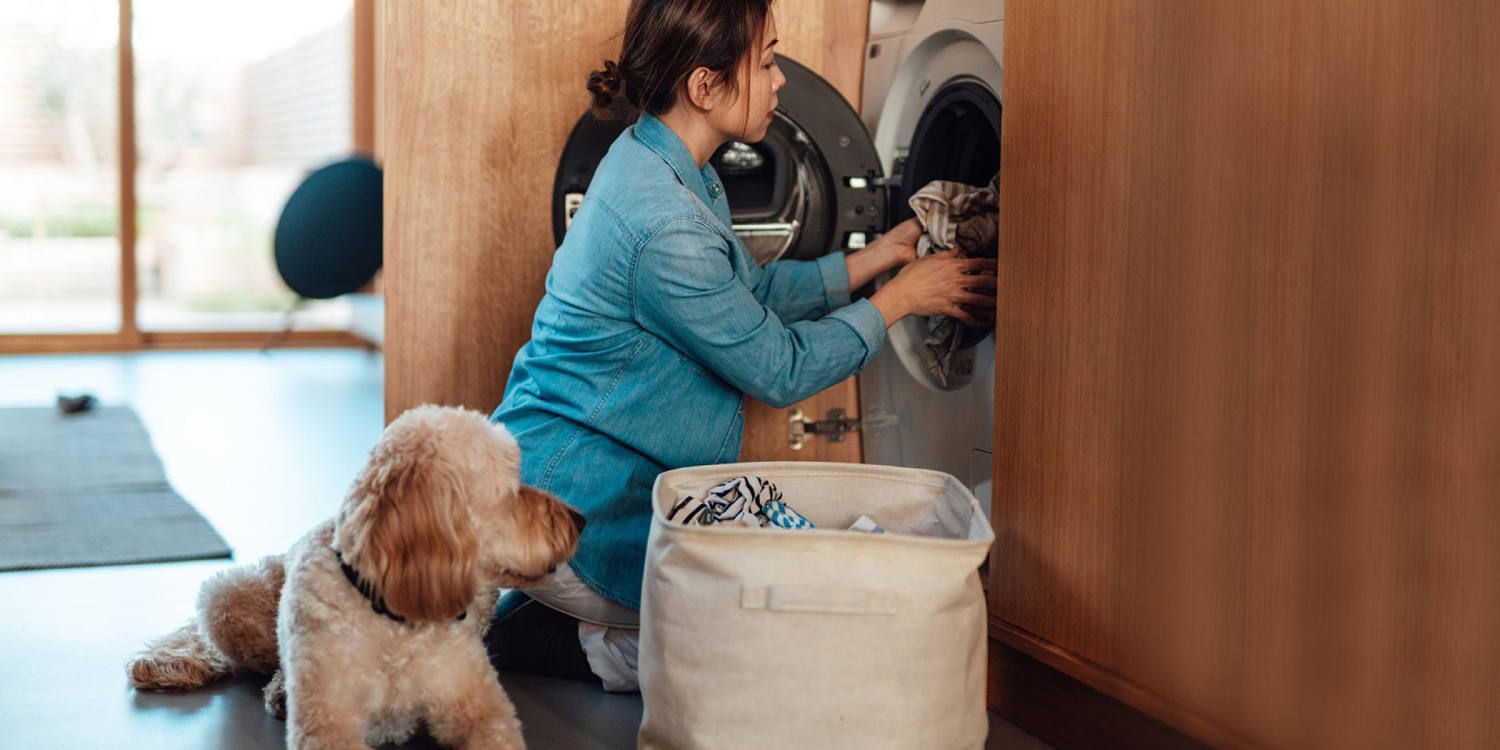
No, you do not need specialized pet laundry detergent to get dog blankets, beds, towels, and gear clean for most healthy dogs. Standard liquid laundry detergent, used with the right water temperature, proper dosing, and a thorough rinse, handles everyday fur, drool, mud, and mild dog odor without turning your wash cycle into a specialty retail tax.
Spend enough years watching consumer goods brands invent new shelf categories, and a pattern emerges. First came specialized pet stain sprays. Then came scented wipes for paws and butts. Now, brightly labeled bottles of pet laundry detergent sit beside dog treats and plush squeaky toys, promising to banish "wet dog smell" and protect sensitive skin at a steep per-load markup.
Sometimes a specialty formula earns its keep. Most of the time, it is repackaged surfactant chemistry wearing a puppy illustration.
To understand whether your dog's laundry actually needs a dedicated detergent, you have to look past the front label and examine what sits inside a dog blanket after a week of real life. A dog bed is not a human dress shirt. It collects sebum, dander, saliva, outdoor soil, grass stains, occasional muddy paw prints, and sometimes urine, vomit, or anal gland secretions. Standard detergents are engineered to lift oil, protein, and particulate soil from fabric. That overlap is much bigger than pet-care marketing wants you to admit.
How Standard Detergents Handle Everyday Dog Mess
Walk down the laundry aisle of any grocery store and you are looking at decades of chemical formulation work aimed at breaking down stubborn human and household grime. Most standard liquid detergents rely on a blend of anionic and nonionic surfactants to loosen oils and suspend dirt in water so it washes down the drain rather than redepositing onto fibers. Many also include enzymes—such as proteases for protein stains, lipases for fats and oils, and amylases for starches—along with builders or chelating agents that help work in harder water.
Dog messes map closely onto those exact targets. Saliva contains proteins and mucins. Sebum and rolled-in yard debris carry lipids and waxes. Drool-soaked rope toys and canvas crate mats hold onto organic residue that traps odor if left sitting in a damp basket.
Water temperature matters just as much as the jug you pour. Cold water saves energy and protects delicate fabrics, yet warm or hot water—when care labels and fabric types allow—often boosts soil and grease removal and helps clear lingering mustiness. Cold washes are fine for light dust and routine freshening. They struggle when a heavy sherpa blanket has soaked up greasy coat oils for three weeks straight.
Many dog owners over-pour detergent assuming extra suds equal extra cleanliness. That habit backfires. Excess detergent leaves a sticky film on fleece, microfiber, and plush fill that actually traps odors and attracts fresh dirt on the next cycle. Cutting back to the recommended dose for the load size and soil level, and adding an extra rinse when washing thick bedding, does more for clean fabric than buying a bottle with a bone on the front.
Where Pet Laundry Detergent Claims Real Differences
Manufacturers selling pet laundry detergent usually lean on three selling points: gentler skin profiles, odor neutralization, and enzyme or probiotic action aimed at biological messes. Each claim has a kernel of reality wrapped in plenty of exaggeration.
Start with skin sensitivity. Dogs have thinner epidermis than humans and a different skin surface pH, and some dogs develop contact irritation or flare-ups when exposed to lingering fragrance compounds, dyes, or harsh residues left on bedding. In theory, a fragrance-free, dye-free formula designed with pet comfort in mind reduces that risk. In practice, plenty of mainstream fragrance-free detergents and baby/sensitive formulas already strip out heavy perfumes and bright dyes without charging a luxury pet premium.
Then comes odor control. A dog's "wet dog" smell comes largely from volatile organic compounds produced by microorganisms and oils on the coat and transferred onto fabrics, getting amplified when moisture hits them. Some pet detergents use odor encapsulators, plant extracts, or specific enzyme blends to break down organic matter rather than masking it with strong floral or pine scents. Heavy synthetic fragrance is actually a liability around dogs, whose sense of smell is vastly more acute than ours. Masking a sour crate mat with loud perfume does not clean the fabric; it just creates a chemical clash that many dogs dislike.
What about enzymatic or microbial formulas marketed specifically for pet accidents? Enzymes can help break down protein- and starch-based stains such as drool, food spills, or minor spots, provided the water temperature and wash time suit the formula and the stain has not been baked into the fibers by a hot dryer. Still, standard enzyme detergents already target protein and lipid soils. Unless a product proves superior performance on stubborn pet soils in independent testing—which most marketing copy avoids showing—the advantage over a solid mainstream detergent is narrow.
Consider a hypothetical example to see how the math plays out. Suppose a household with two medium dogs runs two loads of dog bedding and towels every week, totaling 104 loads a year. If a specialty pet detergent costs $0.35 per load while a reliable standard liquid detergent costs $0.14 per load, that single swap adds roughly $21.84 a year before counting shipping or store markups. Over five years, that is more than $109 for routine washes—money that could buy a replacement bed cover, a better lint brush, or a bag of high-value training treats. That is a hypothetical illustration rather than a specific brand price audit, yet the cost gap holds up across most aisles.
The Hidden Risks of Specialty Pet Formulas
Buying a specialty label does not automatically mean you are buying a safer or more effective product. That is a blind spot many conscientious owners miss.
First, ingredient transparency in laundry products is uneven. Even when a bottle says "for pets" or "natural," terms like plant-derived, eco-friendly, or odor-blocking are largely marketing language rather than strict clinical guarantees for canine dermatology. A formula can be gentle on one dog's belly and still trigger itching or redness in another dog prone to allergies.
Second, some specialty blends rely on essential oils or botanical extracts for scent and freshness. Essential oils are concentrated chemicals, and several are irritating or toxic to dogs or cats depending on concentration, exposure route, and individual sensitivity. Just because a plant comes from nature does not mean it belongs in a washing machine used for pet blankets.
Third, some pet detergents underperform on heavy-duty grime because they skimp on tough cleaning agents in pursuit of a "mild" reputation. If your dog tracks thick clay mud onto a canvas car seat cover or rolls in something foul on a hike, a gentle formula may leave behind dulling residue that forces you to rewash the load anyway.
There is also the washing machine itself to consider. Every time you wash dog hair and bedding in a shared home machine, fur, dander, and fine grit collect in the drum, gasket folds, and drain trap. No detergent dissolves a wad of Labrador undercoat or pulls dense hair out of a lint filter. Running an empty tub-clean cycle periodically and brushing loose hair off blankets before they hit the drum makes a bigger difference than switching detergents.
| Cleaning Approach | Best Use Case | Main Advantage | Key Limitation |
|---|---|---|---|
| Standard liquid detergent | Routine dog blankets, towels, crate mats, mild odors | Widely available, cost-effective, strong baseline soil removal | May contain perfumes or dyes if you pick a scented version |
| Fragrance-free standard detergent | Dogs with sensitive skin or owners who dislike heavy scents | Avoids added fragrance irritants at a fair price | Must check label for dyes and enzyme strength |
| Dedicated pet laundry detergent | Occasional targeted pet loads or convenience in a single purchase | Tailored branding and often milder scent profiles | Higher cost per load; uneven proof of superior cleaning |
| Pre-wash enzymatic treatment | Fresh protein or organic spots like drool, food, or accidents | Targets specific organic stains before the main wash | Needs proper contact time and avoids high heat too early |
When Specialty Detergents Actually Make Sense
Dismissing every pet laundry detergent out of hand would be lazy reporting. There are specific situations where a dedicated product—or a carefully chosen alternative—can be practical.
If you wash pet items exclusively in a dedicated utility machine or prefer keeping a separate bottle in the laundry room so nobody accidentally uses fabric softener on water-repellent dog gear or microfiber towels, a dedicated jug has clear operational value. Fabric softener coats fibers in a waxy layer that reduces absorbency on dog-drying towels and can trap odors in synthetics over time. Keeping pet laundry separate from human clothes can also help in households where someone has severe allergies to pet dander or where a dog has frequent accidents.
Convenience also counts in real life. If you already shop at a pet retailer, grab a bottle on impulse, and see cleaner, fresher-smelling bedding with zero skin reaction from your dog, there is no harm in finishing it. Just do not confuse convenience with necessity.
A Practical Routine for Cleaner Dog Laundry
If you want genuinely clean dog things without paying a novelty markup, focus on the steps that actually move grime out of fabric.
- Shake and de-hair first. Take blankets and bed covers outside, shake out loose dirt and fur, and use a rubber pet brush or lint roller on stubborn clings. Hair left in the wash clogs drains and mats onto other items.
- Treat spots before the cycle. For mud, drool, food, or minor accidents, blot excess matter first and apply a targeted stain or enzymatic cleaner to the spot rather than drowning the whole load in extra detergent.
- Measure carefully. Use a modest amount of a standard, ideally fragrance-free detergent matched to load size and water hardness. Less is often more when rinsing thick fleece and stuffing.
- Choose temperature and rinse wisely. Wash sturdy cotton, canvas, and heavy bedding on warm or hot when safe for the fabric, and add an extra rinse cycle to clear detergent residue.
- Dry thoroughly. Dampness breeds musty odor fast. Line-dry or tumble-dry completely on an appropriate heat setting, checking seams and thick corners before putting bedding back down.
Start your next dog laundry load with the fragrance-free detergent already in your cupboard, measure half a cap less than usual, and add an extra rinse to see if your dog's bedding comes out cleaner without spending another dime on pet hype.